Info
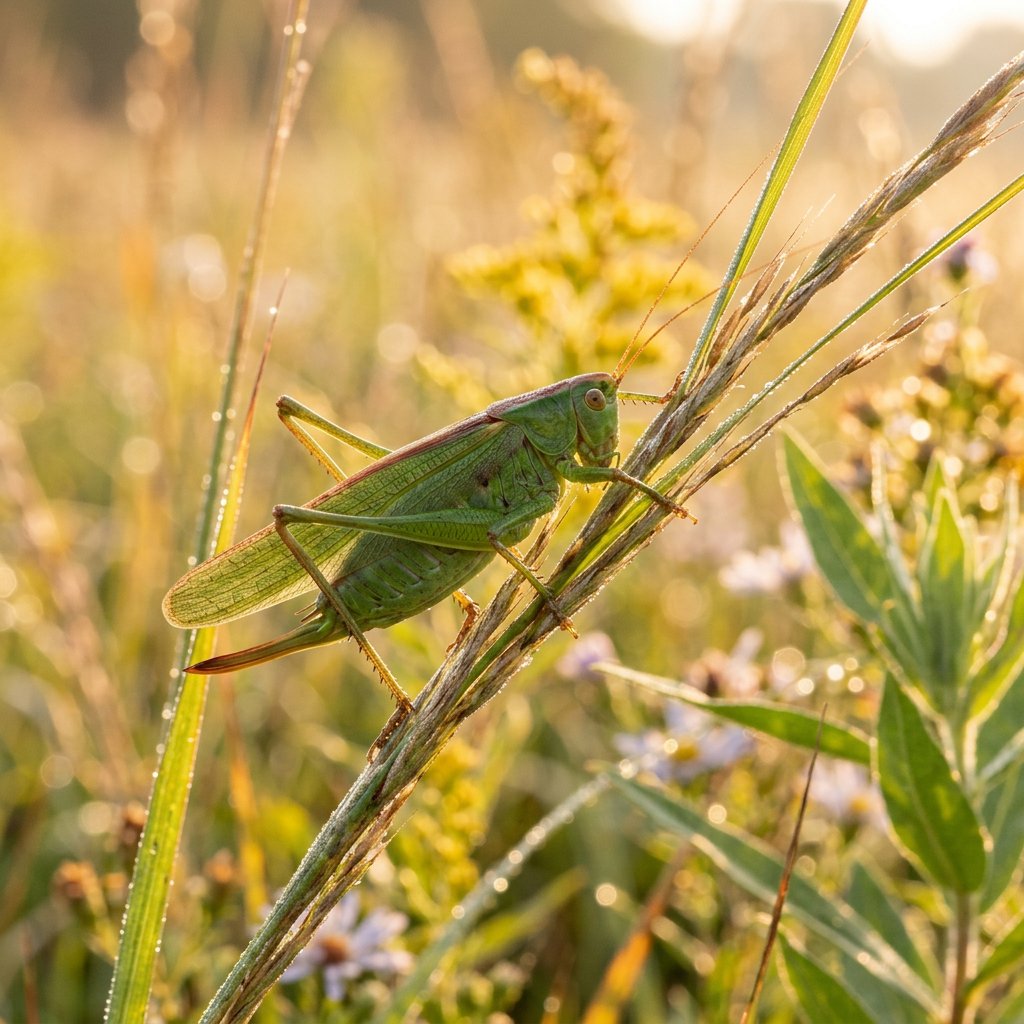
Often called the Handsome Meadow Katydid, this insect truly lives up to its name with a vibrant, multicolored palette that looks like it was hand-painted. Found primarily in the eastern United States, these insects are the flamboyant vocalists of the wetlands. If you hear a rhythmic, buzzing "zip-zip-zip-zeeeeee" coming from a marshy thicket, you’ve likely encountered this little musician performing its summer serenade.
🔍 How to Identify
- 🎨 Technicolor Body: Unlike their plain green cousins, they sport a brilliant emerald body often accented with bright yellow stripes and striking turquoise or blue-tinted legs.
- 👀 Vivid Eyes: They are famous for their intense, contrasting eye colors—usually a deep reddish-orange or bright maroon—that stand out against their lime-green heads.
- 📏 Streamlined Shape: They have a very slender, grass-like profile with exceptionally long, thread-like antennae that can reach twice the length of their bodies.
🌲 Habitat & Ecology
- 💧 Wetland Specialists: These katydids prefer "wet feet," meaning you will almost exclusively find them in marshes, wet meadows, or the dense vegetation lining the edges of ponds and ditches.
- 🍴 Diverse Diners: While they primarily feed on the seeds and blades of grasses and sedges, they are opportunistic hunters and will occasionally snack on smaller, soft-bodied insects like aphids.
- 🎶 Sun-Loving Singers: Most katydids are nocturnal, but the Handsome Meadow Katydid is a daytime performer, using the heat of the sun to power its high-energy buzzing calls.
⚠️ Safety & Toxicity
- 🟢 Gentle Neighbor: This species is completely harmless to humans and pets. They do not have a stinger and possess no venom or irritating sprays.
- 👄 Mouthparts: While they have strong mandibles designed for chewing tough marsh grasses, they are not aggressive. If handled roughly, they might deliver a tiny, pinprick-like "nip" in self-defense, but it is not painful or dangerous.
- 🌿 Garden Impact: They rarely appear in numbers large enough to damage ornamental gardens, as they prefer the specific habitat of wild wetlands over manicured lawns.
✨ Fun Fact
The Handsome Meadow Katydid’s song is produced by "stridulation"—rubbing a scraper on one wing against a file-like structure on the other. This sound is so high-pitched that many people over the age of 40 lose the ability to hear the highest frequencies of their song!
More Details








