Info
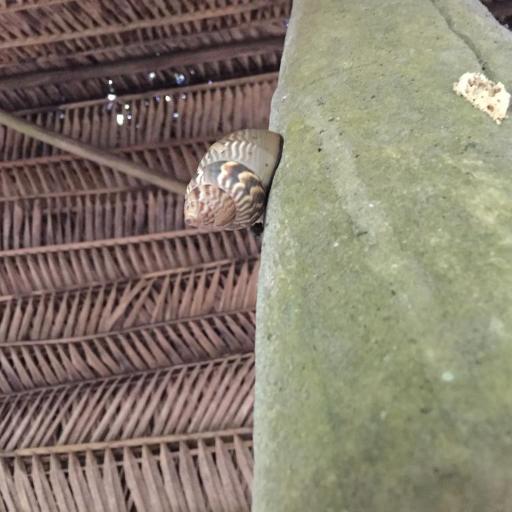
Often referred to as the Tree Snail or "Living Jewels," the Orthalicus is a stunning large land snail (not an insect!) that spends its life high above the ground. These slow-moving beauties are famous for their porcelain-like shells and are often considered the "janitors of the canopy" due to their unique diet. In folklore, their presence was once thought to indicate the health of a tropical forest.
🔍 How to Identify
- 🐚 The Shell: Features a large, pointed, conical shape. The surface is typically smooth and creamy with bold, dark brown or purple "zig-zag" stripes known as flammules.
- 🐌 The Foot: A soft, muscular, light-gray body that can retract completely into the shell. It leaves a thin, shimmering mucus trail on tree bark.
- 👁️ The Tentacles: Like most land snails, they have two pairs of stalks; the upper pair holds small eye-spots used to detect light and shadows.
🌳 Habitat & Ecology
- 🧗 Arboreal Lifestyle: Unlike common garden snails that hide in the dirt, Orthalicus lives almost exclusively on the trunks and branches of smooth-barked trees like Gumbo Limbo or Wild Tamarind.
- 🍽️ Gourmet Forager: They do not eat your garden vegetables! Instead, they use a sandpaper-like tongue (radula) to scrape microscopic algae, fungi, and lichens off the surface of tree bark.
- 💤 The Dry Sleep: During dry seasons, they perform "aestivation." They produce a specialized mucus that glues their shell firmly to a branch, allowing them to sleep for months until the humidity rises.
⚠️ Safety & Toxicity
- 🟢 Harmless: These snails are non-aggressive, non-venomous, and do not bite. They are safe to observe in the wild.
- 🛑 Conservation Alert: Many species within this genus are rare or protected by law. Because they are sensitive to environmental changes, you should never remove them from their habitat or use harsh pesticides near them.
- 🧼 Hygiene: While not toxic, like all wild mollusks, they can carry parasites. If you happen to touch one, always wash your hands thoroughly afterward.
✨ Fun Fact
The "glue" these snails use to attach themselves to trees during dry weather is incredibly strong; the bond is so powerful that the shell will often shatter before the mucus seal breaks!
More Details








