Info
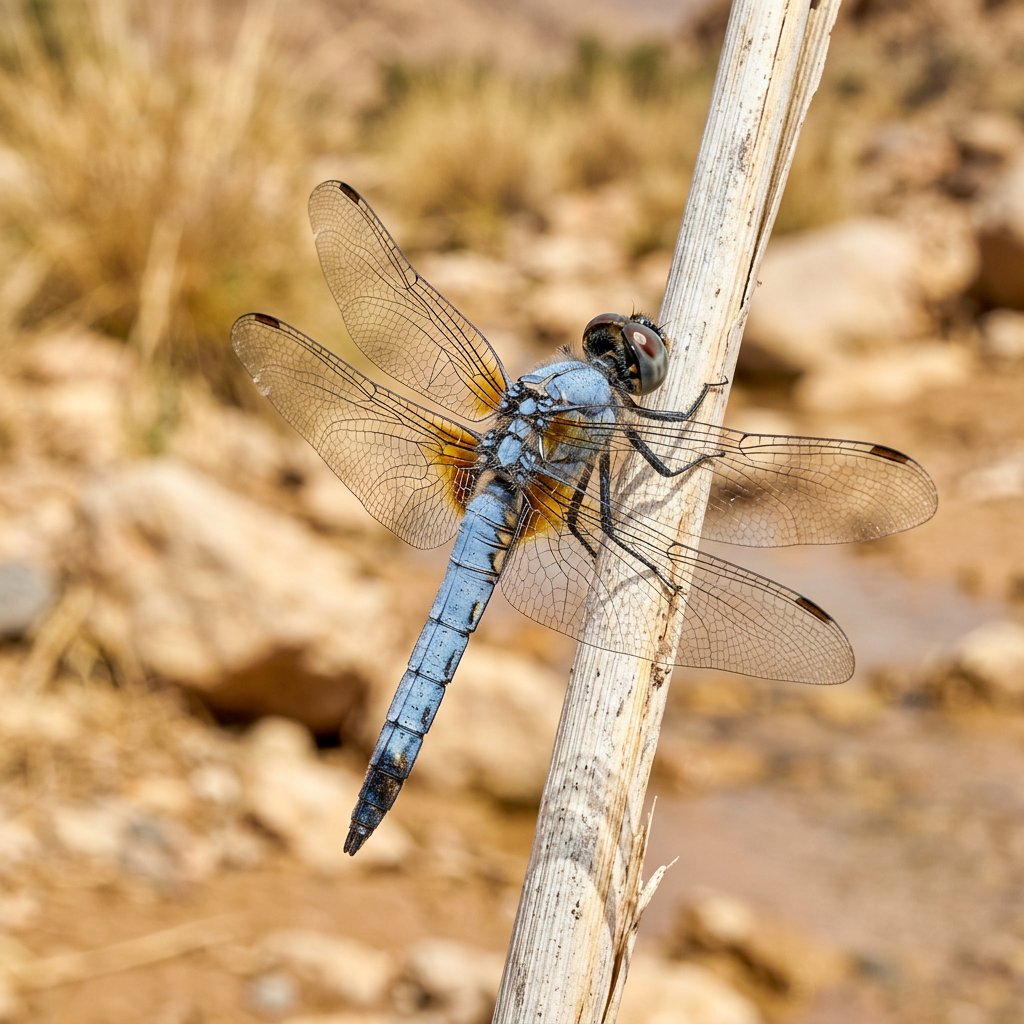
Often called the Epaulet Skimmer, this dragonfly is a sun-loving aerial acrobat found across Africa, the Middle East, and Southern Europe. While its darting flight and needle-like body might look intimidating, it is a quintessential "friend" to gardeners, acting as a master guardian that patrols the skies for pesky mosquitoes and midges.
🔍 How to Identify
- 💎 The "Blue Frost": Mature males develop a stunning, powdery-blue coating known as pruinescence over their slender abdomens, giving them a frosted appearance.
- 🎗️ The Epaulets: The name comes from the distinct pale or white vertical stripes on the sides of the thorax, which resemble military shoulder decorations (epaulets).
- 🪟 Wing Windows: The wings are mostly transparent, but look closely at the tips to see a long, dark-bordered cell called the pterostigma, which helps stabilize their flight.
- 🍂 Golden Juveniles: Unlike the blue males, females and young males are a camouflaged golden-brown with dark, intricate line-work along their bodies.
🌲 Habitat & Ecology
- ☀️ The Sun Seeker: This species is incredibly heat-tolerant. You will often find them perching on dry sticks or hot stones near ponds, streams, or even temporary rain puddles in semi-arid regions.
- 🦟 Mosquito Control: They are voracious predators with "mask-like" lower lips that can snatch prey in milliseconds. They spend their days perched on a favorite "throne" (a twig or reed), darting out to intercept flying insects before returning to the same spot.
⚠️ Safety & Toxicity
- 🛡️ Perfectly Safe: Dragonflies do not have a stinger. They are non-toxic and pose absolutely no threat to humans, cats, or dogs.
- 🤏 Pinch Warning: If you catch one and hold it by the body, it may attempt a tiny "nip" with its mandibles. It isn't venomous and rarely breaks the skin, but it’s best to admire their beauty from a distance to avoid stressing them.
✨ Fun Fact
To stay cool in the blistering midday sun, the Epaulet Skimmer performs a "handstand" known as the Obelisk Posture. It points its abdomen directly at the sun to reduce the surface area exposed to the heat, acting like its own biological parasol!
More Details








