Info
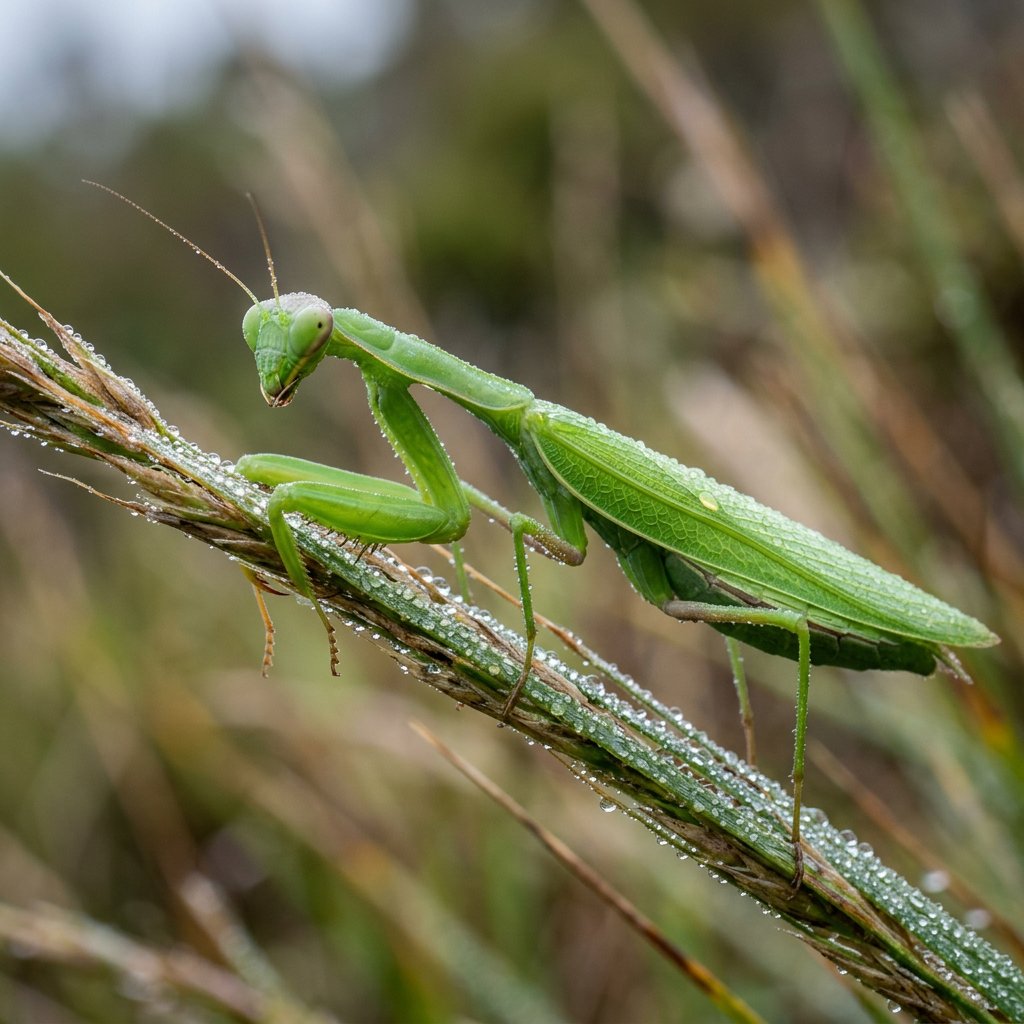
Often called the "Garden Mantis" or the "New Zealand Praying Mantis," Orthodera is the ultimate silent guardian of your flowerbeds. Unlike some of its larger, more aggressive relatives, this native beauty is a master of camouflage, blending perfectly with fresh green foliage. While its predatory "praying" stance might look intimidating, it is one of the best roommates a gardener could ask for, acting as a natural shield against pests.
🔍 How to Identify
- 🟩 The "Square" Shield: Unlike other mantis species that have long, thin "necks," Orthodera possesses a distinctive, wide, and almost square-shaped prothorax (the segment just behind the head).
- 🎨 Electric Markings: If you get a glimpse of the inside of their front "raptorial" legs, you’ll see a vivid blue or purple patch, often accented with a small black spot—a key feature used to startle predators.
- 🍃 Leaf Mimicry: They are generally a uniform, bright leaf-green with wings that lie flat and cover the entire abdomen, making them nearly invisible when perched on a matching stem.
🌲 Habitat & Ecology
- 🦗 The Ambush Expert: These insects are pure carnivores that use a "sit-and-wait" strategy. They remain motionless for hours, waiting for flies, moths, or aphids to wander within reach of their lightning-fast front legs.
- ☀️ Sun Seekers: They are diurnal (active during the day) and prefer sunny, open spots on shrubs, fences, or flowering plants where prey is most active. They are particularly fond of native bushes and garden hedges.
⚠️ Safety & Toxicity
- 🤝 Total Garden Friend: Orthodera is considered "beneficial" because it eats many common garden pests. They are not considered an invasive threat in their native ranges.
- 🚫 Non-Threatening: They have no stinger and no venom. While a very large adult might give a tiny, harmless "nip" if pinched or handled roughly, they are generally docile and safe to observe closely with children or pets.
✨ Fun Fact
Unlike many other mantis species where the female famously eats the male after mating (sexual cannibalism), the Orthodera novaezealandiae is a rare "gentle" species—the males usually survive their romantic encounters completely unscathed!
More Details








