Info
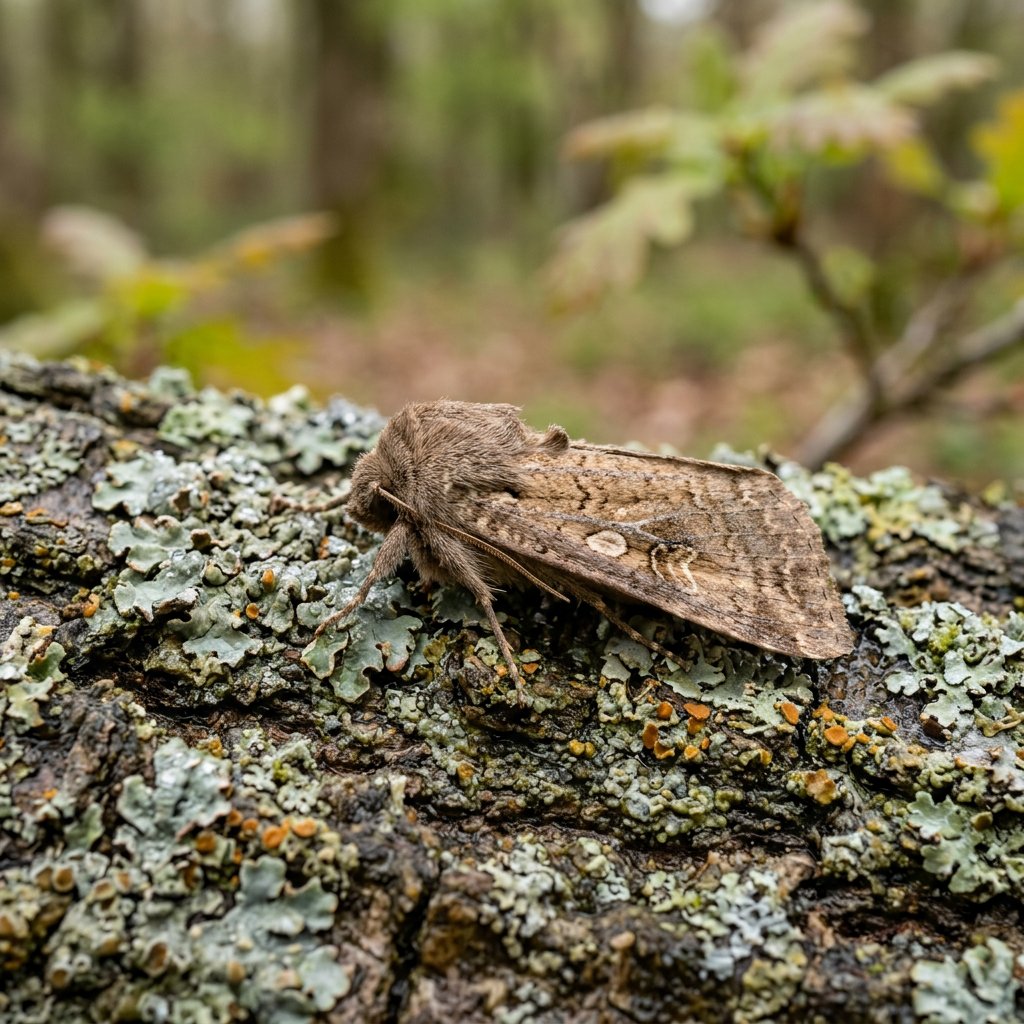
Often called the Common Quaker, this moth is one of nature’s most reliable heralds of spring. Its name comes from its modest, drab-colored wings, which early naturalists thought resembled the plain, somber clothing worn by members of the Quaker society. While it might look like a simple fallen leaf at first glance, its arrival is a celebrated sign that the garden is finally waking up from winter.
🔍 How to Identify
- 🦋 Wing Pattern: The forewings are typically a soft sandy-brown or grayish-ochre, featuring two very distinct, large spots (stigmata) outlined in a pale cream color.
- 🧸 Furry Thorax: It has a notably "hairy" or fuzzy body, which acts like a thermal coat, allowing it to remain active on chilly spring nights when other insects are still dormant.
- 🍂 Camouflage: When resting, it holds its wings in a tight "tent" shape over its body, making it nearly invisible against dried leaves or tree bark.
🌲 Habitat & Ecology
- 🥗 A Generalist Eater: The larvae are not picky; they feed on a wide variety of deciduous trees including Oak, Willow, Birch, and Hawthorn. This flexibility makes them very common in both deep forests and suburban backyards.
- 🌙 The Sallow Seeker: Adult moths are nocturnal and are famously attracted to the nectar of pussy willow (sallow) catkins. On a warm April night, you can often find dozens of them "intoxicated" by the nectar on a single flowering branch.
⚠️ Safety & Toxicity
- ✅ Harmless: The Common Quaker is a friend to the gardener and poses no threat to humans or animals.
- 🐛 Safe Caterpillars: Unlike some moth species that have irritating stinging hairs, the larvae of Orthosia cerasi are smooth and safe to handle if you happen to find one while pruning your trees.
✨ Fun Fact
The Common Quaker is a master of "shivering." Before taking flight on cold nights, it vibrates its wing muscles rapidly to generate enough internal body heat to fly—essentially a biological pre-flight warm-up!
More Details








