Info
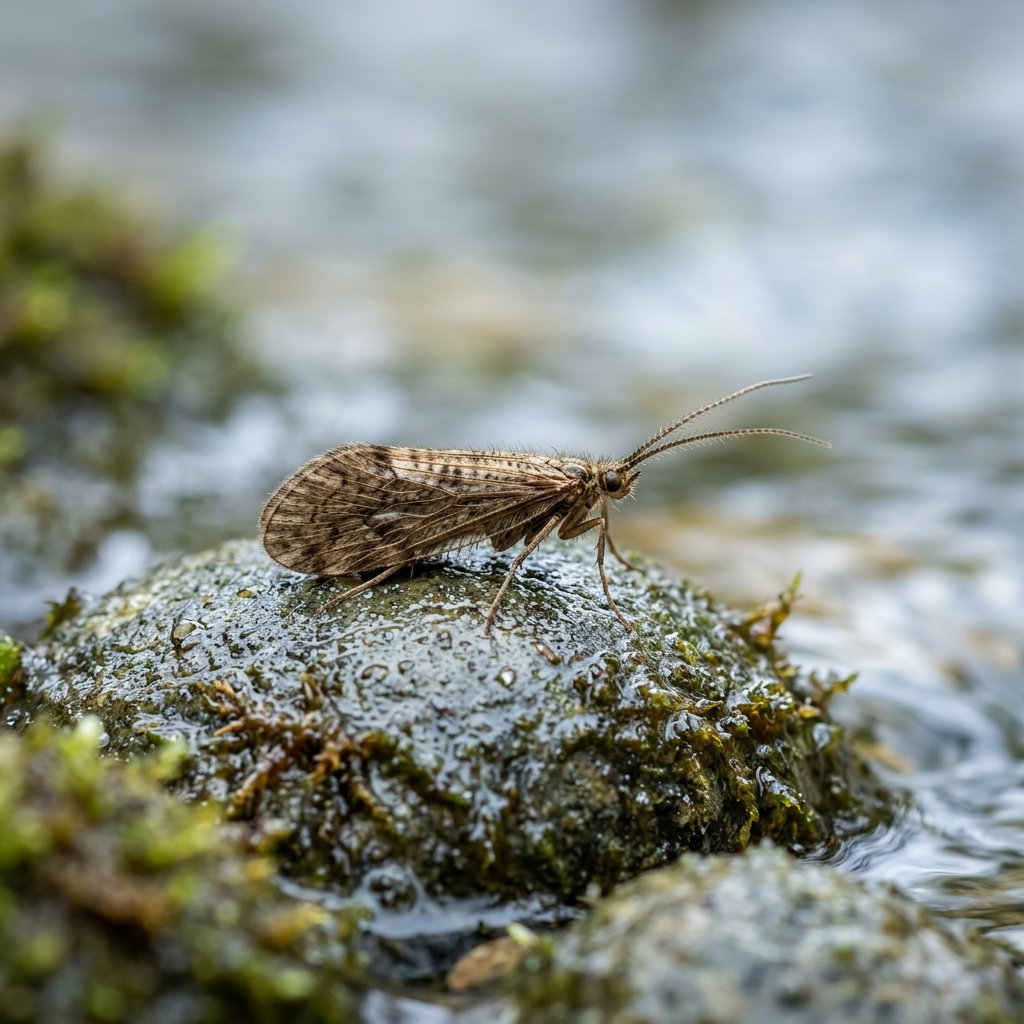
Often called "Microcaddisflies," these tiny insects are the unsung miniature residents of our freshwater ecosystems. Looking like a cross between a microscopic moth and a delicate splinter, Orthotrichia are masters of the "micro-world," often going unnoticed until they swarm near porch lights or pond edges. They are nature’s quiet indicators of a healthy, functioning aquatic environment.
🔍 How to Identify
- 📏 Microscopic Size: These are among the smallest caddisflies in the world, usually measuring a mere 2 to 4 millimeters in length—about the size of a grain of rice.
- 🦋 Hairy Wings: Unlike moths, which have scales, Orthotrichia have wings covered in fine, dense hairs. They often feature a long, silky fringe along the trailing edges.
- ⛺ The Tent Pose: When resting, they fold their wings steeply over their backs in a distinct "A-frame" or tent-like shape, hiding their body entirely.
🌲 Habitat & Ecology
- 💧 Freshwater Neighbors: You will almost always find them near the margins of lakes, slow-moving streams, or ponds. They are highly sensitive to pollution, so seeing them is a sign of good water quality.
- 🏗️ Silken Architects: The larvae live underwater and are famous for building "purse-shaped" cases made of silk. They carry these tiny, translucent homes with them as they crawl along submerged rocks and plants.
- 🥗 Algae Specialists: While the adults rarely eat, the larvae are specialized "piercer-scrapers," using sharp mouthparts to suck the nutrients out of individual filaments of algae.
⚠️ Safety & Toxicity
- 🛡️ Completely Harmless: Orthotrichia are "friends" to humans and pets alike. They do not possess any venom, stingers, or mouthparts capable of biting.
- 🌿 Plant Safe: They are not garden pests; they do not eat foliage or damage ornamental plants. They are simply passing through to find a mate and return to the water.
✨ Fun Fact
- The larvae of Orthotrichia go through a "hyper-metamorphosis." Their early stages look like tiny, free-swimming worms, but their final larval stage suddenly develops a massive abdomen and begins its career as a master silk-builder!
More Details








