Info
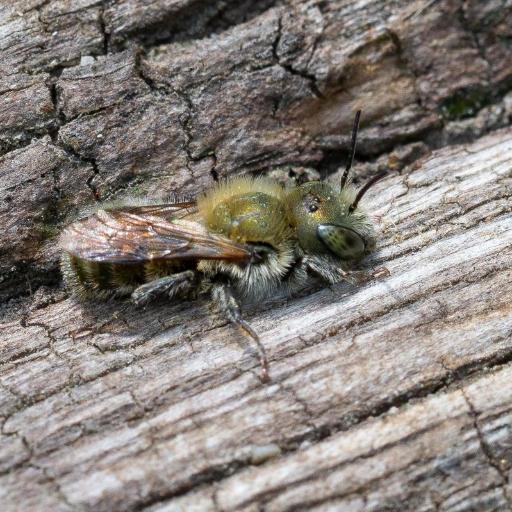
Often called the Blue Mason Bee, Osmia caerulescens is a shimmering little gem of the insect world. While most people think of bees as fuzzy and yellow-and-black, this solitary bee looks more like a piece of flying jewelry. It is an incredibly efficient pollinator, often outperforming honeybees when it comes to fruit trees and garden flowers.
🔍 How to Identify
- 💎 Metallic Sheen: The most striking feature is its dark, metallic blue-black color. Depending on the light, it can appear deep navy, violet, or even a dull greenish-bronze.
- 🐝 Stocky Build: They have a very compact, rounded body shape, making them look somewhat like a "chunky" housefly at first glance—though their behavior is much more purposeful.
- 🖌️ Pollen Brushes: Unlike honeybees that carry pollen on their legs, the females have a dense "scopa" (a brush of hairs) on the underside of their abdomen where they collect pollen.
🌲 Habitat & Ecology
- 🏠 Solitary Nesting: These bees are "mason" bees, meaning they nest in pre-existing holes in old wood, hollow stems, or specialized "bee hotels." They don’t build hives or have a queen; every female is a fertile "queen" of her own small nest.
- 🍃 Leaf Masticators: To seal their egg chambers, they use chewed-up leaves (leaf pulp) rather than mud. This creates a green, leafy "plug" at the entrance of their nesting holes.
- 🍎 Orchard Heroes: They are particularly fond of plants in the pea family (Fabaceae) and are phenomenal at pollinating fruit trees, moving quickly from flower to flower with high efficiency.
⚠️ Safety & Toxicity
- 🛡️ Non-Aggressive: This bee is extremely docile. Because they have no hive or honey to protect, they have no reason to attack. They are much safer to have around children and pets than social wasps or honeybees.
- 🩹 The Sting: Males have no sting at all. Females do have a stinger, but they will only use it if they are physically squeezed or stepped on. The sting is significantly less painful than a honeybee's and usually results in only minor, temporary irritation.
✨ Fun Fact
Unlike many bees that struggle in urban environments, the Blue Mason Bee is a "city slicker." It thrives in urban gardens and is known for being one of the first bees to move into a brand-new "bee hotel" hanging on a balcony or fence!
More Details








