Info
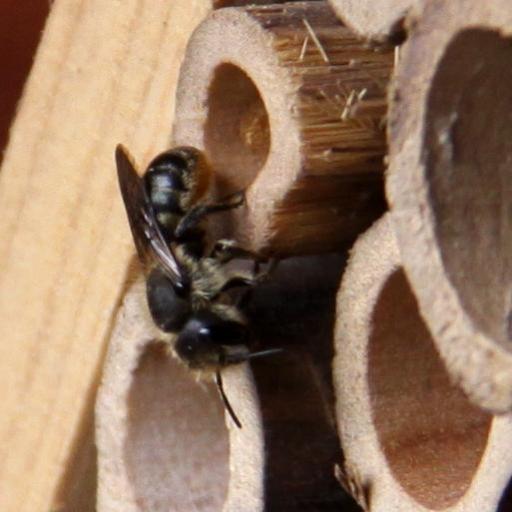
The Lea’s Mason Bee (Osmia leaiana) is a hardworking, solitary pollinator that often hides in plain sight. At first glance, you might mistake it for a common fly due to its dark, metallic body, but a closer look reveals a master architect and an essential ally for your garden. Unlike social honeybees, these bees live life alone, spending their summer days tirelessly gathering pollen and sealing their young into tiny, leaf-lined nurseries.
🔍 How to Identify
- 🪰 Metallic Sheen: Look for a dark, bronze-to-olive green metallic luster across its body, which gives it a subtle "jewel" appearance in direct sunlight.
- 🧡 The "Orange Belly": The most striking feature of the female is the bright orange brush of hairs (the scopa) on the underside of her abdomen, which she uses to transport pollen.
- 🐝 Stocky Build: They have a robust, rounded body shape that is shorter and broader than a honeybee, giving them a very "sturdy" look as they move between flowers.
🌲 Habitat & Ecology
- 🏘️ The Natural Architect: These bees don't build hives; instead, they are opportunists that nest in pre-existing holes in dead wood, hollow plant stems, or the "bee hotels" provided by gardeners.
- 🍃 Chewed-Leaf Seals: While other mason bees use mud, Osmia leaiana uses "masticated leaf"—chewed-up leaf pulp—to create the walls and the final protective plug for their nesting tubes.
- 🌸 Flower Preferences: They are particularly fond of the Asteraceae and Fabaceae families. You will frequently find them hovering around knapweeds, thistles, and bird’s-foot trefoil.
⚠️ Safety & Toxicity
- ✅ Very Low Risk: As solitary bees, they lack the "nest-defense" instinct of social wasps or honeybees. They are extremely docile and are not interested in humans.
- 🩹 The Sting: A sting is highly unlikely unless the bee is physically crushed against your skin. Even then, the sting is significantly weaker and less painful than that of a honeybee, usually resulting only in minor, temporary irritation.
✨ Fun Fact
Unlike honeybees that pack pollen into "baskets" on their legs, Lea’s Mason Bees carry dry pollen on their bellies. This makes them "messy" eaters; they drop more pollen as they move from flower to flower, which makes them much more efficient pollinators than many other bee species!
More Details








