Info
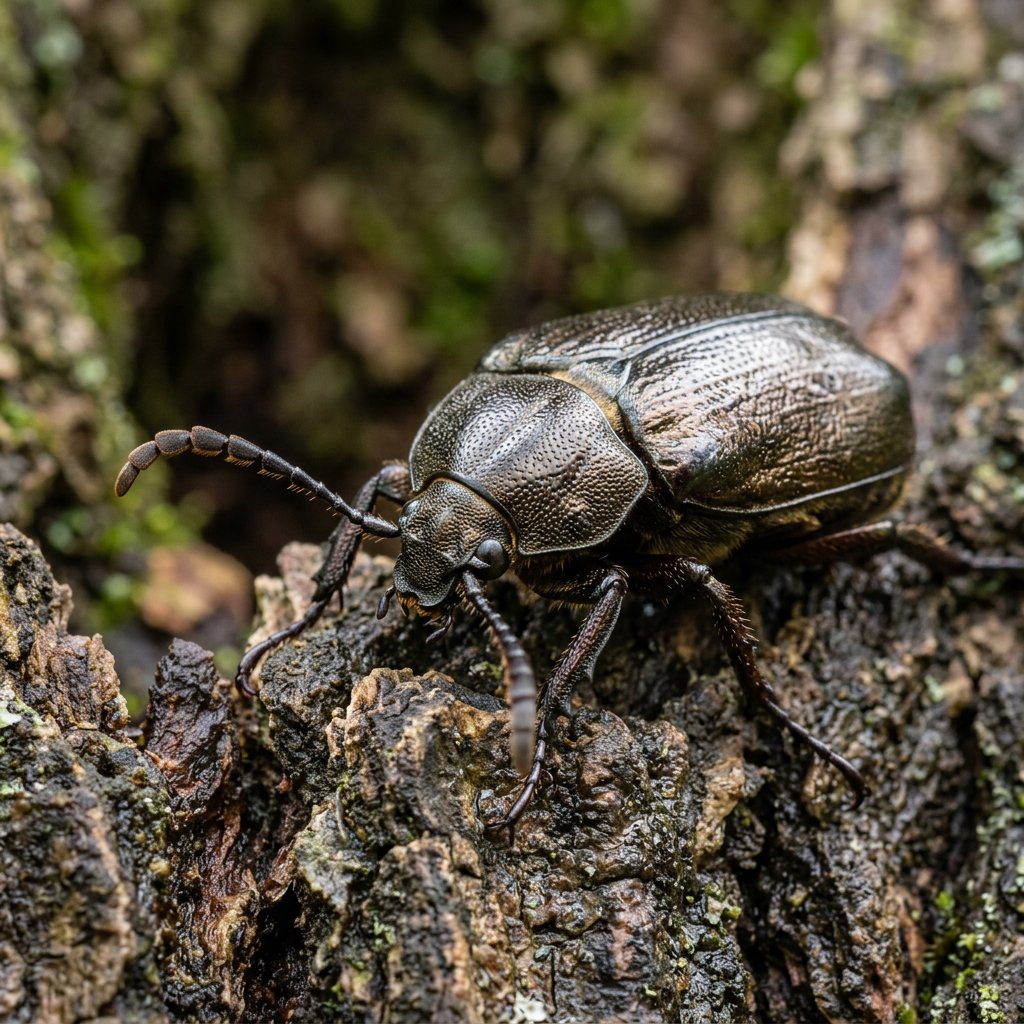
Known as the Hermit Beetle or the "Russian Leather Beetle," Osmoderma eremita is a rare and majestic inhabitant of Europe’s ancient woodlands. While you might have been looking for a plant, this beetle is so deeply tied to the life of old trees that it is often discussed alongside forest flora. It is a "relic" species, a living ghost of the primary forests that once covered the continent, and is famous for the pleasant, fruity aroma the males emit.
🔍 How to Identify
- 🪲 Size and Shape: One of Europe’s largest beetles, it has a robust, oval, and slightly flattened body that can reach up to 4 centimeters in length.
- ✨ Metallic Sheen: Its exoskeleton is typically a deep, dark mahogany or black, but it reflects a subtle bronzed or metallic luster when viewed in direct sunlight.
- 👃 The "Leather" Scent: Male beetles produce a powerful pheromone to attract females that smells remarkably like old leather, ripe apricots, or plums.
🌲 Habitat & Ecology
- 🏠 Ancient Tree Specialist: This beetle is an "obligate" inhabitant of hollow trees. It lives almost exclusively in the decaying wood mold (mulm) found inside the cavities of very old Oaks, Beeches, and Willows.
- ♻️ Forest Engineer: As larvae, they spend up to three years eating decaying wood, acting as vital recyclers that turn dead organic matter into nutrient-rich soil within the tree's hollow.
- 📍 The Homebody: They are notoriously poor flyers. A Hermit Beetle may spend its entire life within a few hundred meters of the tree where it was born, making them very sensitive to habitat loss.
⚠️ Safety & Toxicity
- 🛡️ Completely Harmless: Despite its large and somewhat intimidating size, the Hermit Beetle is a gentle giant. It has no stinger and its mandibles are not designed to bite humans.
- 🛑 Protected Status: In many European countries, it is a strictly protected species. It is "safe" for you, but you are a "danger" to it—it is often illegal to disturb or collect them, as they are a high-priority conservation species.
✨ Fun Fact
The species name eremita comes from the Greek word for "hermit" or "monk," referring to the beetle's reclusive lifestyle spent deep inside the dark "cells" of hollow trees. Scientists often use them as an "indicator species"—if the Hermit Beetle is present, it means the forest is hundreds of years old and ecologically thriving.
More Details








