Info
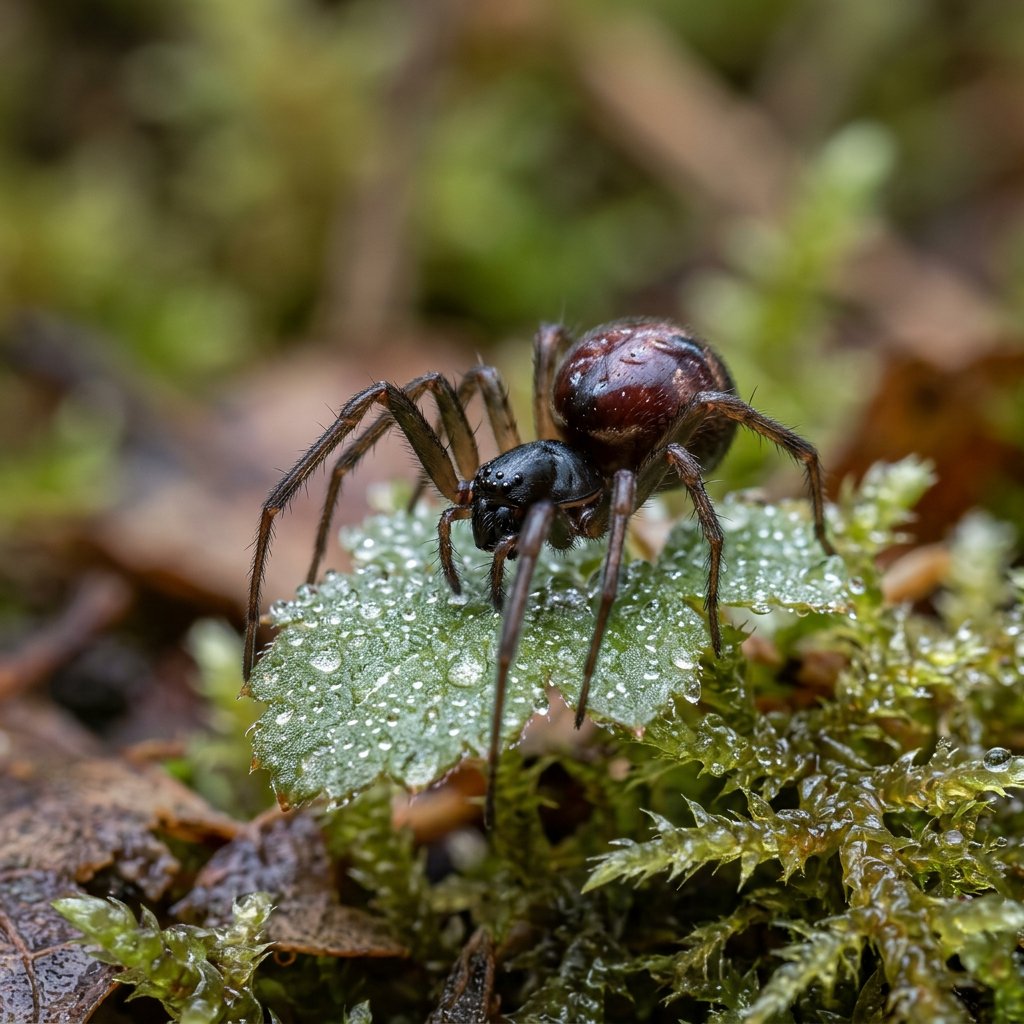
Meet the tiny traveler of the spider world, the Black-tailed Dwarf Spider. Though humble in size, this species is a master colonizer, having spread from its likely origins in South America to nearly every corner of the globe. Known for its distinct "dipped in ink" appearance, it is a common but often overlooked guest in gardens, frequently seen scurrying through mulch or floating through the air on a silken parachute.
🔍 How to Identify
- 🍑 The Signature Tail: Its most defining feature is a stark, black "tail" or spot at the very end of its otherwise pale, yellowish, or orange-red abdomen.
- 🔍 Microscopic Size: These spiders are incredibly small, usually measuring only 2 to 3 millimeters—roughly the size of a pinhead, making them easy to miss without a magnifying glass.
- 🎻 Glossy Frame: The front part of the body (cephalothorax) typically sports a shiny, reddish-brown hue that contrasts sharply with the lighter tones of its midsection.
🌲 Habitat & Ecology
- 🍂 Compost Lover: You’ll most likely encounter this spider in "disturbed" habitats—think compost heaps, garden mulch, manure piles, or damp leaf litter where it hunts tiny soil-dwelling organisms.
- 🎈 The Master Balloonist: This species is a frequent "ballooner." To move to new homes, it stands on its tiptoes, releases a strand of silk into the wind, and allows the breeze to carry it miles away, sometimes even across vast oceans.
⚠️ Safety & Toxicity
- ✅ Harmless Ally: The Black-tailed Dwarf Spider is considered entirely harmless to humans and domestic pets.
- 🐜 Natural Pest Control: Their fangs are far too small to pierce human skin; they spend their lives as "tiny lions" in your garden, keeping populations of fungus gnats and other small pests in check.
✨ Fun Fact
Because of their incredible ballooning skills, Ostearius melanopygius is often among the very first "pioneer" species to arrive and settle on brand-new islands formed by volcanic eruptions!
More Details








