Info
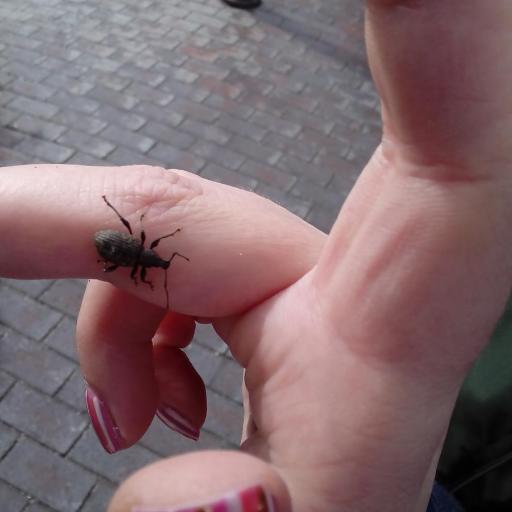
Known as the "Vine Weevil" or "Black Vine Weevil," this flightless beetle is the ultimate garden ninja. While you sleep, it crawls out from the mulch to perform a sort of "leaf origami," leaving behind distinct scalloped edges on your favorite plants. Because it cannot fly, it relies on its sturdy legs and master-level hitchhiking skills to colonize new greenhouses and gardens.
🔍 How to Identify
- 🪲 The "Snout": Like all weevils, it has a prominent, broad snout (rostrum) with distinct "elbowed" antennae attached near the tip.
- 🌑 Matte Armor: Its body is a dull, matte black or deep charcoal, featuring a rough, pitted texture on its back (elytra) often flecked with tiny patches of yellowish-gold scales.
- 🚫 Fused Wings: Its wing covers are fused together, meaning it is physically incapable of flight. If you see a similar bug flying, it isn’t a Vine Weevil!
🌲 Habitat & Ecology
- 🍽️ The Midnight Notcher: These insects are strictly nocturnal. They spend their days hiding in leaf litter or soil and climb plants at night to feed. They are notorious for eating Rhododendrons, Azaleas, Strawberries, and Yews.
- 🐛 Hidden Danger: While the adults cause cosmetic damage by "notching" leaves, the real threat is underground. Their C-shaped, creamy-white larvae live in the soil and devour plant roots, which can cause a seemingly healthy plant to suddenly wilt and die.
⚠️ Safety & Toxicity
- 🛡️ Status: Harmless to humans and pets.
- 🦶 Details: They do not bite, sting, or carry any diseases. Their only defense mechanism is "playing dead" (thanatosis); if disturbed, they will tuck in their legs and drop to the ground, mimicking a small pebble until the threat passes.
✨ Fun Fact
Every single Black Vine Weevil is a female! They reproduce through a process called parthenogenesis, meaning they don't need a mate to produce offspring. A single wandering weevil can start an entire colony all by herself.
More Details








