Info
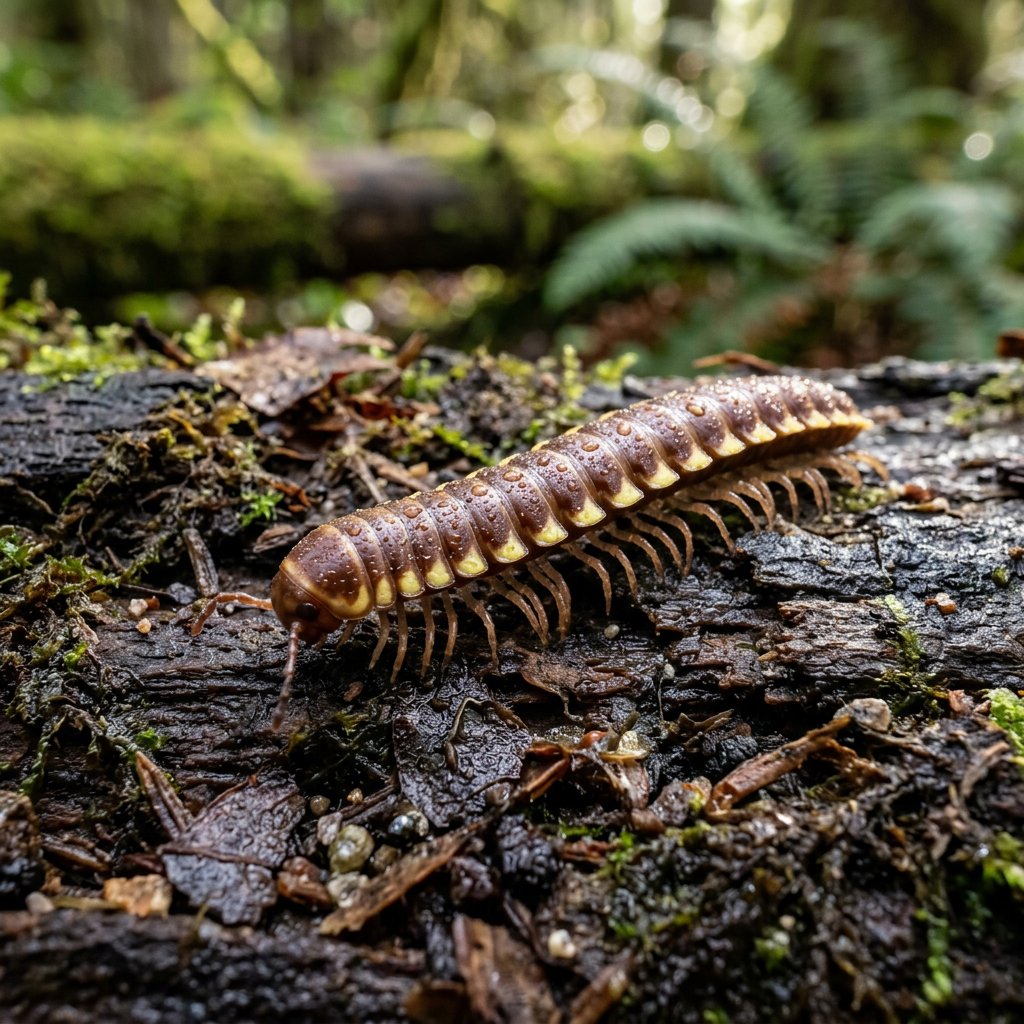
The Greenhouse Millipede (Oxidus gracilis) is a tiny, leggy architect of the soil that often hitches a ride into our homes via nursery pots. While its name might sound like a garden pest, this "world traveler" is actually a vital member of the underground cleanup crew. Originally from Asia, it has successfully spread across the globe, becoming a familiar face in gardens, greenhouses, and indoor terrariums.
🔍 How to Identify
- 🦵 The Leg Count: As a true millipede, it sports two pairs of tiny, pale legs on most of its body segments, which move in a mesmerizing, wave-like motion.
- 🍫 Polished Armor: Its body is typically a deep charcoal or chocolate brown, featuring a glossy, almost "beaded" texture that helps it glide through soil.
- 💛 Pale Shoulders: Look for distinctive cream-colored or yellowish "keels" (paranota) on the sides of each segment, giving its back a slightly flattened and serrated appearance.
🌲 Habitat & Ecology
- 🍂 Nature's Recycler: These invertebrates are detritivores, meaning they feast on decaying organic matter. They turn rotting leaves and mulch into nutrient-rich compost, acting as a natural fertilizer factory for your plants.
- 💧 Moisture Seekers: Because they lack a waxy waterproof coating on their shells, they are highly sensitive to drying out. You will mostly find them under damp mulch, stepping stones, or nestled in the drainage holes of ceramic pots.
⚠️ Safety & Toxicity
- 🛡️ Gentle Nature: The Greenhouse Millipede is a "friend" to gardeners. They do not bite, sting, or carry diseases, and they pose no threat to the structural integrity of your home.
- 👃 Chemical Defense: When startled or crushed, they can release a tiny puff of hydrogen cyanide gas as a defense mechanism. While harmless in such small amounts, it has a faint "bitter almond" scent and can cause mild skin irritation or staining if handled roughly.
✨ Fun Fact
- 🌏 The Ultimate Hitchhiker: Thanks to the global plant trade, Oxidus gracilis is now considered the most widely distributed millipede species on Earth, having successfully colonized every continent except Antarctica!
More Details








