Info
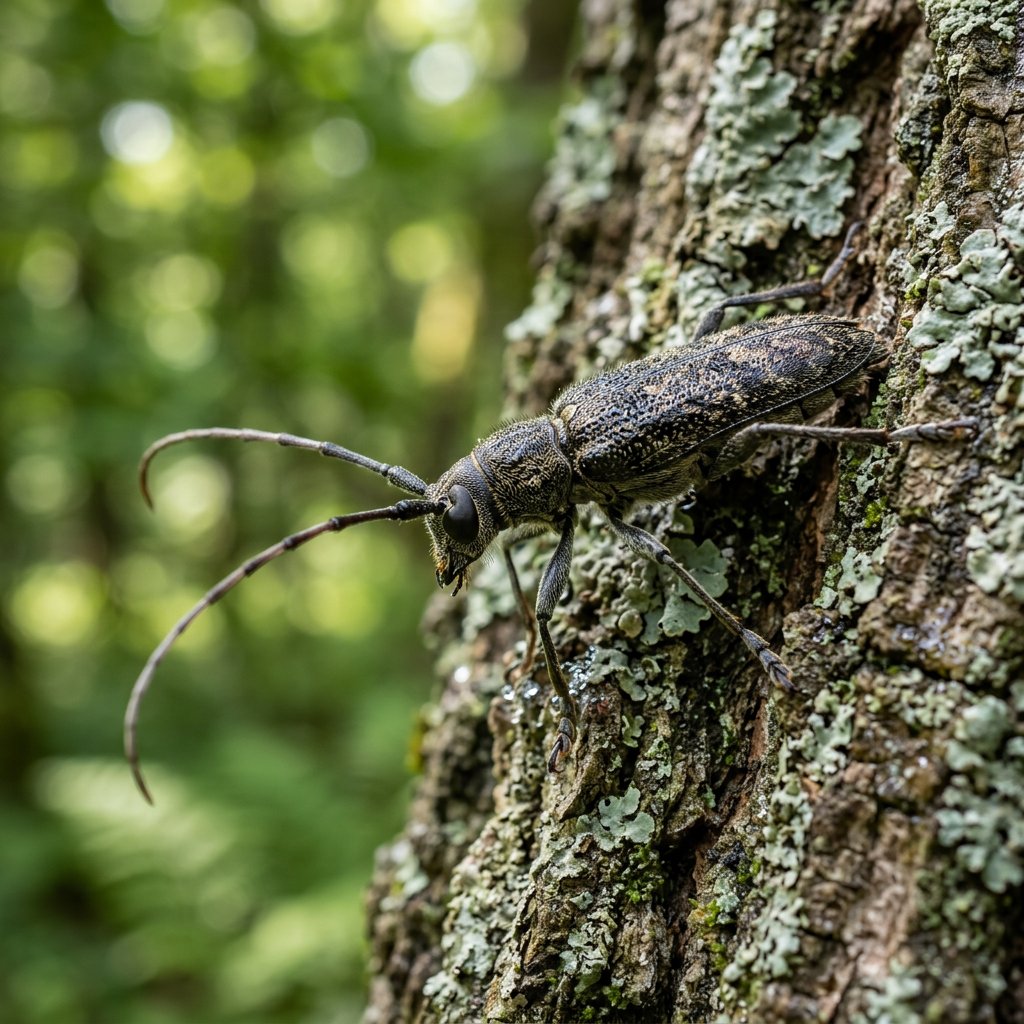
Known as the Variable Longhorn Beetle, this sleek insect is a master of the forest floor and a dedicated recycler of nature. With its elegant, sweeping antennae and "racing-stripe" patterns, it looks like it’s built for high speed—which explains its Latin name cursor, meaning "runner." While its long antennae might look intimidating to some, this beetle is a peaceful woodland inhabitant that plays a vital role in breaking down old timber.
🔍 How to Identify
- 🪲 The "Long Horns": True to its family name, it sports impressive, segmented antennae that sweep backward, often reaching more than half the length of its body.
- 🏎️ Racing Stripes: Most individuals feature two distinct, light-colored (reddish or tan) stripes running vertically down their dark, leathery wing covers (elytra).
- 📏 Slender Profile: It has a notably elongated and flattened body shape compared to rounder garden beetles, typically measuring between 15mm and 30mm.
🌲 Habitat & Ecology
- 🪵 The Great Recycler: You will primarily find this beetle in coniferous or mixed forests. Its larvae are specialized "wood-eaters," living inside moist, decaying stumps of pine, spruce, or even birch trees, helping to turn dead wood into soil.
- 🌸 Sun-Seeker: While the larvae stay hidden in wood, the adults are active during the day. You can often spot them sunbathing on foliage or visiting flowers to fuel up on nectar and pollen.
⚠️ Safety & Toxicity
- 🛡️ Friendly Forest-Dweller: This beetle is entirely harmless to humans and pets. It does not sting, and it carries no venom or toxic chemicals.
- 🤏 Gentle Handling: Like most beetles with strong mandibles for wood, it may give a tiny, harmless pinch if squeezed tightly, but it prefers to use its "cursor" legs to simply run away from trouble.
✨ Fun Fact
The Oxymirus cursor is a master of "Variable" fashion! Depending on where you find it, its colors can range from almost entirely jet-black to a bright, warm chestnut. This color variation helps it blend perfectly into the specific types of bark and leaf litter found in its local forest.
More Details








