Info
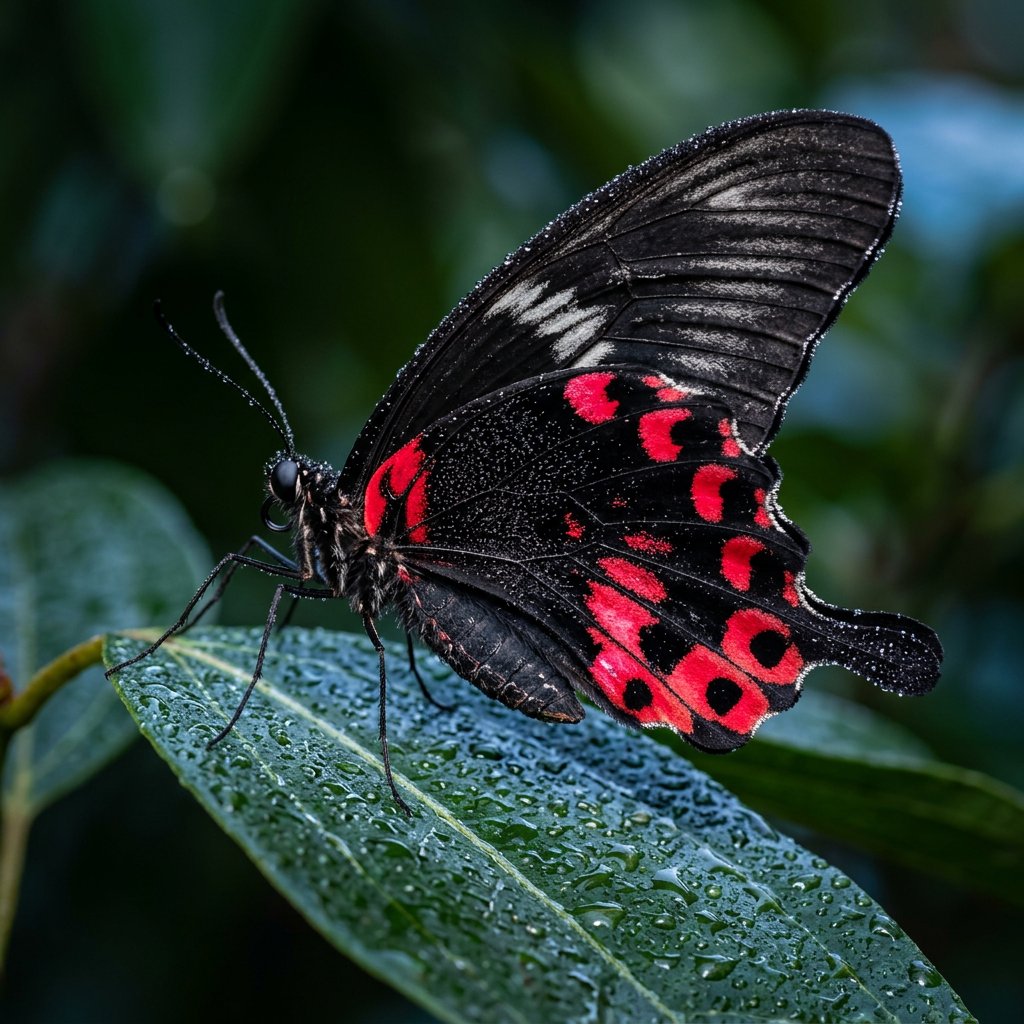
Often called the Crimson Rose, this butterfly is one of the most striking jewels of the South Asian landscape. With its velvety black wings splashed with deep, blood-red spots, it looks like a piece of living silk fluttering through the air. In folklore, its bold colors are often seen as a symbol of passion and protection, warning all who watch that beauty can sometimes be formidable.
🔍 How to Identify
- 🦋 The Wings: Broad, velvety black forewings featuring a distinctive diagonal band of white spots, while the hindwings are decorated with two rows of bright crimson "roses."
- 🔴 The Body: A signature feature is its vivid red abdomen; while most butterflies have muted body colors, the Crimson Rose proudly displays its "warning" colors even on its torso.
- 📍 The Tails: As a member of the Swallowtail family, it possesses elegant, slender tails on the hindwings that help stabilize its powerful, rhythmic flight.
🌲 Habitat & Ecology
- 🍃 Chemical Defense: As a caterpillar, it feeds exclusively on Aristolochia (Birthwort) vines. These plants contain toxic aristolochic acids which the insect stores in its body, making the adult butterfly poisonous to birds and lizards.
- 🌺 Pollination Power: They are active flyers and frequent visitors to garden favorites like Lantana, Hibiscus, and Jasmine. Interestingly, they are known for "gregarious roosting," where dozens of individuals gather to sleep on the same tree branch at night for safety in numbers.
⚠️ Safety & Toxicity
- ✅ Harmless to Humans: The Crimson Rose is a "gentle giant" of the insect world. It does not bite or sting, and its presence in a garden is a sign of a healthy ecosystem.
- 🚫 Toxic if Ingested: While perfectly safe to watch or have land on you, they are chemically protected. If a curious pet or a young child were to ingest the butterfly, the toxins could cause nausea or digestive upset. Nature’s bright red paint is a "Do Not Eat" sign!
✨ Fun Fact
The Crimson Rose is so well-protected by its internal toxins that other "tasty" butterflies, like the female Common Mormon, have evolved to mimic its exact wing patterns. This biological "identity theft" tricks predators into thinking the harmless mimic is actually a poisonous Crimson Rose!
More Details








