Info
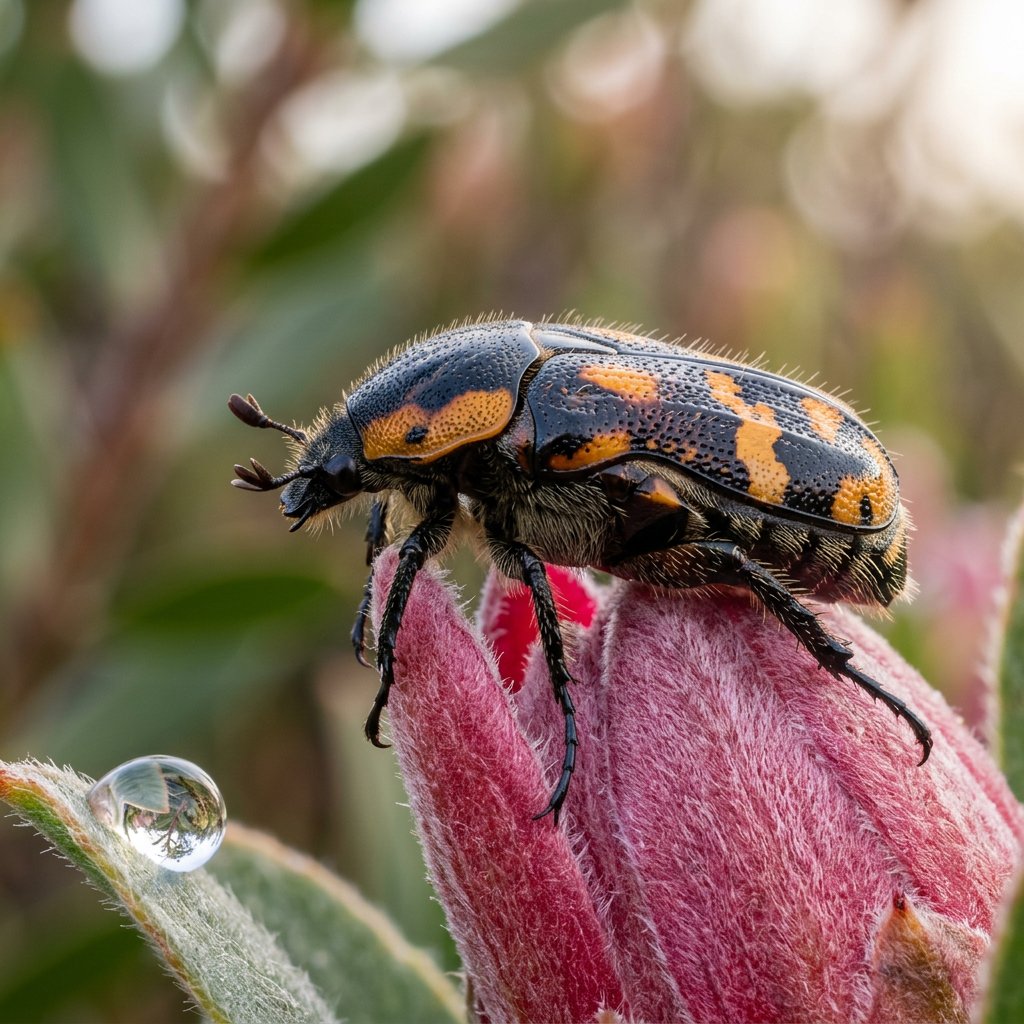
Known as the Garden Fruit Beetle or the Yellow-bellied Fruit Beetle, this vibrant insect is a common sight in sun-drenched gardens across Southern Africa. Often mistaken for a large bee due to the loud, heavy droning sound it makes while flying, this beetle is a harmless—if slightly greedy—guest that treats your backyard like an all-you-can-eat fruit buffet.
🔍 How to Identify
- 🎨 The Pattern: They sport a matte, olive-green to black back with bold, sunshine-yellow or orange bands along the edges and a distinct "U" or "V" shape in the center.
- 🛡️ Body Shape: They have a robust, oval, and slightly flattened shield-like body, typically growing to about 25mm (1 inch) in length.
- 🟡 The Belly: If you flip one over (carefully!), you’ll see a bright yellow or cream-colored underside, which is a key identifying mark for this specific species.
🌲 Habitat & Behavior
- 🍑 The Diet: These beetles are obsessed with sugar. You will most likely find them buried deep inside overripe peaches, roses, or even sipping fermented sap from wounded trees.
- 🪱 Compost Kings: While the adults eat your flowers, their larvae (large, white, C-shaped grubs) are actually beneficial. They live in soil or compost heaps, where they work tirelessly to break down decaying organic matter into rich soil.
- ☀️ Sun Seekers: They are strictly diurnal (active during the day). You’ll see them most active during the hottest hours of the afternoon, buzzing between blooms and fruit trees.
⚠️ Safety & Toxicity
- ✅ Status: Completely harmless to humans and pets.
- 👐 Details: They possess no stinger and their mouthparts are designed for soft fruit, not biting skin. If they feel threatened, they may release a smelly, brownish liquid as a defense mechanism or simply "play dead" by dropping to the ground and tucking in their legs.
✨ Fun Fact
Unlike most beetles that have to lift their hard outer wing covers (elytra) to fly, the Garden Fruit Beetle keeps its "armor" closed! It has special side-notches that allow its flight wings to slip out and flap while the hard covers remain tucked in for better aerodynamics.
More Details








