Info
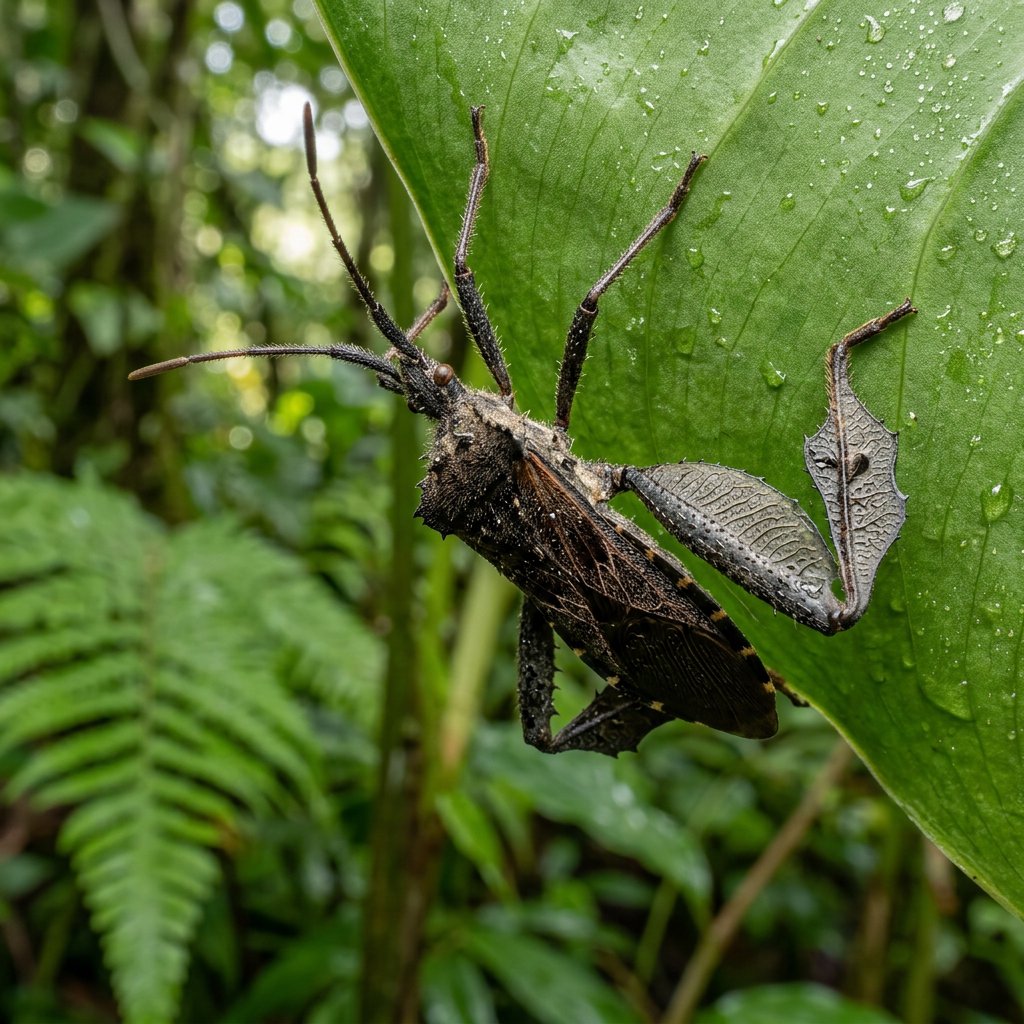
The Pachylis nervosus is a true heavyweight of the insect world, often looking like a miniature, armored tank wandering through the garden. A prominent member of the Leaf-footed bug family (Coreidae), these insects are named for the dramatic, leaf-like expansions on their hind legs. While their large size and prehistoric appearance might seem intimidating, they are slow-moving sap-suckers that prefer the quiet life among the stems.
🔍 How to Identify
- 🦵 Paddle Legs: The most striking feature is the wide, flattened flare on the hind legs (tibiae), which looks like a small, dried leaf or a structural "fin."
- 🎨 Segmented Antennae: They possess long, sturdy antennae with distinct orange or pale-colored bands near the tips, contrasting against their dark bodies.
- 🛡️ Rugged Exterior: The body is broad and shield-shaped, usually a dusty charcoal or deep brown, covered in a network of fine, vein-like textures that give the species its name (nervosus).
🌲 Habitat & Ecology
- 🍴 Host Plants: You will typically find these bugs on leguminous trees and shrubs, where they use their long "beaks" to pierce stems and seed pods to drink plant juices.
- 👪 Social Nymphs: The young (nymphs) are often much more colorful than the adults, appearing in bright shades of red or orange. They stay in tight-knit groups for protection, creating a "flash" of color to ward off birds.
⚠️ Safety & Toxicity
- 🛡️ Harmless to Humans: Pachylis nervosus is not aggressive and does not possess a stinger. Their mouthparts are designed for plants, not skin, so they do not bite humans or pets.
- 👃 Stink Defense: Like many of their relatives, they can release a pungent, foul-smelling chemical if they feel squeezed or threatened. This "stink" is their primary defense against being eaten, so it is best to admire them without picking them up.
✨ Fun Fact
Scientists believe the "flares" on their back legs act as a clever decoy; when a bird or lizard attacks, it often goes for the expendable, leaf-like leg flap rather than the bug's vital head or body, allowing the insect to escape with its life!
More Details








