Info
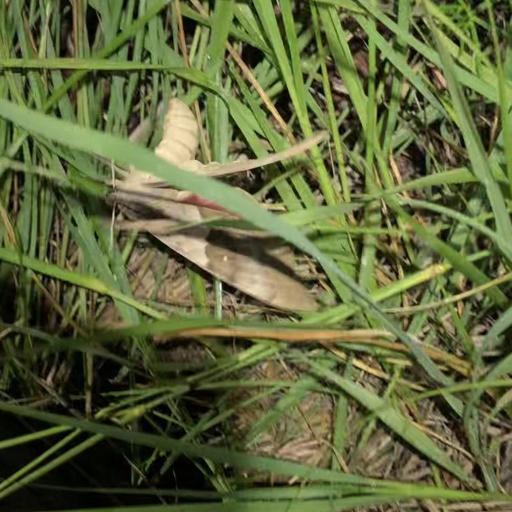
The Western Poplar Sphinx is a true "gentle giant" of the moth world. Often mistaken for a clump of dried, serrated leaves, this massive insect is one of the largest moths found in Western North America. While its camouflage is nearly perfect, it hides a startling secret: a brilliant flash of rose-pink wings hidden beneath its drab exterior.
🔍 How to Identify
- 🦋 Impressive Wingspan: These moths are heavy-bodied and large, with a wingspan that can reach up to 5 or 6 inches, making them hard to miss when they land.
- 🍂 Cryptic Forewings: The front wings are shades of tan, gray, and wood-brown with deeply scalloped edges, allowing the moth to blend perfectly into the bark of a Poplar tree.
- 💖 The "Startle" Patch: If disturbed, the moth shifts its front wings to reveal a vibrant splash of pink or crimson on the hindwings, a defense mechanism meant to confuse predators.
- 🐛 The Larva: The caterpillar is a large, lime-green "hornworm" with white diagonal stripes and a small, characteristic horn on its tail end.
🌲 Habitat & Ecology
- 💧 Water Seekers: You will almost always find these moths near water sources—rivers, streams, or irrigated gardens—because that is where their favorite host trees grow.
- 🌳 Tree Specialists: They are ecologically tied to Salicaceae family trees, specifically Cottonwoods, Willows, and Poplars. The caterpillars are voracious leaf-eaters but rarely do enough damage to hurt a healthy tree.
- 🌙 Nighttime Navigators: Like many sphinx moths, they are nocturnal. You are most likely to spot them resting near porch lights or on the sides of buildings at dawn, waiting for the sun to go down again.
⚠️ Safety & Toxicity
- 🛡️ Status: Completely harmless to humans and pets.
- 🐾 Details: The Western Poplar Sphinx does not bite, sting, or carry any venom. Even the "horn" on the caterpillar is soft and fleshy, intended only to look intimidating to birds. They are safe to observe closely or gently relocate if they land somewhere inconvenient.
✨ Fun Fact
- ⏳ Living on Borrowed Time: Adult Western Poplar Sphinx moths have no functioning mouthparts and cannot eat. They live for only about a week or two, fueled entirely by the energy they stored as caterpillars, with the sole mission of finding a mate.
More Details








