Info
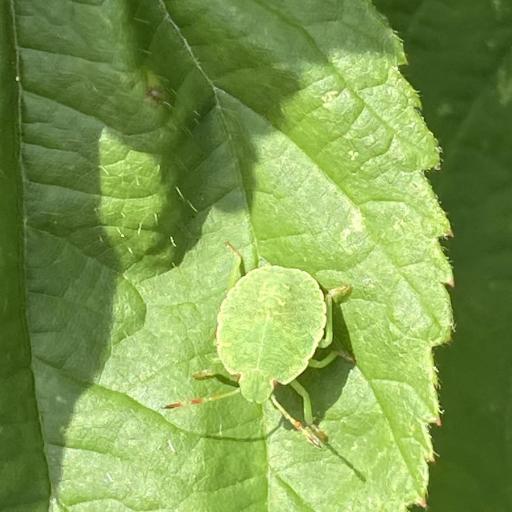
Known as the Green Shield Bug, this master of camouflage is one of the most common sights in European gardens. Often mistaken for a leaf due to its vibrant emerald color, it is a harmless sap-sucker that transitions through a dramatic "wardrobe change" as the seasons turn. While it belongs to the "stink bug" family, it is far more of a quiet garden resident than a household pest.
🔍 How to Identify
- 🛡️ Shield Shape: It features a broad, flat, pentagonal body that perfectly mimics the shape of a medieval knight’s shield.
- 🎨 Seasonal Color: During the summer, it is a uniform, bright grass-green. In autumn, its color shifts to a dark bronze or reddish-brown to blend in with falling leaves.
- 🕳️ Fine Punctures: If you look closely, the entire upper surface is covered in tiny, dark pits (punctures), giving it a slightly textured, matte appearance.
🌲 Habitat & Ecology
- 🍽️ The Sap Diet: It uses a needle-like beak to pierce the skin of fruits and leaves, particularly favoring hazel, alder, and various garden shrubs. While they can occasionally cause "pitting" on apples or berries, they are rarely considered a major agricultural threat.
- ☀️ Sun Bathing: You will most likely spot them on the upper surface of leaves during warm, sunny afternoons, as they require solar heat to stay active and mobile.
⚠️ Safety & Toxicity
- 🛡️ Defense Mechanism: They are completely non-toxic and do not bite or sting. However, like all shield bugs, they possess "stink glands" that release a pungent, sour-smelling fluid if they are squashed or feel threatened.
- 🐕 Pet Safety: While not dangerous to curious cats or dogs, the foul-smelling secretion is incredibly bitter. A pet that tries to "taste" one will likely react with heavy drooling or face-pawing due to the unpleasant flavor.
✨ Fun Fact
The Green Shield Bug’s color change is not just a trick of the light; it is a physiological response to shorter days. This "hibernation suit" helps them survive the winter hidden in ivy or leaf litter, only for them to turn bright green again once they emerge in the spring!
More Details








