Info
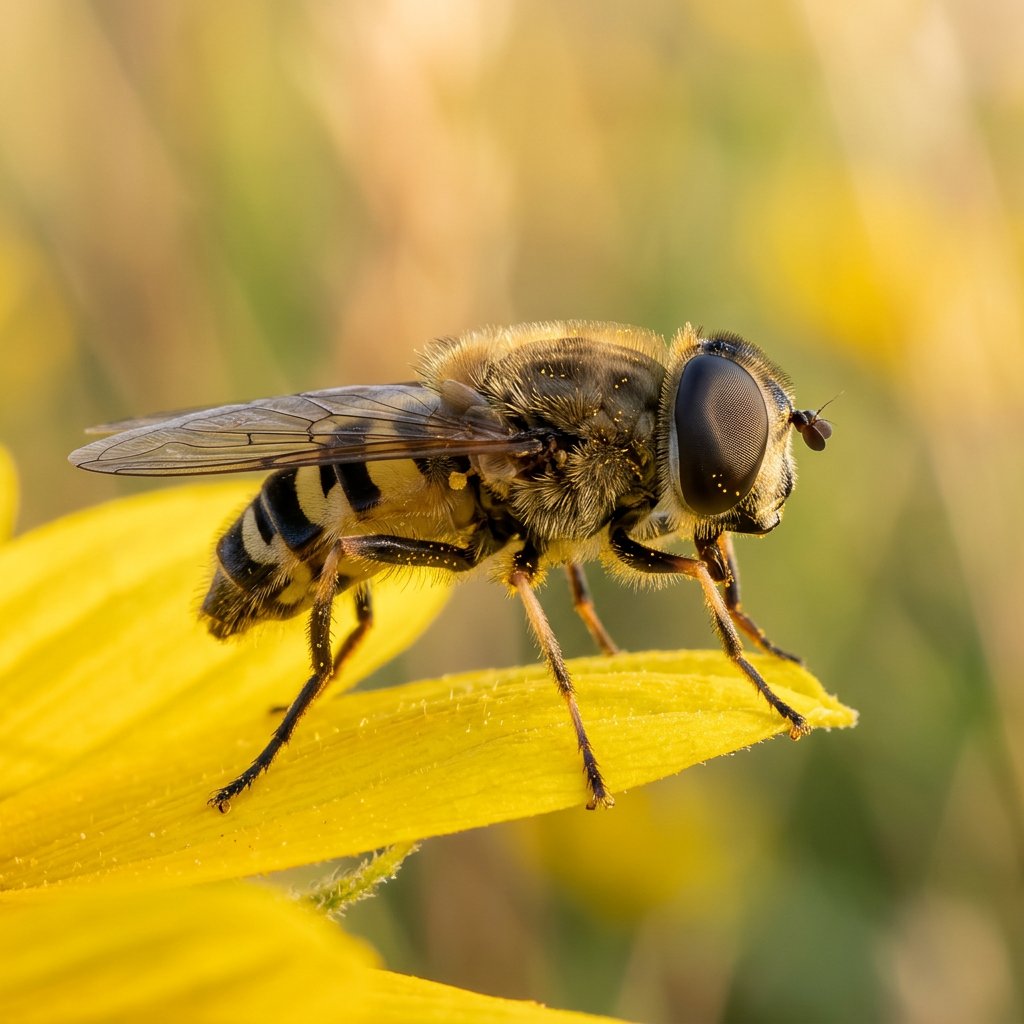
The Palpada pusilla is a master of disguise, often mistaken for a honeybee or a small wasp as it zips through sun-drenched flower beds. Known as a type of Hoverfly or Flower Fly, this tiny actor uses its bright golden-and-black "costume" to trick predators into thinking it packs a punch. In reality, it is a gentle, stingless guest that plays a vital role in keeping your garden productive and beautiful.
🔍 How to Identify
- 👀 The Eyes: Large, wrap-around compound eyes that dominate the head, a classic feature of flies that distinguishes them from the smaller, side-set eyes of bees.
- ✈️ The Hover: Remarkable flight control that allows them to remain perfectly stationary in mid-air—like a tiny helicopter—before darting away in a blur.
- 🐝 The Pattern: A teardrop-shaped abdomen featuring bold yellow or orange bands against a dark background, mimicking the warning colors of social wasps.
🌲 Habitat & Ecology
- 🌼 The Nectar Bar: Adult Palpada pusilla are frequent visitors to open-faced flowers. They are particularly fond of composite flowers like daisies and asters, where they feast on nectar and protein-rich pollen.
- 💧 A Murky Beginning: Unlike many garden insects, their larvae are "rat-tailed maggots." They live in stagnant, nutrient-rich water or damp organic matter, acting as tiny recyclers that break down decaying material.
- 🌎 Warmth Seekers: These flies are most common in the southern United States, Central America, and South America, thriving in warm, humid environments where flowers are abundant.
⚠️ Safety & Toxicity
- 🛡️ Status: Completely harmless "Sheep in Wolf's Clothing."
- 🚫 No Stinger: Despite their convincing wasp-like appearance, they possess no stinger and do not bite. They are a "high-reward, zero-risk" insect for any gardener.
- 🐶 Pet Friendly: They pose no threat to curious cats or dogs. If a pet "catches" one, the fly’s only defense is its speed and its deceptive look.
✨ Fun Fact
The larvae of this fly are world-class divers! They use a long, telescopic breathing tube (the "rat tail") that acts exactly like a snorkel, allowing them to breathe air from the surface while their bodies remain submerged in muddy, oxygen-poor water.
More Details








