Info
Often called the Common Rain Spider, Palystes superciliosus is one of Africa’s most misunderstood residents. While its impressive size and hairy legs can be intimidating, this spider is more of a shy guardian than a household threat. Locally, they are famous for their habit of entering homes just before a storm, earning them their "rainy" nickname.
🔍 How to Identify
- 🦵 Banded Legs: Look for distinct black and white bands on the underside of the legs, which become visible when the spider raises its front limbs in a defensive "display."
- 🧔 The White Mustache: They feature a prominent white line of hairs just above their fangs (chelicerae), giving them a distinguished, mustachioed appearance.
- 📏 Size & Scale: These are large spiders; including their legs, they can easily span the size of a human palm, with a mottled brown or grey body that provides perfect camouflage on tree bark.
🌲 Habitat & Ecology
- 🏠 The Indoor Guest: While they prefer scrublands and forests, they frequently wander into houses to hunt or escape the elements. They don't spin webs to catch prey; instead, they are active "pursuit predators" that run down their meals.
- 🦎 A Diverse Diet: As a valuable part of the ecosystem, they keep populations of large moths, crickets, and even small lizards or geckos in check.
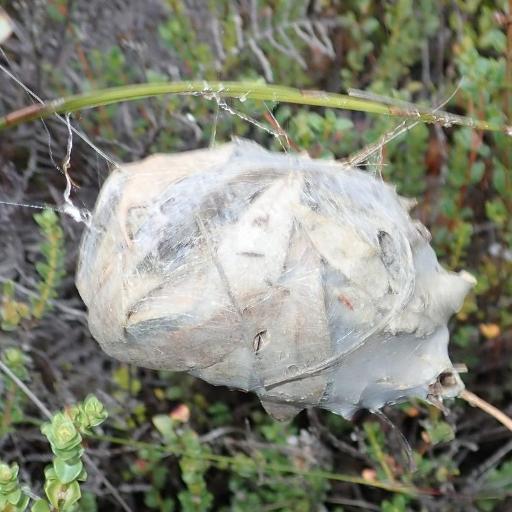
- 🧶 The Silk Nursery: Females build a large, round egg sac out of silk and woven leaves, which they guard fiercely for several weeks until the spiderlings hatch.
⚠️ Safety & Toxicity
- 🛡️ Not Medically Significant: While they are venomous (as almost all spiders are), their venom is not dangerous to humans. A bite is generally no worse than a common bee sting.
- 🚫 Defensive, Not Aggressive: They will only bite if squeezed or if a female is defending her egg sac. If you find one inside, the best approach is to gently usher it into a container and move it outdoors.
- 🐱 Pet Safety: While unlikely to be fatal, a bite can cause localized swelling or discomfort for small dogs or cats, so it's best to keep curious pets away.
✨ Fun Fact
Despite their scary appearance, Rain Spiders are incredibly devoted mothers. A female will cling to her silk egg sac for up to three weeks without eating, fiercely protecting her future offspring from predators like wasps and birds.
More Details








