Info
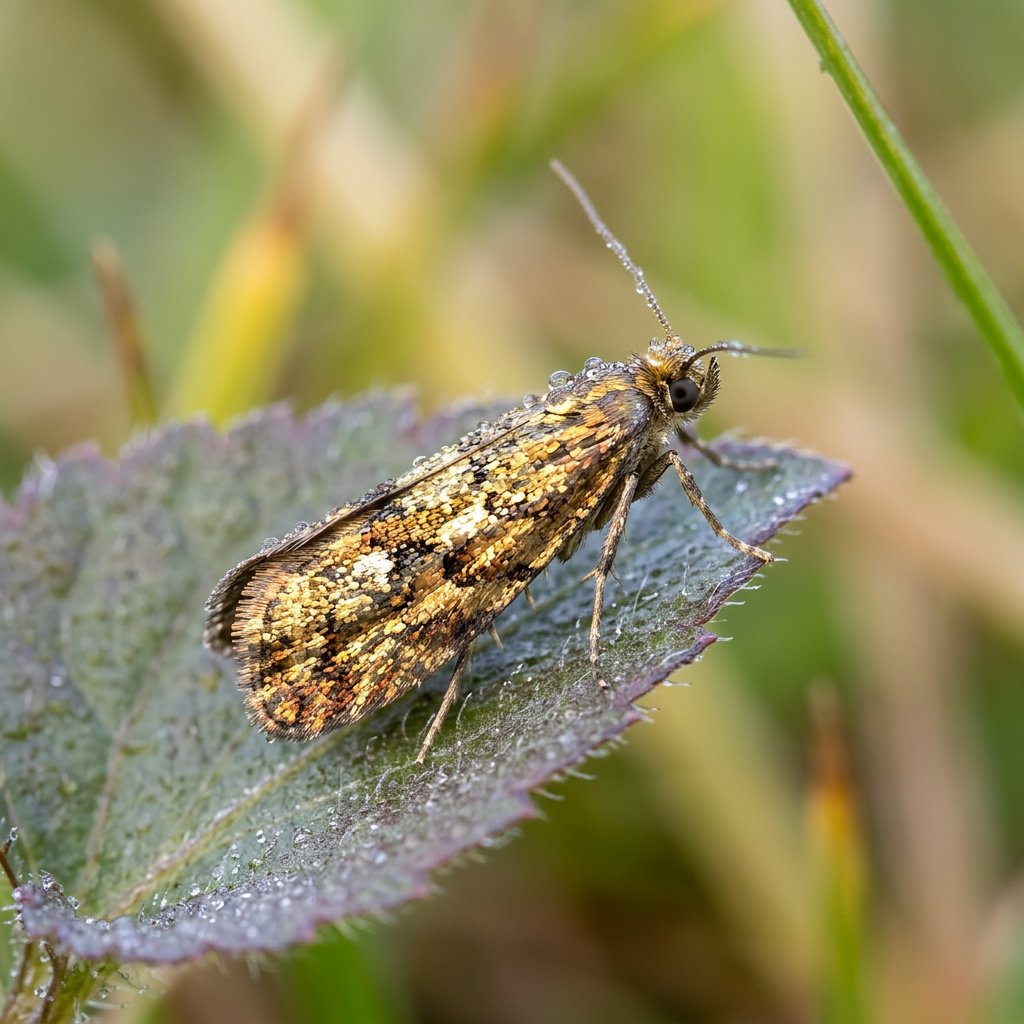
Often referred to as the "Bronze Moths," members of the Pancalia genus are like living jewelry for your garden. These tiny, day-flying moths are often mistaken for small beetles or flies because of their brilliant metallic sheen, but a closer look reveals a delicate, sophisticated insect that plays a quiet role in the meadow ecosystem. They are most famous for their exclusive relationship with wild violets, where their life cycle begins.
🔍 How to Identify
- ✨ Metallic Wings: Their forewings are a stunning deep bronze or coppery-gold, which glints brightly when they catch the sunlight during mid-day flights.
- 🏁 Antennal Markings: A key giveaway is their dark, thickened antennae, which often feature a distinct white band near the tips, looking like tiny signal flags.
- 📏 Diminutive Size: They are incredibly small, usually with a wingspan of only 10–12mm, making them easy to miss unless you are looking closely at low-growing herbage.
🌲 Habitat & Ecology
- 🌸 The Violet Connection: These moths are "specialists." Their larvae (caterpillars) feed almost exclusively on the leaves or seed pods of wild violets (Viola species), often mining into the stems as they grow.
- ☀️ Sun-Lovers: Unlike most moths that hide during the day, Pancalia are heliophilic (sun-loving). You will find them most active in dry grasslands, chalk downs, or woodland clearings during bright, warm afternoons in late spring.
⚠️ Safety & Toxicity
- ✅ Harmless Friend: These moths are completely harmless to humans and pets. They do not bite, sting, or carry diseases.
- 🌿 Garden Neutral: While the larvae eat violet leaves, they rarely occur in high enough numbers to cause noticeable damage to ornamental plants, making them a "neutral" and welcome sign of a healthy local ecosystem.
✨ Fun Fact
One of the most common species, Pancalia leuwenhoekella, was named in honor of Antonie van Leeuwenhoek, the Dutch scientist known as the "Father of Microbiology," who was the first to document many microscopic wonders of the natural world!
More Details








