Info
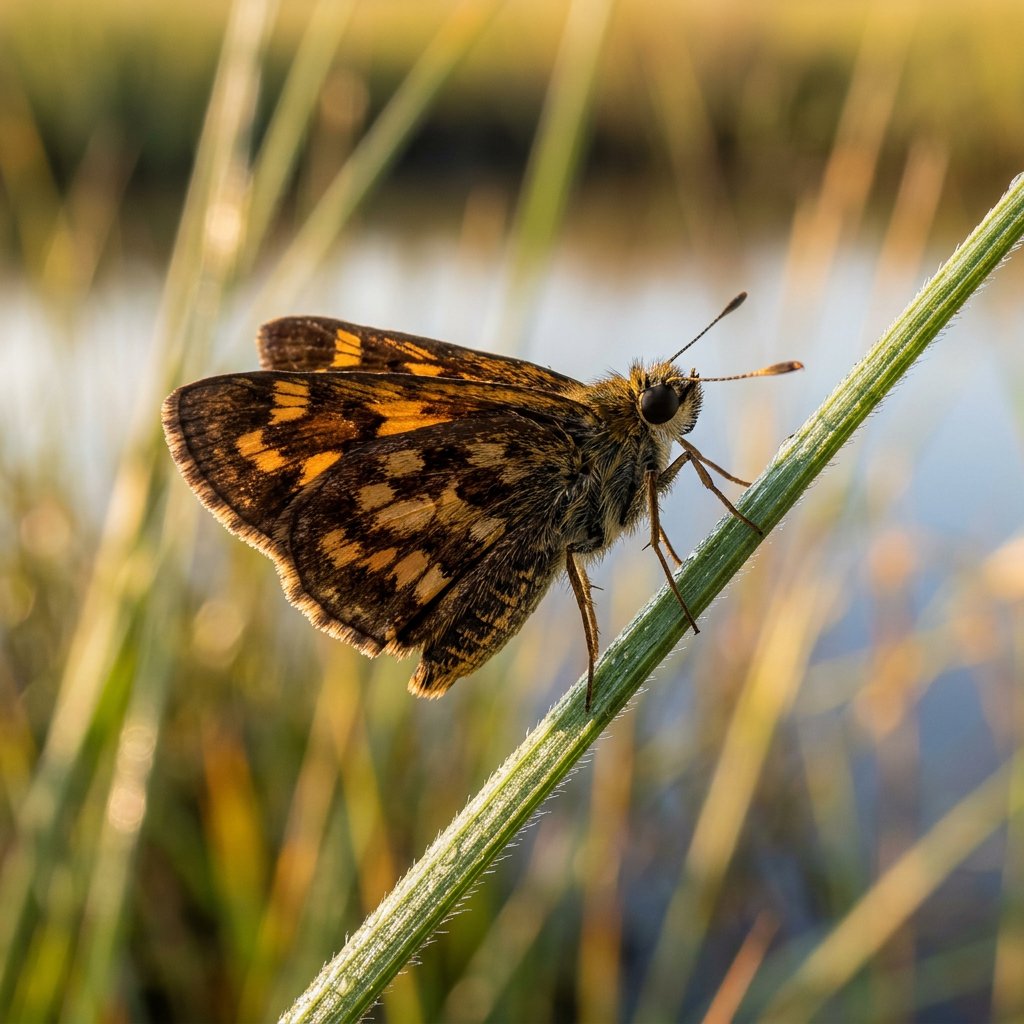
Often called the Salt Marsh Skipper, this resilient little butterfly is a true coastal specialist. Unlike many delicate garden visitors, it thrives where the air is salty and the ground is damp. It belongs to the Hesperiidae family, a group known for their rapid, jerky flight patterns that make them look as if they are "skipping" across the marsh grass.
🔍 How to Identify
- 🦋 The "Jet" Profile: Like most skippers, it holds its wings at two different angles when resting—the forewings are held upright while the hindwings are spread flat, resembling a tiny fighter jet.
- 🎨 Underwing Streak: The most reliable marking is a thin, creamy-white horizontal line or "vitta" on the underside of its olive-brown hindwings.
- 📏 Pointed Wings: Its forewings are notably elongated and more pointed than those of many other skipper species, designed for high-speed flight through coastal winds.
🌲 Habitat & Ecology
- 🌊 Salt Marsh Native: This insect is a specialist of the Atlantic and Gulf coasts. You will almost exclusively find it in brackish meadows, tidal marshes, and coastal dunes.
- 🌾 Saltgrass Specialist: Its life cycle is intimately tied to Saltgrass (Distichlis spicata). The caterpillars are incredibly tough, having evolved to consume high-salinity grasses that would be toxic or indigestible to most other insects.
- 🍯 Nectar Seeker: While the larvae are picky eaters, the adults are active pollinators that visit coastal wildflowers like thistles and shepherd's needle to fuel their high-energy lifestyle.
⚠️ Safety & Toxicity
- ✅ Harmless Friend: The Salt Marsh Skipper is completely non-toxic and lacks any stingers or biting mouthparts. It is a "friend" to the ecosystem.
- 🛡️ Gentle Nature: It poses no threat to humans, pets, or garden plants (unless you are specifically growing ornamental saltgrasses, which it may nibble on).
✨ Fun Fact
Most butterflies avoid the ocean spray because salt can dehydrate their tiny bodies, but the Salt Marsh Skipper has "salty" DNA—it is one of the few butterfly species in the world that can spend its entire life cycle in areas regularly flooded by the tide!
More Details








