Info
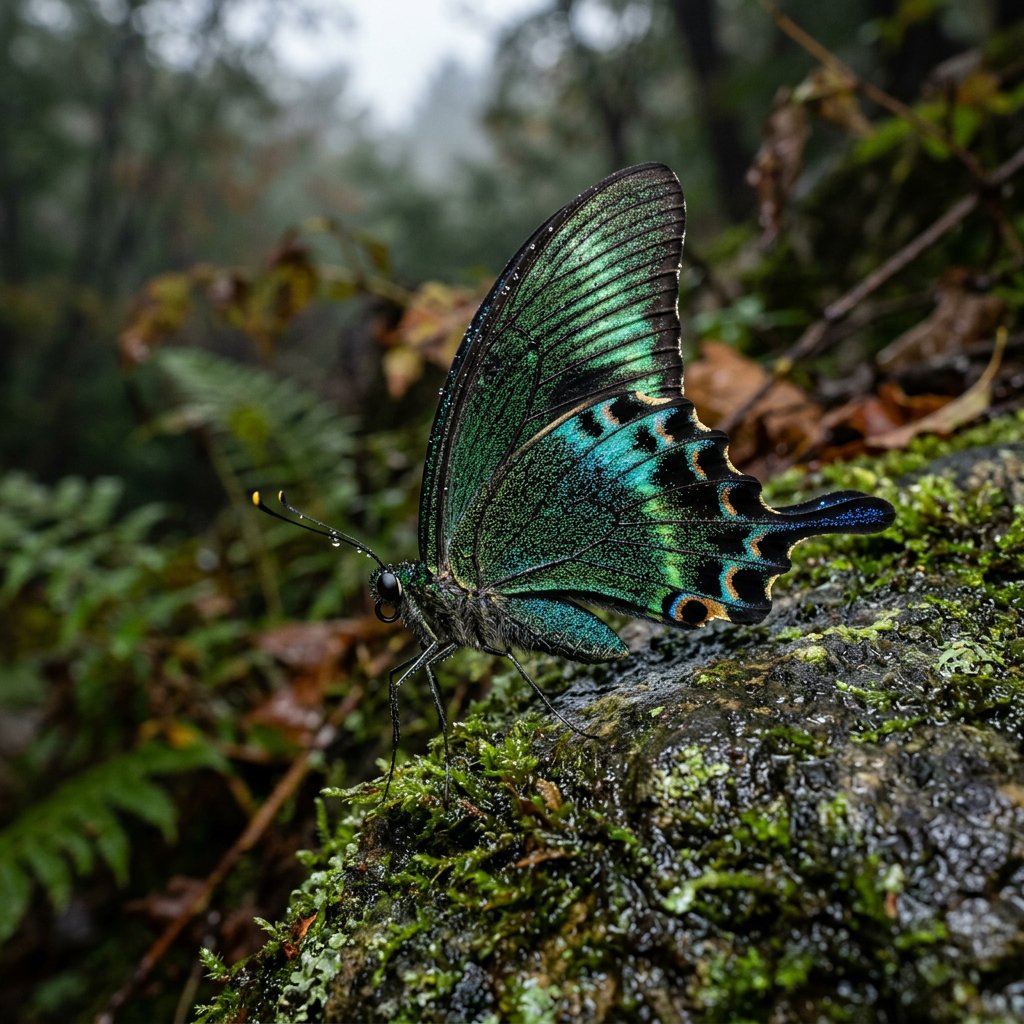
The Papilio bianor, famously known as the Chinese Peacock, is often described as a living gemstone fluttering through the air. Renowned for its velvet-black wings dusted with shimmering emerald and sapphire scales, this butterfly is a symbol of elegance in East Asian folklore and art. It is a frequent visitor to woodland edges and lush gardens, where its iridescent colors shift and glow with every flap of its wings.
🔍 How to Identify
- 🦋 Wingspan: A large and impressive butterfly, typically reaching a span of 4 to 5 inches, making it easy to spot even from a distance.
- ✨ Iridescent Dusting: The upper side of the wings is covered in microscopic scales that reflect brilliant metallic green, blue, or turquoise, depending on the angle of the light.
- 🎨 Hindwing Details: The lower wings feature elegant "tails" (swallowtails) and are adorned with a row of vivid reddish-pink or purple crescent spots along the edges.
🌲 Habitat & Ecology
- 🌿 Nectar Preferences: As an adult, it is a high-energy pollinator that favors nectar-rich flowers like Lilies, Hibiscus, and Azaleas.
- 🍂 The Citrus Connection: The larvae (caterpillars) are picky eaters, primarily feeding on the leaves of the Rutaceae family, such as the Prickly Ash or various citrus trees.
- 💧 Puddling Behavior: You might find groups of males gathered around damp soil or mud puddles; they are "puddling" to extract essential minerals and salts from the water.
⚠️ Safety & Toxicity
- 🟢 Human Safety: Completely harmless to humans. They do not bite, sting, or carry diseases.
- 🍊 The "Stink" Defense: While the butterfly is safe, the caterpillar has a secret weapon called an osmeterium. If threatened, it pokes out a fleshy, orange, Y-shaped organ from its head that emits a strong, foul odor to ward off predators.
✨ Fun Fact
The stunning green and blue colors you see aren't actually caused by green or blue pigments! Instead, they are "structural colors" created by microscopic ridges on the wing scales that split and reflect light, much like a prism or a soap bubble.
More Details








