Info
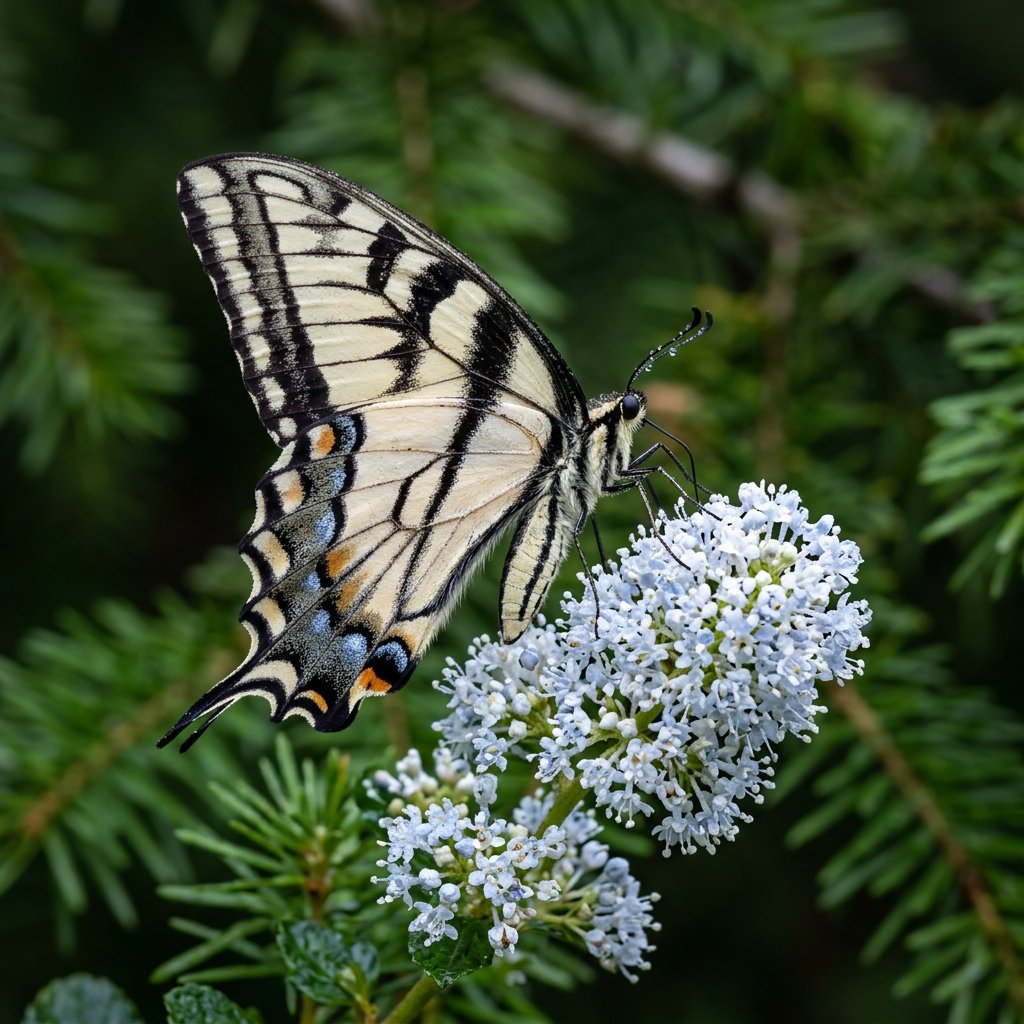
Known as the Pale Swallowtail, this elegant insect is like a ghostly, monochrome cousin to the more common yellow Tiger Swallowtail. A true "friend" of the garden, it is often seen gliding through the mountain canyons and suburban backyards of Western North America. Its slow, deliberate flight pattern makes it one of the most graceful pollinators you’ll ever encounter.
🔍 How to Identify
- 🦋 Wing Color: Unlike its bright yellow relatives, this butterfly features a distinct creamy white or very pale yellow base color.
- 🦓 Tiger Stripes: Bold, thick black vertical stripes run across the wings, creating a high-contrast "zebra" appearance.
- 🪁 The Signature Tails: Long, slender black extensions sprout from the bottom of the hindwings, mimicking the look of a swallow’s tail.
- 🎨 Hindwing Accents: A small row of blue crescents and a single orange "eye-spot" are visible near the base of the tails.
🌲 Habitat & Ecology
- 🏔️ Western Wanderer: They are primarily found in the canyons, foothills, and woodlands of the Western United States and Canada, often hovering near stream banks.
- 🍃 Host Plants: The caterpillars are selective, feeding almost exclusively on the leaves of Mountain Lilac (Ceanothus), Coffeeberry, and wild plum trees.
- 🥤 Puddling Behavior: You may spot groups of males gathering around damp soil or mud. They are "puddling"—drinking mineral-rich water to boost their health and reproductive success.
⚠️ Safety & Toxicity
- ✅ Harmless Guest: The Pale Swallowtail is completely safe for humans and pets. They do not bite, sting, or possess any venom.
- 🛡️ Caterpillar Defense: While not toxic, the caterpillars have a hidden orange organ called an osmeterium behind their head. If threatened, they pop it out to release a foul-smelling odor to ward off birds.
✨ Fun Fact
The Pale Swallowtail’s long tails are actually a clever survival trick! They act as a "false head" to trick birds into biting the expendable wing tips instead of the butterfly's actual body. It is very common to see older butterflies flying perfectly well with "beak-shaped" chunks missing from their tails.
More Details








