Info
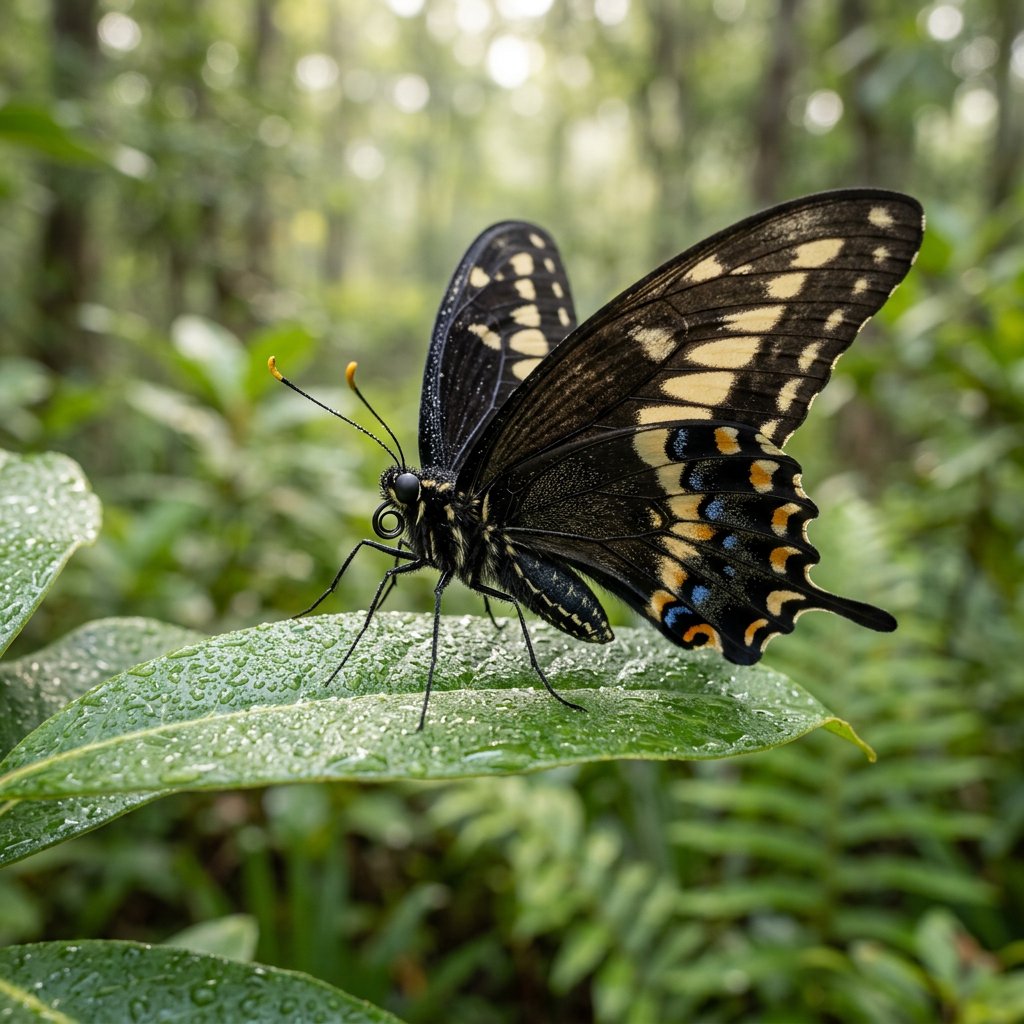
The Palamedes Swallowtail is the king of the southeastern swamps. Known as the "Laurel Swallowtail," this majestic butterfly is a signature sight in the coastal plains of the United States. Named after the Greek hero Palamedes, it glides through the air with a regal grace, often mistaken for its cousin, the Spicebush Swallowtail, until its massive size and unique markings give it away.
🔍 How to Identify
- 🦋 Wing Color: Massive, velvety brownish-black wings that can reach a span of up to 5 inches, making it one of the larger swallowtails in its range.
- 🟡 Yellow Bands: A distinct, continuous pale yellow band runs across both the front and hind wings, accompanied by a row of yellow spots along the edges.
- 🎨 Hindwing Details: The underside of the hindwing features a beautiful "galaxy" of orange and blue spots, with a characteristic yellow line that runs parallel to the body.
🌲 Habitat & Ecology
- 🍃 Picky Eaters: The caterpillars are highly specialized; they feed almost exclusively on the leaves of Redbay and Swampbay trees. Because of this, you will rarely find this butterfly far from wet, wooded areas or cypress swamps.
- 🌺 Nectar Lovers: Adult Palamedes are active pollinators. They are particularly fond of deep-throated flowers like thistles, azaleas, and sweet pepperbush, where they use their long proboscis to reach hidden nectar.
⚠️ Safety & Toxicity
- 🟢 Status: Completely harmless and friendly to gardeners.
- 👃 Stinky Defense: While the adult is defenseless, the caterpillar has a secret weapon called an osmeterium. If threatened, it pokes out a bright orange, Y-shaped organ from its head that emits a foul, musky odor to discourage hungry birds.
✨ Fun Fact
The Palamedes Swallowtail is often used by ecologists as an "indicator species." Because its larvae depend so heavily on the Redbay tree, the health of the butterfly population tells scientists a lot about the health of the entire coastal forest ecosystem!
More Details








