Info
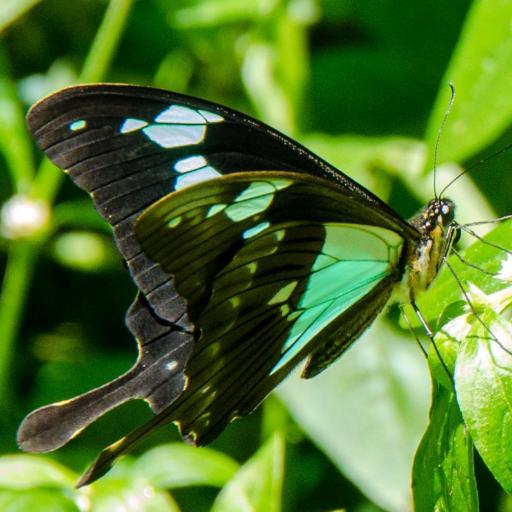
Known as the Apple Green Swallowtail, this butterfly looks like a piece of living emerald flickering through the African sun. It is widely celebrated by nature lovers for its high-contrast patterns and elegant "swallowtail" streamers, making it one of the most striking members of the Papilionidae family.
🔍 How to Identify
- 🦋 The Wings: Features broad, velvet-black wings dominated by vibrant, neon-green or apple-green bands that appear to glow against dark forest foliage.
- 🎗️ The Tails: Distinctive, elongated "tails" extend from the hindwings, mimicking the look of a swallow's tail to distract predators from the butterfly's vital body parts.
- 🎨 The Underside: Unlike the flashy top side, the underside is a mosaic of chocolate brown, silver, and cream, allowing the butterfly to disappear instantly when it closes its wings against a tree trunk.
🌲 Habitat & Ecology
- 🌍 African Origins: This species is a resident of the lush, montane, and lowland forests of Sub-Saharan Africa, ranging from Guinea to Ethiopia and down to South Africa.
- 💧 Mud Puddling: You will often find groups of males gathered around damp patches of earth or riverbanks. They "puddle" to suck up essential minerals and salts from the soil, which are vital for successful mating.
- 🍃 Citrus Lovers: The larvae (caterpillars) are particularly fond of plants in the citrus family (Rutaceae), often blending in perfectly with the leaves to avoid being eaten by birds.
⚠️ Safety & Toxicity
- ✅ Perfectly Safe: The Apple Green Swallowtail is a "friend" of the garden. It possesses no stingers, biting mouthparts, or chemical defenses that could harm humans.
- 🐶 Pet Safety: They are non-toxic to domestic animals. While their erratic flight might trigger a dog's chasing instinct, the butterfly itself poses no biological threat if touched or accidentally licked.
✨ Fun Fact
✨ Gender Disguise: While the males always sport the classic green bands, the females are "polymorphic." This means some females look exactly like the males, while others have evolved to look completely different (often brownish or yellowish) to mimic other "distasteful" butterfly species that birds avoid eating!
More Details








