Info
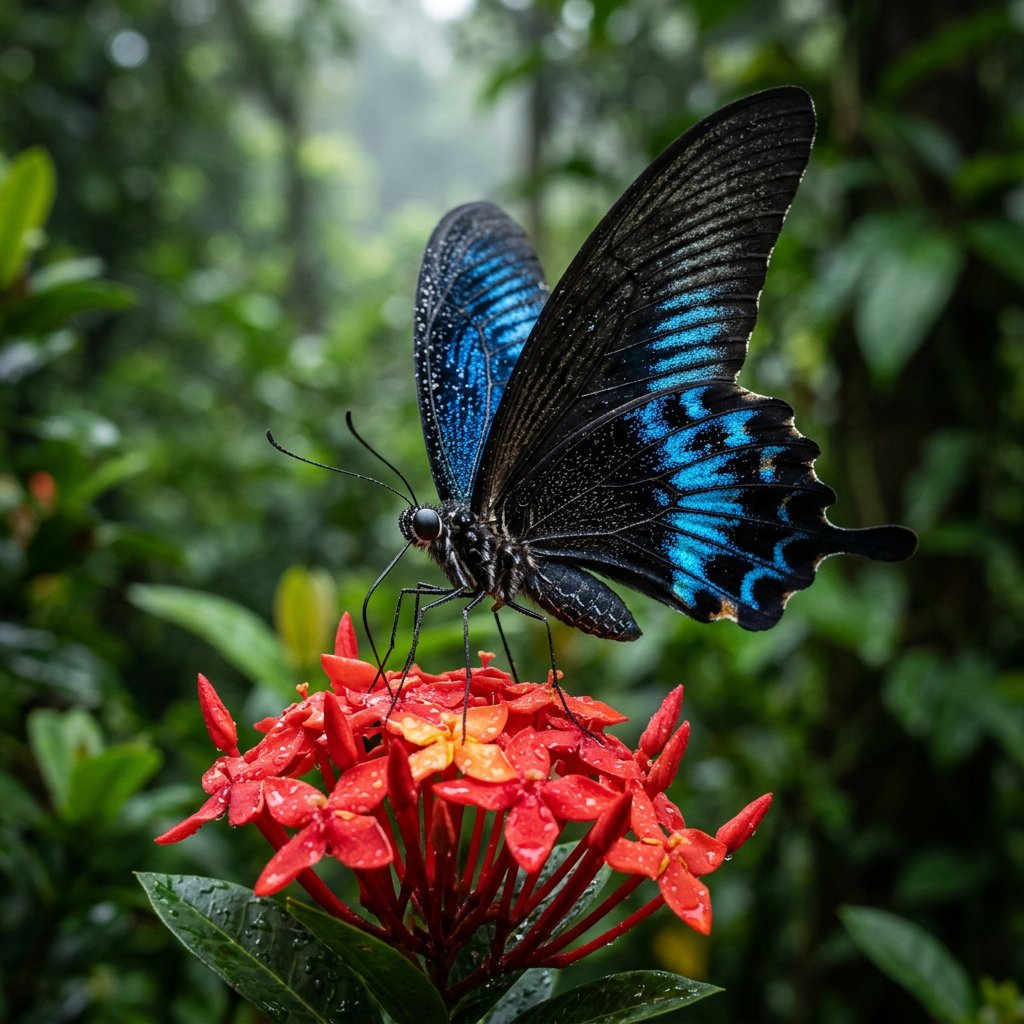
Known as the Blue Mormon, this striking butterfly is one of the largest and most majestic species found in South Asia. In 2015, it gained prestigious recognition as the official State Butterfly of Maharashtra, India. With its velvety black wings and brilliant "powder blue" gradients, it looks like a piece of the twilight sky fluttering through the forest canopy or a sun-drenched garden.
🔍 How to Identify
- 🦋 The Wingspan: This is a true giant of the butterfly world, boasting a wide, heavy-set wingspan that can reach up to 150mm (6 inches).
- 🎨 Velvety Contrast: The upper side of the wings is a deep, velvety black, dramatically interrupted by a series of pale blue or greenish-blue streaks on the hindwings.
- 🔴 The Crimson Base: When the butterfly rests with its wings closed, you can spot distinct bright red spots located at the very base of the wings near the body.
🌲 Habitat & Ecology
- 🍋 The Citrus Connection: Blue Mormons are frequent visitors to home orchards because their caterpillars specifically crave plants from the citrus family (Rutaceae), such as lime, pomelo, and curry leaf trees.
- 💧 Mud-Puddling: You will often find the males gathering around damp patches of soil or forest puddles. They engage in "mud-puddling," sucking up essential salts and minerals from the wet earth to boost their health.
- 🌬️ Powerful Flight: Unlike the frantic fluttering of smaller butterflies, the Blue Mormon has a strong, leisurely flapping flight, often soaring high above the treetops before diving down to feed on nectar-rich flowers.
⚠️ Safety & Toxicity
- ✅ Friendly Visitor: The Blue Mormon is a "friend" to the garden. It is completely harmless to humans and pets, as it lacks any sting or bite.
- 🌿 Garden Impact: While the large green caterpillars have a healthy appetite for citrus leaves, they rarely cause enough damage to kill a tree, and most gardeners welcome them as a fair price for seeing the beautiful adults.
✨ Fun Fact
Despite its large size and bold colors, the Blue Mormon is an expert at "living on the edge"—it is known to be an occasional wanderer, sometimes traveling hundreds of miles away from its usual forest habitat into busy urban cities just to find a specific flowering bush!
More Details








