Info
Often called "Thick-tailed Scorpions," members of the Parabuthus genus are the heavyweights of the arid African landscape. While they are frequently mistaken for insects, these are actually formidable arachnids known for their incredible speed and powerful venom. In many desert cultures, they are respected and feared as the "architects of the sand" due to their impressive burrowing skills.
🔍 How to Identify
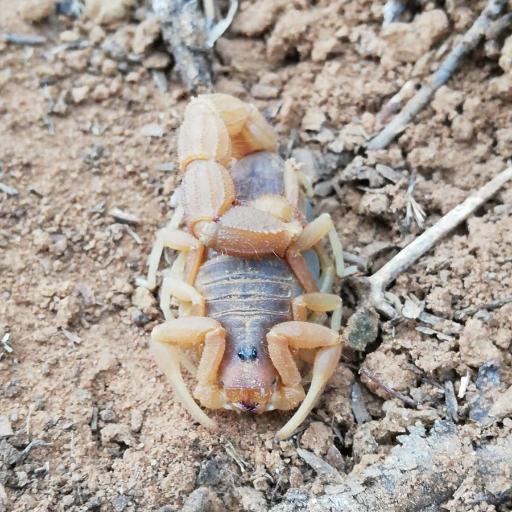
- 🦂 The "Thick" Tail: The metasoma (tail) is disproportionately large and robust compared to the rest of the body, which is the defining characteristic of this genus.
- 🤏 Slender Claws: Unlike scorpions that use brute strength, Parabuthus has relatively thin, delicate-looking pedipalps (pincers) because they rely on their potent sting to subdue prey.
- 🎨 Desert Camouflage: Their bodies are typically armored in shades of sandy yellow, burnt orange, or deep earthy browns, allowing them to vanish against the desert floor.
🌲 Habitat & Ecology
- 🏜️ Arid Specialists: These scorpions are masters of the drylands, typically found hiding under rocks, fallen logs, or deep inside hand-dug burrows to escape the midday sun.
- 🌙 Nocturnal Predators: They are active night-hunters with surprising agility. They feed primarily on insects and other arachnids, but larger individuals have been known to tackle small lizards.
- 🏃 High-Speed Movement: Unlike the slow crawl of many other scorpion types, Parabuthus can move with lightning-fast bursts of speed when agitated or hunting.
⚠️ Safety & Toxicity
- 🚫 Medical Emergency: WARNING. Most species in the Parabuthus genus possess highly potent neurotoxic venom. A sting is considered a serious medical emergency for humans.
- 💦 Venom Spraying: Some species (such as P. transvaalicus) have the rare ability to "spray" or flick their venom at an attacker’s eyes, which can cause intense pain and temporary blindness.
- 🐾 Pet Warning: These are extremely dangerous to curious dogs and cats. If you live in an area where they are native, keep outdoor areas clear of debris where they might hide.
✨ Fun Fact
Certain species of Parabuthus are known as "hissing scorpions." When they feel threatened, they rub their stinger across the granulated surface of their back (stridulation) to produce a raspy, warning sound similar to a cricket or a snake.
More Details








