Info
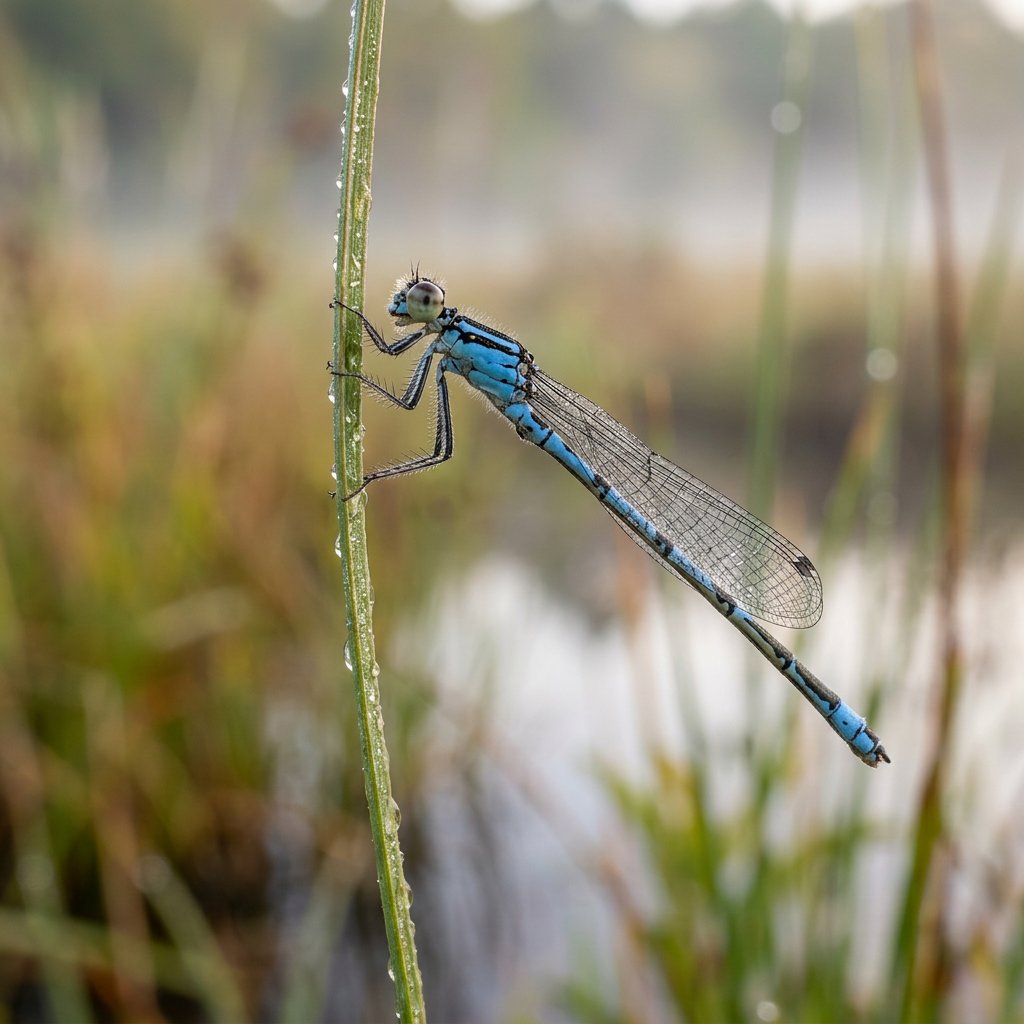
Often called the Common Blue Damselfly or the Hieroglyphic Damselfly, this delicate creature is like a living jewel hovering over ponds and lakes. Its scientific name, hieroglyphicum, hints at the mysterious, ancient-looking black patterns etched onto its sky-blue thorax. A true friend to the gardener, this insect spends its day as a tiny, winged sentinel, patrolling the water's edge for pesky gnats and mosquitoes.
🔍 How to Identify
- 🎨 Thoracic "Scripts": Look for the distinctive black markings on the sides of the thorax that resemble ancient Egyptian hieroglyphs against a pale blue background.
- 📏 Needle-Thin Abdomen: The body is exceptionally slender and "needle-like," primarily bright blue in males and often a duller green or tan in females, segmented with fine black rings.
- 🛡️ The Folded Wing: Unlike their dragonfly cousins who rest with wings spread wide, this damselfly holds its four transparent, vein-filled wings pressed together vertically over its back when at rest.
🌲 Habitat & Ecology
- 💧 Freshwater Dwellers: They are most commonly found near still or slow-moving water, such as garden ponds, marshes, and rice fields, where they rely on floating vegetation to lay their eggs.
- 🍴 Miniature Predator: Don't let their fragile appearance fool you; they are voracious hunters. They practice a technique called "gleaning," where they pluck aphids, mosquitoes, and small flies right off leaves or mid-air.
- 🧘 Perching Behavior: They aren't long-distance flyers. You will often see them taking frequent breaks, perching on reeds or grass blades to regulate their body temperature in the sun.
⚠️ Safety & Toxicity
- ✅ Harmless Friend: Despite their pointed tails, damselflies do not have stingers. They are completely incapable of stinging humans or pets.
- 🦷 Non-Aggressive: While they have mandibles for eating small bugs, they are far too small to bite a person. They are safe to observe closely and are a sign of a healthy, clean water ecosystem.
✨ Fun Fact
Damselflies belong to the order Odonata, a group of insects so ancient that they were flying through the Earth's forests over 300 million years ago—long before the first dinosaurs ever walked the planet!
More Details








