Info
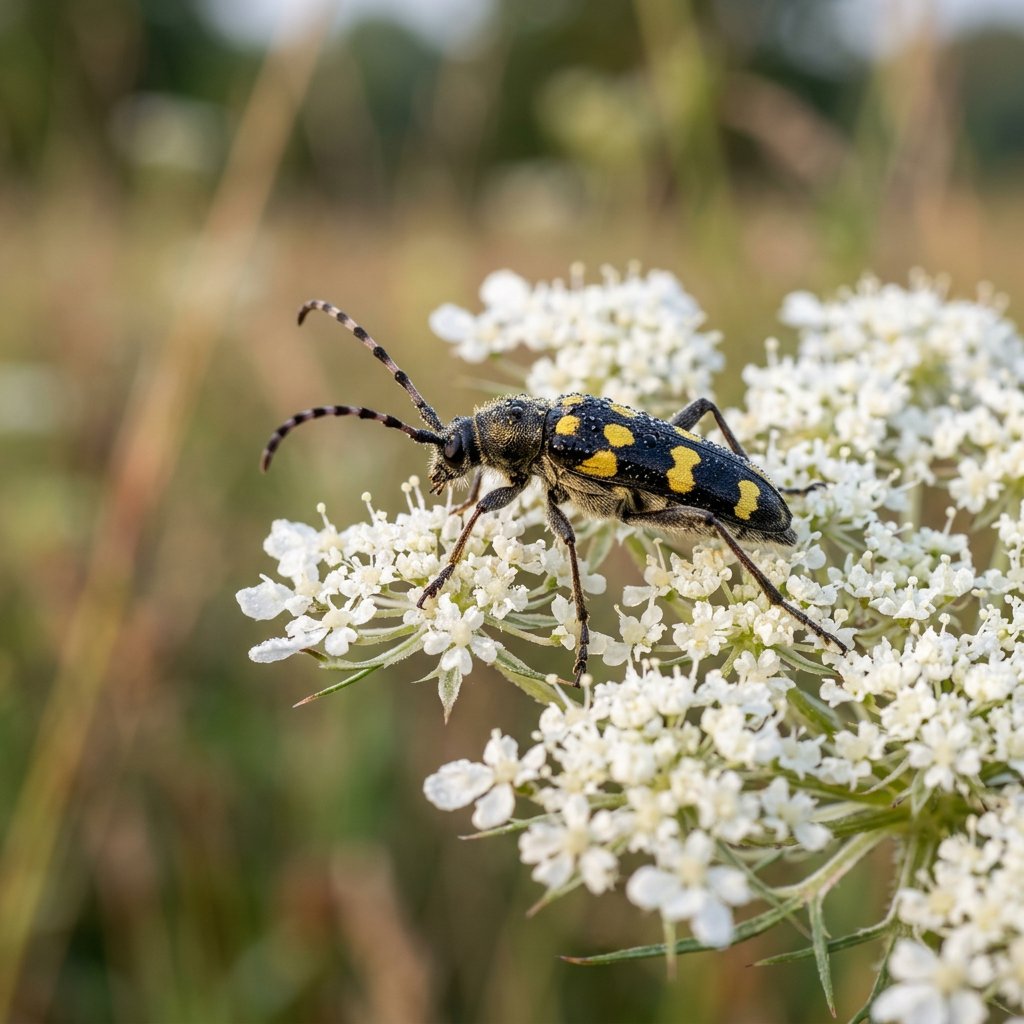
Known as the Spotted-horned Longhorn Beetle, Paracorymbia maculicornis is a frequent guest at summer garden parties across Europe and temperate Asia. While its long, striped antennae might look like alien sensors, this beetle is actually a gentle flower-visitor often found basking on white blossoms. It is a classic "flower longhorn," spending its adult life fueling up on nectar to support its role as a quiet, efficient pollinator.
🔍 How to Identify
- Check out those Antennae: The most striking feature is the "spotted" or ringed look of the antennae, where black segments alternate with pale bases, giving them a striped appearance.
- 🪶 The Wing Covers (Elytra): They typically sport straw-colored or yellowish-brown wing covers that are wider at the shoulders and taper toward the back.
- 📏 Body Shape: Like many flower longhorns, it has a slender, elegant silhouette and a slightly "hunchbacked" appearance when viewed from the side while feeding.
🌲 Habitat & Ecology
- 🌼 The Flower Buffet: You will most likely spot these beetles on flat-topped flower clusters, such as Cow Parsley, Elderberry, or Hogweed. They are "diurnal," meaning they love the sunshine and are most active during the warmest parts of the day.
- 🪵 Nature’s Recycler: Before they get their wings, the larvae live inside decaying wood. They prefer the moist, rotting branches of both broadleaf trees (like Birch) and conifers (like Spruce), helping to break down dead wood into nutrient-rich soil.
⚠️ Safety & Toxicity
- 🛡️ Status: Completely harmless to humans and pets.
- 🌿 Details: Unlike some beetles that can spray chemicals or deliver a painful bite, the Spotted-horned Longhorn is a pacifist. It has no sting and its mandibles are designed for eating pollen, not skin. If it lands on you, simply enjoy the view or gently nudge it back toward a flower.
✨ Fun Fact
The specific name maculicornis comes from the Latin words macula (spot) and cornu (horn), which literally translates to "spotted horn"—a perfect description of its fashion-forward, striped antennae!
More Details








