Info
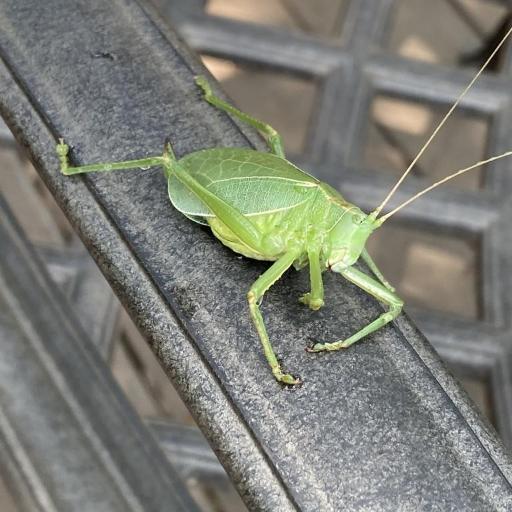
Often called the Central Texas Leaf-cutting Katydid, this robust insect is a master of disguise that looks more like a wandering leaf than a bug. While they spend most of their lives high in the canopy of oak trees, they are famous for "outbreak" years where they appear in staggering numbers, coating tree trunks and making the night air hum with their rhythmic calls. Despite their somewhat intimidating size, they are gentle giants of the Texas hill country.
🔍 How to Identify
- 🍃 Leaf-Like Wings: Their forewings are broad, bright green, and veined, perfectly mimicking the texture and shape of a living leaf to hide from hungry birds.
- 💪 Stout Build: As the name robustus suggests, they have a thicker, heavier body compared to the slender common meadow katydids.
- 📡 Elongate Antennae: They possess very fine, hair-like antennae that are often longer than their entire body, used to sense their surroundings in the dark.
🌲 Habitat & Ecology
- 🌳 Oak Enthusiasts: These katydids are almost exclusively found in oak forests. They feed on the foliage of Post Oaks and Live Oaks, and during massive population explosions, they can noticeably thin out the leaves of a canopy.
- 🎶 The Night Choir: Males produce a loud, repetitive "chhh-chhh" sound by rubbing their wings together. In a high-population year, the collective sound of thousands of these insects can be loud enough to drown out a conversation.
- 🍂 Boom and Bust Cycles: Their populations are highly cyclical. For several years they may be rare, only to suddenly emerge by the millions in a single season, creating a spectacle for local naturalists.
⚠️ Safety & Toxicity
- 🟢 Status: Completely harmless and non-venomous. They are considered "friends" to the ecosystem as they provide a massive food source for birds and lizards.
- 🦷 Pinch Warning: While they don't sting, their mandibles are designed for cutting tough oak leaves. If you pick one up and it feels threatened, it may deliver a small, non-toxic pinch to your finger.
- 🐾 Pet Safety: They are not toxic to cats or dogs who might find them a crunchy, protein-rich snack.
✨ Fun Fact
During peak outbreak years in Central Texas, the sheer volume of katydids can be so high that their droppings (frass) falling from the trees sounds like a gentle rain hitting the ground!
More Details








