Info
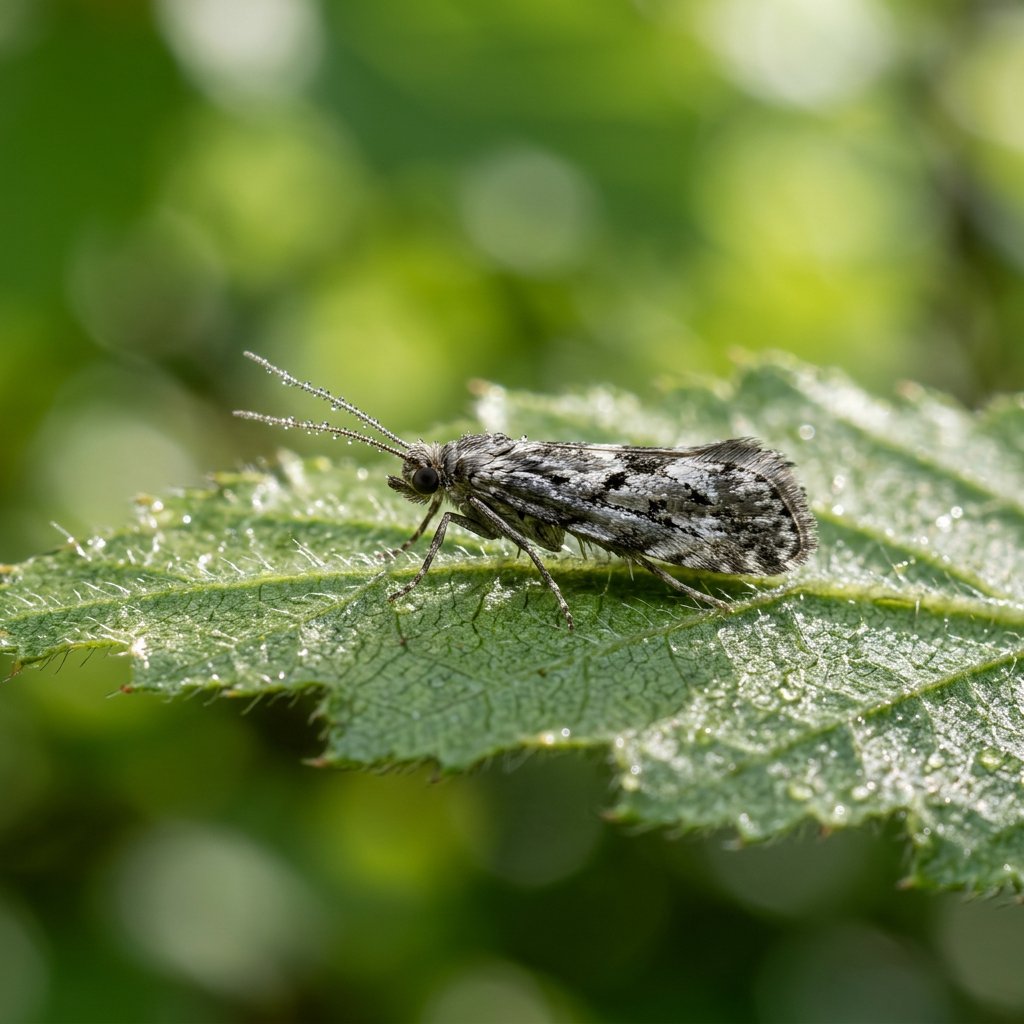
Often called "White-headed Ermines," the Paraswammerdamia moths are the silver ghosts of the hedgerow. These tiny, elegant insects are part of the Ermine moth family, named for their speckled wings that resemble the royal fur of an ermine. Though they are small and easily overlooked, they play a quiet role in the ecosystem of suburban gardens and wild woodlands alike.
🔍 How to Identify
- 🦳 The "White Cap": One of the most striking features is the tuft of bright white or pale scales on the top of the head, which looks like a tiny, snowy wig against their darker body.
- 📏 Pencil Shape: When resting, these moths wrap their wings tightly around their bodies, creating a very narrow, elongated silhouette that helps them blend into twigs.
- 🌫️ Clouded Wings: The forewings are usually a smoky grey or silvery-white, decorated with fine, dark mottling and a distinct white patch near the wingtips.
🌲 Habitat & Ecology
- 🌳 Host Plant Lovers: You will usually find these moths near their favorite "nurseries." The caterpillars specifically seek out Hawthorn, Rowan, and various wild Cherry trees to feed on.
- 🕸️ The Silken Tent: The larvae are skilled weavers. They often spin light, translucent silk webs—or "tents"—among the leaves of their host plant, providing a safe harbor from predators while they eat.
- 🌙 Night Flyers: Like most moths, they are active at night and are frequently drawn to porch lights. During the day, they hide in plain sight, resting on the bark of trees where their mottled patterns provide perfect camouflage.
⚠️ Safety & Toxicity
- ✅ Harmless Neighbor: Paraswammerdamia moths are completely harmless. They do not possess a stinger, they do not bite, and they are not known to carry any diseases.
- 🌱 Garden Impact: While the caterpillars do eat leaves, they are rarely found in large enough numbers to cause serious harm to a healthy tree. They are a natural part of the garden's biodiversity and provide food for songbirds.
- 🐾 Pet Safety: These moths are non-toxic to cats and dogs. If your pet happens to snack on one, there is no cause for alarm.
✨ Fun Fact
The genus name Paraswammerdamia honors Jan Swammerdam, a legendary 17th-century Dutch scientist. He was one of the first people to use a microscope to prove that insects were complex living creatures with life cycles, debunking the ancient myth that they were "born from mud."
More Details








