Info
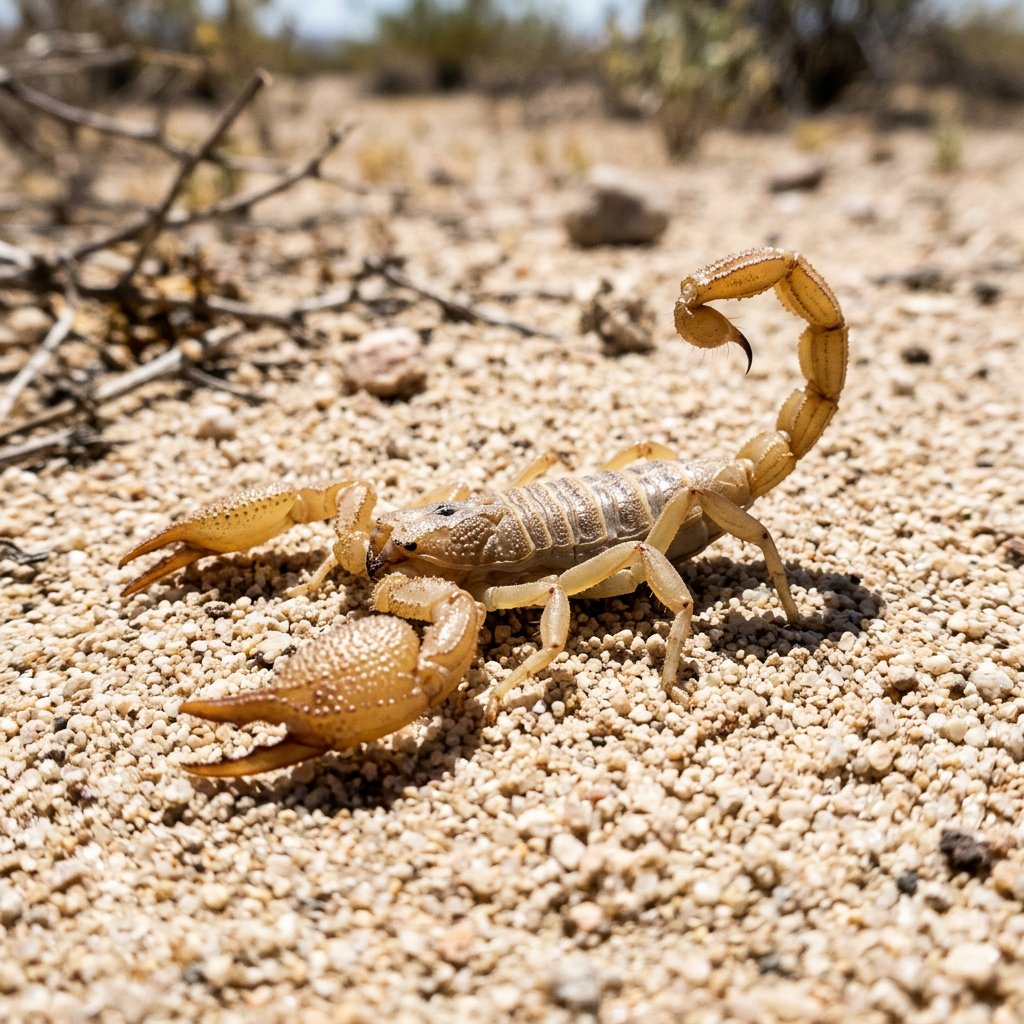
Commonly known as the Yellow Ground Scorpion, this small desert dweller often gives hikers a "confused" second look. Its name, Paravaejovis confusus, stems from its striking resemblance to several other desert scorpions, making it a frequent subject of debate among naturalists. While it looks like a miniature version of a desert titan, it is a specialized hunter perfectly adapted to the arid landscapes of the American Southwest.
🔍 How to Identify
- 🦂 Pale Coloring: They typically sport a uniform pale yellow to tan body, which acts as perfect camouflage against sandy desert soils.
- 📏 Slender Build: Unlike some of its bulkier cousins, this scorpion has a very slender "tail" (metasoma) and relatively thin, delicate-looking pincers.
- 🔍 Granulated Texture: If you look closely at its segments, you’ll notice a slightly grainy or bumpy texture, a key feature that distinguishes it from the smooth-bodied Bark Scorpion.
🌵 Habitat & Ecology
- 🏜️ The Desert Floor: Unlike Bark Scorpions that love to climb walls and trees, the Yellow Ground Scorpion prefers life at ground level. It is frequently found hiding under flat rocks, inside abandoned burrows, or tucked into desert washes.
- 🌙 Nocturnal Predator: This is a night-shift worker. It emerges after sunset to hunt for small insects, spiders, and even other tiny scorpions, using sensitive hairs on its legs to detect the vibrations of approaching prey.
- 🏠 Occasional Houseguest: While they prefer the outdoors, they sometimes wander into homes in Arizona or Southern California during extreme heat or heavy rains in search of a cool, moist corner.
⚠️ Safety & Toxicity
- 🐝 Status: Mildly Venomous. A sting is generally comparable to that of a honeybee or a social wasp—painful and irritating, but rarely a medical emergency.
- 🛡️ Defensive Nature: They are not aggressive and will usually try to scurry away or hide if disturbed. However, they will sting if accidentally stepped on or squeezed.
- 🐾 Pet Safety: While usually not fatal to dogs or cats, a sting can cause localized swelling and distress. It’s best to keep curious pets away from any scorpion found indoors.
✨ Fun Fact
Like a scene out of a sci-fi movie, the Yellow Ground Scorpion glows a brilliant neon cyan-green under ultraviolet (UV) light. This "fluorescence" is caused by a chemical in their exoskeleton, and scientists believe it might help them detect light or communicate with other scorpions in the dark!
More Details








