Info
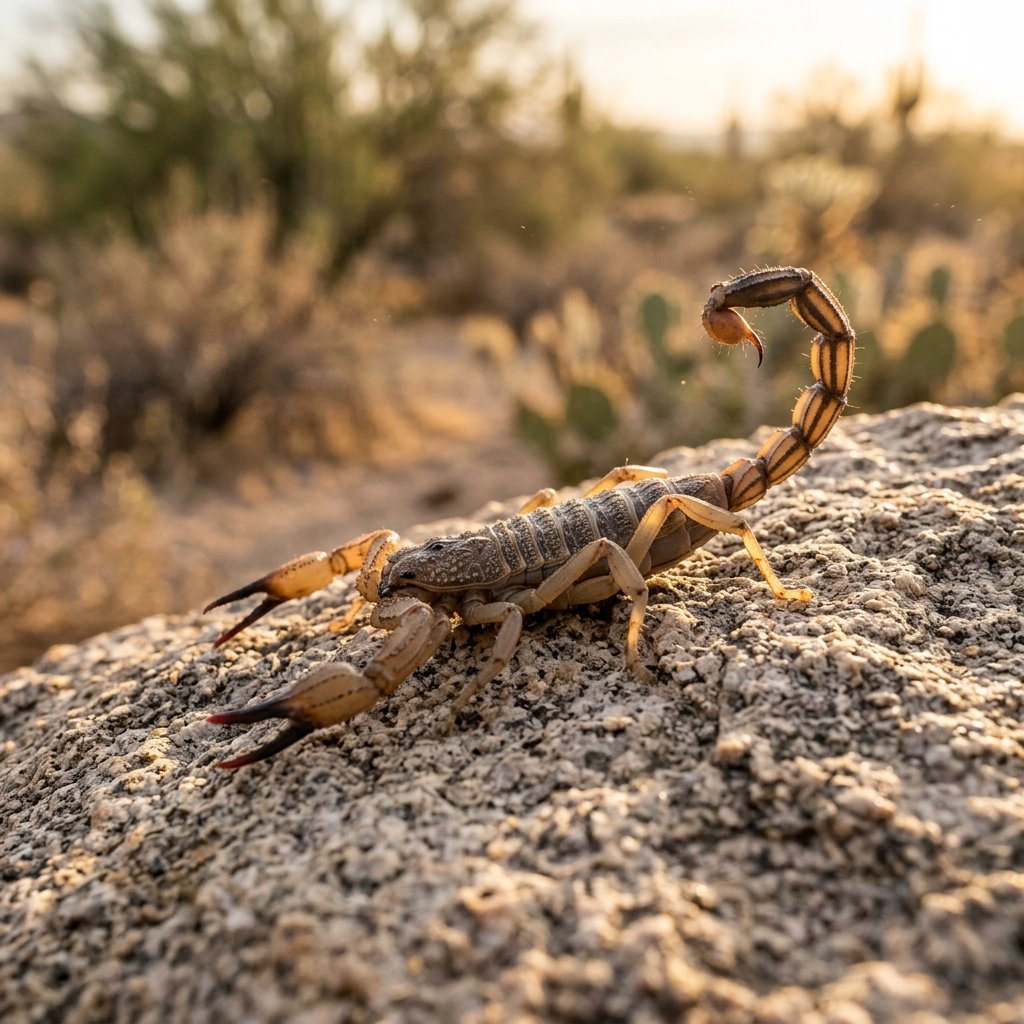
Often called the Striped Devil Scorpion or the Arizona Stripedtail, this desert dweller sounds much more menacing than it actually is. A classic resident of the American Southwest, it is frequently encountered by hikers and homeowners alike. Despite the "Devil" moniker, these scorpions are relatively shy predators that play a vital role in keeping local insect populations under control.
🔍 How to Identify
- 🦂 The "Striped" Tail: Its most defining feature is the series of dark, longitudinal stripes running down the top of its thick tail (metasoma).
- 🎨 Desert Camouflage: The body is typically a pale tan or yellowish-brown, allowing it to blend seamlessly into sandy soil and dried leaf litter.
- 💪 Robust Build: Unlike the slender Bark Scorpion, the Striped Devil has a thicker, more "muscular" tail and sturdy, medium-sized pincers (pedipalps).
🌲 Habitat & Ecology
- 🪨 The Great Underside: These scorpions are experts at "thermally regulating" by hiding. You will almost always find them tucked away under flat rocks, logs, or inside abandoned rodent burrows to escape the desert heat.
- 🦗 Nightly Patrolling: As strictly nocturnal hunters, they emerge after dark to scavenge for crickets, beetles, and even smaller scorpions. They use their pincers to firmly grasp prey while delivering a quick, paralyzing sting.
⚠️ Safety & Toxicity
- 🩹 Low Medical Significance: While the name "Devil Scorpion" is scary, their sting is generally comparable to that of a honeybee or wasp. It causes localized pain, swelling, and redness but is not considered life-threatening to healthy adults.
- 🐾 Watch Your Step: Because they love to hide in shoes or under porch debris, they are a common cause of accidental stings. Keep curious pets away, as the venom can be more painful and distressing for smaller animals.
✨ Fun Fact
Like a scene out of a sci-fi movie, the Striped Devil Scorpion—along with most of its cousins—contains a protein in its exoskeleton that glows a brilliant, neon cyan-blue when exposed to ultraviolet (UV) light! Hardcore "scorpion hunters" use blacklight flashlights at night to spot them instantly.
More Details








