Info
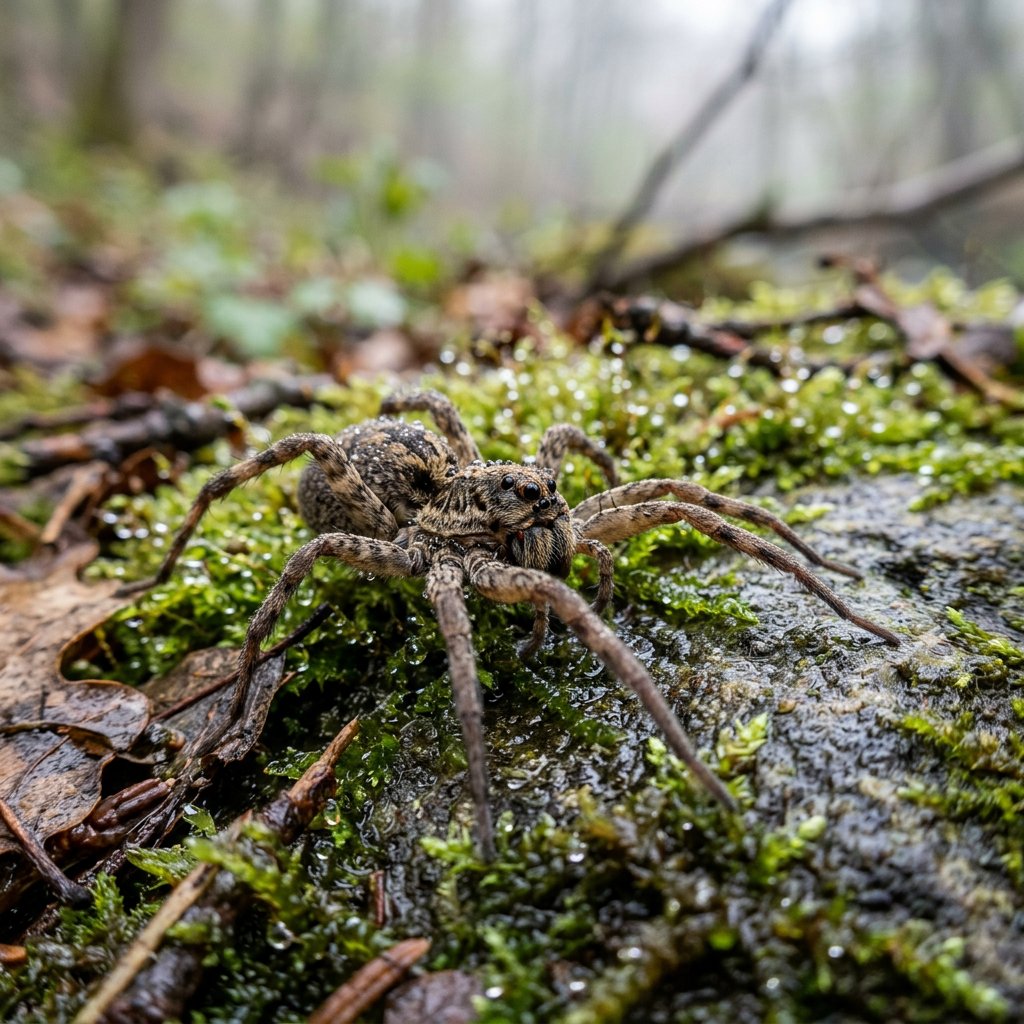
Known as the Spotted Wolf Spider, Pardosa amentata is the restless, hairy security guard of the garden floor. Unlike the spiders that sit patiently in webs, this species is a "wolf" by nature—a visual hunter that relies on speed and keen eyesight to chase down its prey. In many cultures, seeing these spiders active in the sun is a sign of a healthy, thriving ecosystem.
🔍 How to Identify
- 👀 The Eye Arrangement: They possess eight eyes, but the most distinctive are the two large, forward-facing eyes that give them excellent depth perception for hunting.
- 🤎 Mottled Pattern: Their bodies are a complex mosaic of dark brown and greyish-tan, with a pale central stripe running down the "head" (cephalothorax).
- 🏃♂️ Robust Build: They have long, sturdy legs covered in fine sensory hairs, designed for rapid sprinting across leaf litter and garden soil rather than climbing smooth surfaces.
🌲 Habitat & Ecology
- 🍂 The Ground Floor: You will rarely find them high up in trees; they prefer damp garden borders, lawns, and pebble-dashed areas where they can blend into the shadows.
- 🕷️ Active Hunters: They do not spin webs to catch food. Instead, they use their incredible speed to pounce on flies, aphids, and small beetles, making them a "friend" to gardeners looking for natural pest control.
- ☀️ Sunbathers: On early spring days, you'll often see them basking on stones or wooden fences to warm up their muscles for the hunt.
⚠️ Safety & Toxicity
- ✅ Harmless Ally: While their size and speed can be "scary," they are non-aggressive and will almost always run away when approached.
- 🩹 The Bite: Bites are extremely rare and usually only happen if the spider is squeezed. The venom is not medically significant for humans—it is often described as less painful than a typical bee sting.
- 🐾 Pet Safety: They are not considered a threat to cats or dogs. If a pet eats one, it is generally harmless, though the "hairy" texture might cause minor mouth irritation.
✨ Fun Fact
- 🎒 The Living Backpack: Female Spotted Wolf Spiders are dedicated mothers. They carry their blueish-grey egg sacs attached to their tail-end (spinnerets). Once the spiderlings hatch, they climb onto their mother’s back and ride there for several days until they are ready to hunt on their own!
More Details








