Info
Often called the Clodius Parnassian, this elegant butterfly looks like it was fashioned from delicate parchment or fine silk. Found dancing across the alpine meadows and moist forests of Western North America, it is a sturdy survivor of cold mountain climates. Unlike many vibrant butterflies that scream for attention, the Parnassian carries a ghostly, understated beauty that blends perfectly with misty mountain mornings.
🔍 How to Identify
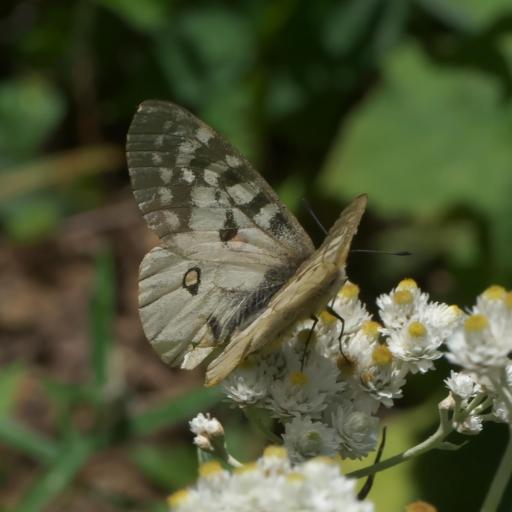
- 🦋 Translucent Wings: The wings have a unique, waxy texture and are semi-transparent, especially near the edges, making them look almost like frosted glass.
- 🔴 Red Ocelli: Look for two distinct red or pinkish spots on the hindwings, often outlined in black, which act as "eyespots" to confuse hungry birds.
- 🖤 Charcoal Markings: The base color is a creamy white, decorated with bold black smudges and dark veins that look like delicate charcoal sketches on paper.
🌲 Habitat & Ecology
- 🏔️ High-Altitude Specialists: These butterflies are true mountain dwellers, frequently spotted in moist meadows, subalpine ridges, and forest openings where the air remains cool.
- 🌿 The Bleeding Heart Connection: Their life cycle is deeply tied to the Dicentra (Bleeding Heart) plant. The caterpillars feed almost exclusively on these plants, absorbing bitter chemicals that make them unpalatable to predators.
- 🌬️ Low-Energy Flight: Because they live in cooler environments, they have a heavy, fluttering flight pattern. They often stay close to the ground to avoid being swept away by mountain winds.
⚠️ Safety & Toxicity
- ✅ Friendly Pollinator: The Clodius Parnassian is entirely harmless to humans. It does not bite or sting and plays a vital role in pollinating mountain wildflowers.
- 🐾 Non-Toxic to Touch: While the caterpillars sequester toxins from their host plants for their own protection, the adult butterflies are safe to be around and pose no threat to pets or curious children.
✨ Fun Fact
- 🔒 The Mating Lock: Male Parnassians are famously protective. After mating, the male attaches a waxy, external structure called a sphragis to the female’s abdomen. This acts as a biological "chastity belt," preventing other males from mating with her and ensuring his offspring are the ones that survive!
More Details








