Info
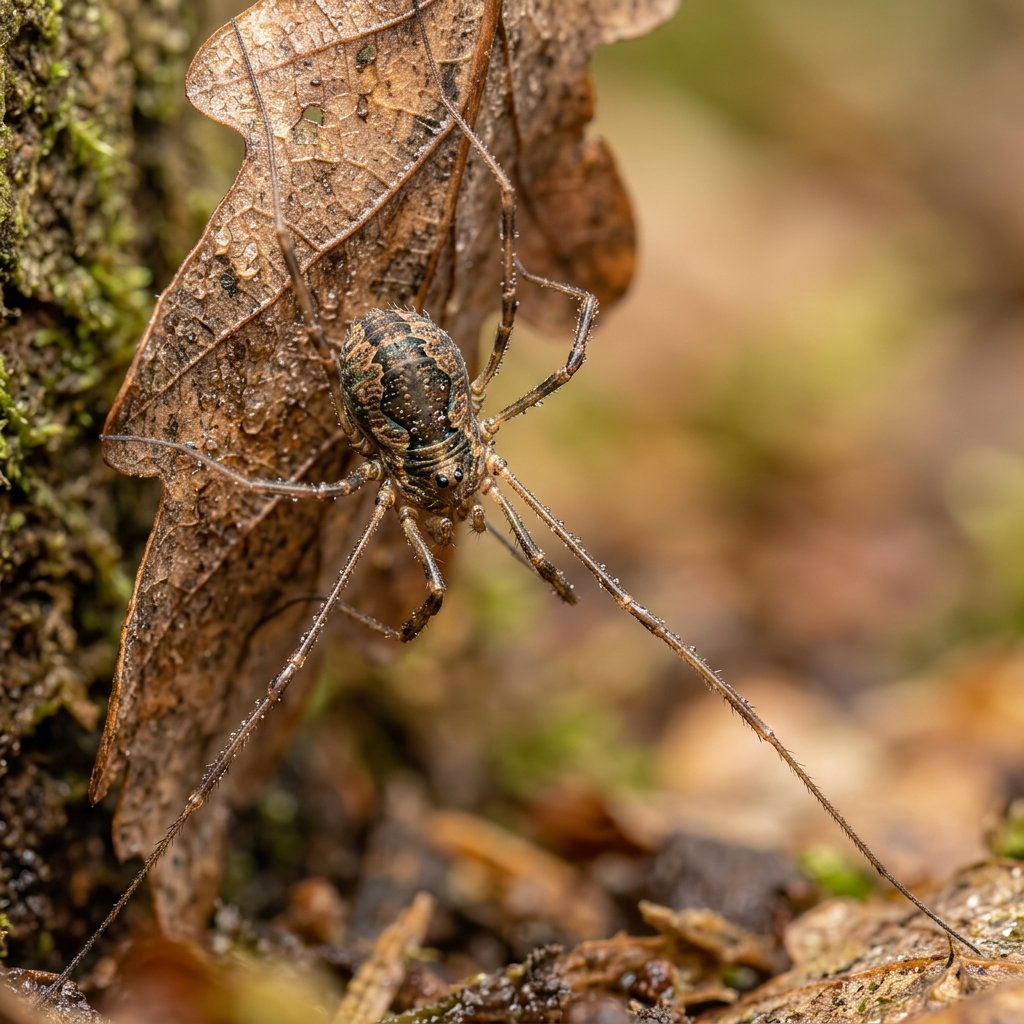
Often called the Field Harvestman, Paroligolophus agrestis is a frequent guest in autumn gardens. While they are arachnids, they aren't true spiders; they belong to the order Opiliones. These "gentle wanderers" are often found scurrying over low-lying leaves or resting on tree trunks, acting as tiny, eight-legged janitors for your backyard ecosystem.
🔍 How to Identify
- 🦵 The Legs: Unlike the extremely long, spindly legs of some cousins, this species has moderately long, brownish legs that appear slightly more robust.
- 🎭 The Saddle: Look for a dark, rectangular-shaped marking on its back (the "saddle") that usually has a blunt or "squared-off" back edge.
- 👁️ The Turret: Their two eyes sit atop a small central bump called an ocularium, which is usually pale with a darker line running through the middle.
🌲 Habitat & Ecology
- 🍂 Leaf Litter Explorer: They thrive in damp, shaded environments like garden mulch, woodlands, and tall grasses where they can hide from the midday sun.
- 🍽️ Eclectic Diet: They are beneficial generalists. They hunt small soft-bodied insects like aphids but are also happy to scavenge on dead insects or even nibble on fungi and bird droppings.
- 🪜 Wall Climbers: As the weather cools in late summer and autumn, you will often see them climbing the exterior walls of houses or resting on fences to catch the last bits of warmth.
⚠️ Safety & Toxicity
- 🛡️ Non-Venomous: A common myth suggests harvestmen are highly toxic but lack fangs; in reality, they have no venom glands at all. They are entirely harmless to humans.
- 🚫 No Bite Risk: Their mouthparts (chelicerae) are designed for grasping food, not piercing skin. They cannot bite you or your pets.
- 👃 Smell Defense: If they feel extremely threatened, they may release a tiny drop of pungent fluid from scent glands to discourage birds or larger insects from eating them.
✨ Fun Fact
If a predator grabs one of their legs, the Field Harvestman can voluntarily "detach" that leg to make an escape. The detached leg will continue to twitch for several minutes to distract the attacker—a survival trick known as autotomy.
More Details








