Info
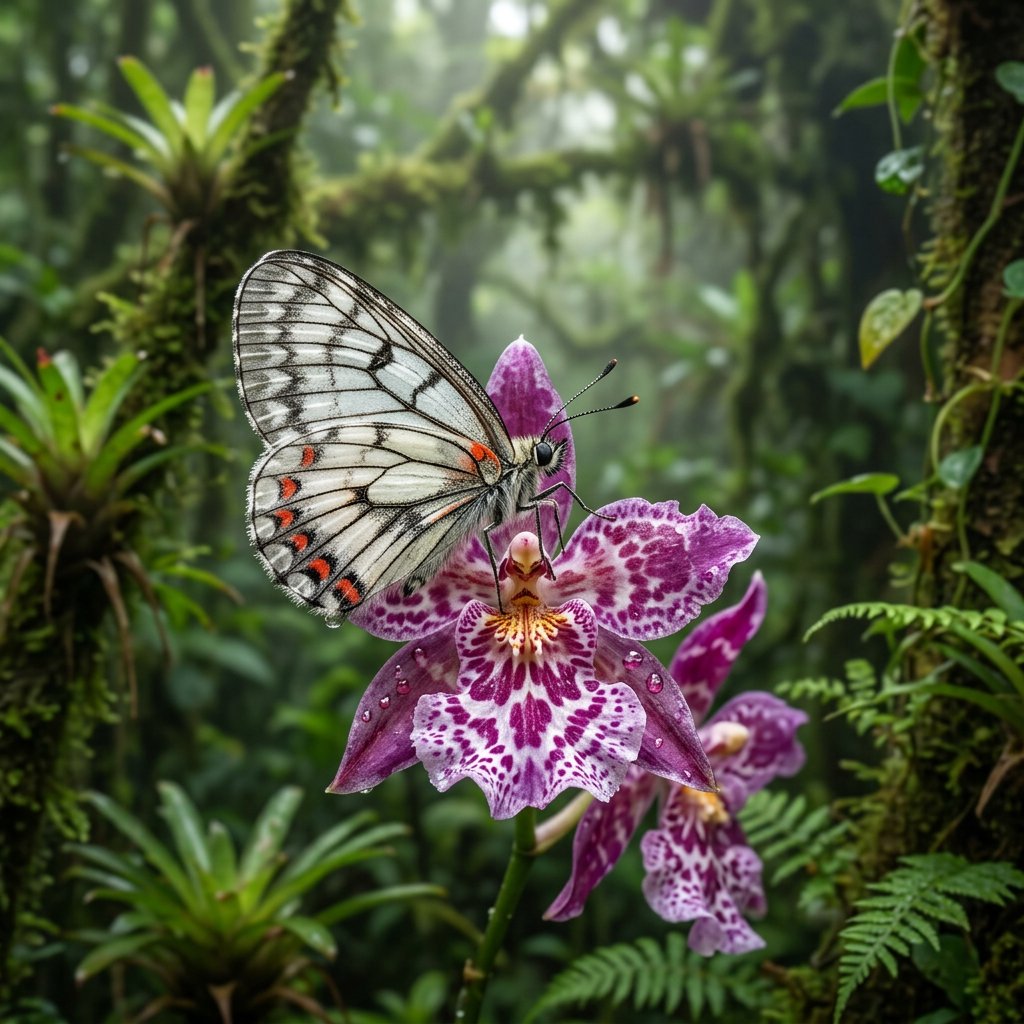
Often called the "Dark Pierids" or "Cloud Forest Mimics," butterflies of the genus Pereute defy the typical image of their family. While most of their cousins (the Whites and Yellows) are bright and pale, these neotropical beauties wear "disguises" to survive in the high-altitude forests of Central and South America. They are masters of shadows, blending into the misty understory with sophisticated elegance.
🔍 How to Identify
- 🦋 Inky Wings: Unlike common garden butterflies, their wings are primarily deep charcoal or matte black, providing a dramatic backdrop for their markings.
- 🎨 Flashy Accents: Look for bold, localized "ink splotches" of scarlet red, vibrant orange, or lemon yellow, usually concentrated near the base or across the middle of the forewings.
- 📏 Sleek Profile: They possess elongated, slightly narrow forewings that give them a faster, more direct flight appearance compared to the erratic fluttering of other species.
🌲 Habitat & Ecology
- ☁️ Cloud Forest Specialists: These insects are true mountain dwellers. They thrive in high-altitude neotropical "cloud forests" where the air is cool, moist, and frequently shrouded in mist.
- 🎭 Professional Mimics: Pereute butterflies participate in what scientists call "Müllerian mimicry." They have evolved to look almost identical to toxic butterflies from other families. By wearing the same "uniform" of red and black, they trick birds into thinking they are poisonous.
- 🌸 Canopy Feeders: While they occasionally descend to the forest floor to "puddle" for minerals in damp soil, they spend most of their time high in the trees, sipping nectar from epiphytes and flowering vines.
⚠️ Safety & Toxicity
- ✅ Harmless Friend: These butterflies are completely safe to observe. They do not have stingers, they do not bite, and they do not possess any irritating hairs or chemicals that affect human skin.
- 🐾 Pet Neutral: They are non-toxic to pets. However, like all delicate insects, they should be observed with eyes only, as their wing scales are easily damaged by touch.
✨ Fun Fact
Despite belonging to the family Pieridae (the same family as the common Cabbage White butterfly found in vegetable gardens), Pereute species look so different that early naturalists frequently misidentified them as being part of the "Longwing" family (Heliconiinae)!
More Details








