Info
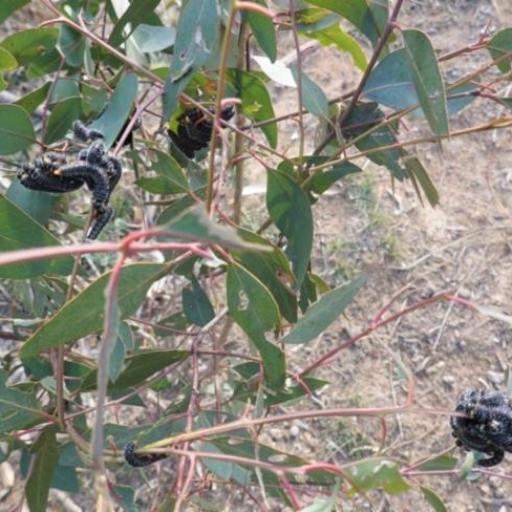
The Perga genus, better known by the evocative nickname "Spitfire Sawflies," is one of Australia’s most misunderstood backyard residents. While they might look like menacing caterpillars or stinging wasps, they are actually a primitive type of stingless wasp. They earned their "Spitfire" title not from fire, but from their dramatic defensive habit of regurgitating a pungent, sticky eucalyptus oil to ward off predators.
🔍 How to Identify
- 🐛 The "Spitfire" Larvae: Most commonly seen as hairless, sausage-shaped grubs with black or dark-brown bodies. They are usually found huddled together in dense, writhing clusters on tree trunks.
- 🦟 The Adult Sawfly: Unlike common wasps, adults have a thick, "waistless" body and two pairs of translucent wings. They are often metallic blue, black, or tawny and lack a stinger.
- 🪚 The "Saw" Appendage: Females possess a specialized, saw-like organ at the end of their abdomen, which they use to slice into eucalyptus leaves to deposit their eggs.
🌲 Habitat & Ecology
- 🍃 Eucalyptus Lovers: These insects are highly specialized. The larvae feed almost exclusively on Eucalyptus foliage, and their unique chemical defense is actually recycled oil from the leaves they eat.
- 🤝 Strength in Numbers: Perga larvae are highly social. During the day, they congregate in large "balls" to regulate temperature and provide collective defense. At night, they disperse to feed, following silken trails left by their leaders.
- 🕳️ Soil Dwellers: Once the larvae reach full size, they crawl down the tree trunk and burrow into the soil to form tough, papery cocoons, where they can stay for several months—or even years—before emerging as adults.
⚠️ Safety & Toxicity
- 🛡️ Non-Stinging: Despite being related to wasps, adult Perga cannot sting. They are completely harmless to humans and pets in terms of venom.
- 🧤 Irritating "Spit": While not toxic in a traditional sense, the yellow-green fluid the larvae "spit" is concentrated eucalyptus oil. It can cause mild skin irritation or a painful stinging sensation if it gets into your eyes.
- 🐕 Pet Safety: If a curious dog tries to eat a cluster of larvae, the oil can cause nausea or drooling, but it is rarely life-threatening. It’s best to keep pets away from low-hanging clusters.
✨ Fun Fact
- 🥁 Tail-Tapping Language: To keep the group together while moving across a tree, Perga larvae communicate by tapping their abdomens against the bark. This rhythmic "drumming" signals to the rest of the colony which direction the leader is heading!
More Details








