Info
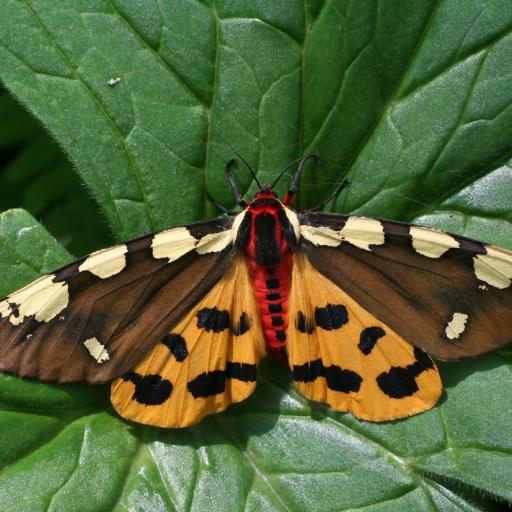
Known as the Augsburg Tiger Moth, this is one of the most magnificent and largest "tiger" species in Europe. It earned its regal nickname from its historical abundance near the German city of Augsburg, though today it is a rare and prized sight for nature enthusiasts. With its heavy, velvety wings and dramatic contrast, seeing one feels like catching a glimpse of a forest's hidden royalty.
🔍 How to Identify
- 🦋 Forewings: The upper wings are a deep, velvety chocolate brown, marked by four or five distinct, cream-colored "islands" or irregular spots that look like spilled milk.
- 🔥 Hindwings: When it spreads its wings, it reveals a shocking display of brilliant orange or golden-yellow hindwings, heavily patterned with large, ink-black blotches.
- 🐛 The "Woolly" Larva: The caterpillar is exceptionally shaggy, covered in a dense coat of long, reddish-brown and black hairs that make it look like a tiny, wandering bear.
🌲 Habitat & Ecology
- 🍂 Forest Dwellers: Unlike common garden moths, the Augsburg Tiger prefers damp, shady deciduous forests and bushy woodland edges where it can hide amongst the leaf litter during the day.
- 🍃 Generalist Diet: The caterpillars are not picky eaters; they enjoy a buffet of woodland plants, including Honeysuckle (Lonicera), Birch, Hazel, and even wild Raspberry bushes.
- 🌙 Night Flyers: They are strictly nocturnal. While the males are occasionally drawn to light traps, the heavy-bodied females are rarely seen, usually staying low in the undergrowth to lay their eggs.
⚠️ Safety & Toxicity
- 🟢 Status: Completely harmless to humans and pets in terms of biting or stinging.
- 🧤 Skin Irritation: While not "venomous," the stiff hairs of the caterpillar can cause a mild, itchy rash (urticaria) on sensitive skin. It is best to admire the "woolly" larvae with your eyes rather than your hands.
- 🐦 Chemical Defense: The bright orange colors are a warning to birds that the moth contains bitter fluids, making it a very unappealing snack for predators.
✨ Fun Fact
The Augsburg Tiger Moth has a very long life cycle compared to its cousins. The caterpillars often "overwinter" twice—meaning they spend two full years as larvae, surviving two separate winters hidden in the moss before they finally transform into the stunning adult moth.
More Details








