Info
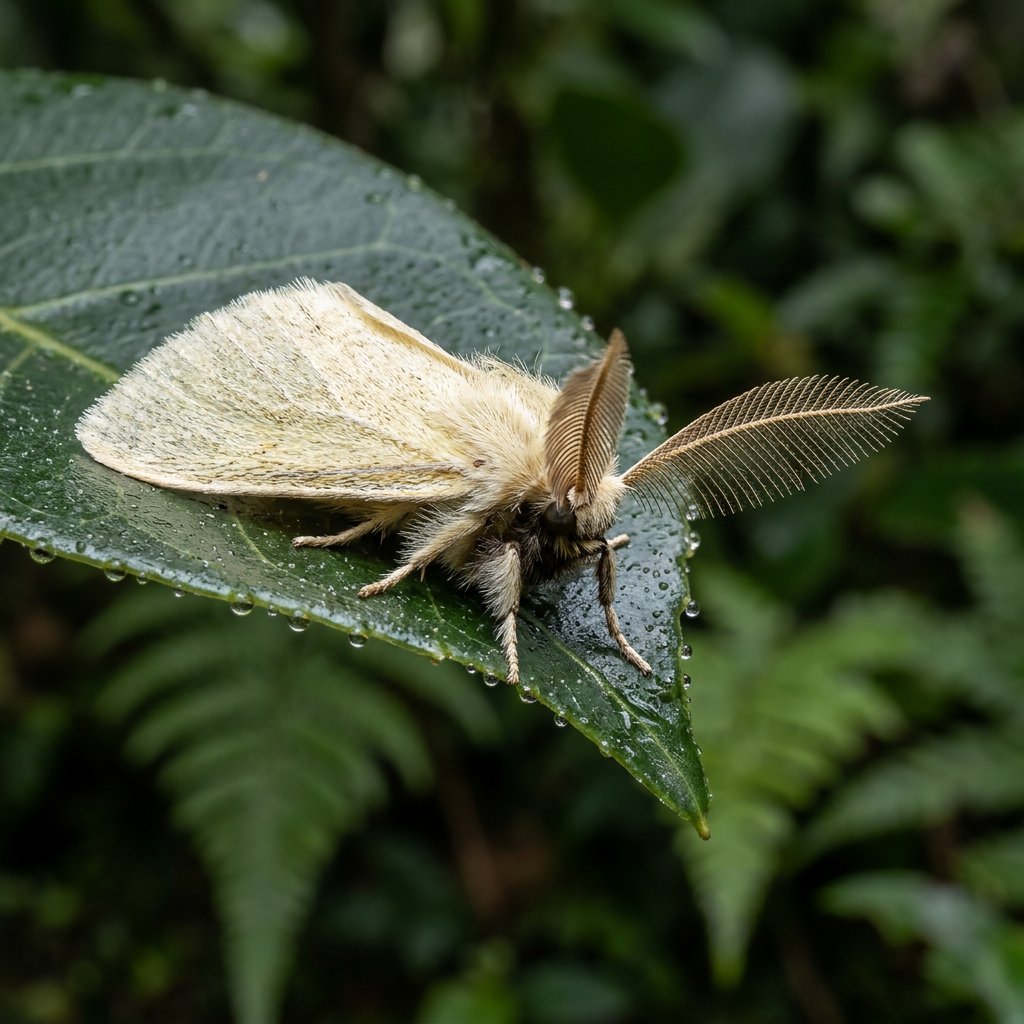
The Clearwing Tussock Moth (Perina nuda) is a fascinating master of disguise that often surprises gardeners when it rests on the underside of a leaf. Unlike most moths that carry thick, dusty scales on their wings, this insect looks more like a delicate piece of frosted glass or a strange, orange-bodied fly. Often called the "Banyan Tussock Moth," it is a frequent guest in tropical and subtropical gardens, especially where Ficus trees are present.
🔍 How to Identify
- 🪟 Glassy Wings: The most striking feature is the lack of scales on large portions of its wings, making them almost entirely transparent with just a thin, dark border.
- 🧶 Furry Torso: Despite its "naked" wings, its body is covered in dense, fuzzy orange or yellowish-brown hairs, giving it a cozy, stuffed-animal appearance.
- 🐛 Spiky Larvae: As a caterpillar, it is highly ornate, featuring tufts of long hairs (tussocks) and bright spots, often appearing in shades of grey, yellow, and black.
🌲 Habitat & Ecology
- 🌿 The Ficus Fanatic: This insect is a specialist; it primarily feeds on members of the Ficus genus, including the Banyan tree and the Peepal tree. If you have a large indoor or outdoor Ficus, you might find them hanging around.
- 🎭 Stealthy Pollinator: While the caterpillars are known for munching on leaves, the adults are gentle fliers that blend into the dappled light of the forest or garden canopy to avoid being spotted by birds.
⚠️ Safety & Toxicity
- 🚫 Look But Don't Touch: While the adult moth is completely harmless, the caterpillars are a different story. Like many "tussock moths," their hairs are urticating, meaning they can cause skin irritation.
- 🧴 Skin Irritation: If a child or pet brushes against the caterpillar, it can cause a stinging sensation, redness, or a bumpy rash. It is best to admire their vibrant colors from a distance and keep curious pets away from infested branches.
✨ Fun Fact
The species name nuda is Latin for "naked." This refers to the moth's unique "naked" wings that have shed their scales to reveal the clear membrane beneath, a rare trait among the typically "dusty" Lepidoptera family!
More Details








