Info
Known as the "Common Stoneflies," these ancient creatures are often called the "Canaries in the Coal Mine" for our waterways. If you spot one near your local stream or river, take it as a compliment to the environment; they are biological barometers that only thrive in the cleanest, most oxygen-rich water. While they might look like prehistoric visitors with their flattened bodies and twin tails, they are gentle indicators of a healthy ecosystem.
🔍 How to Identify
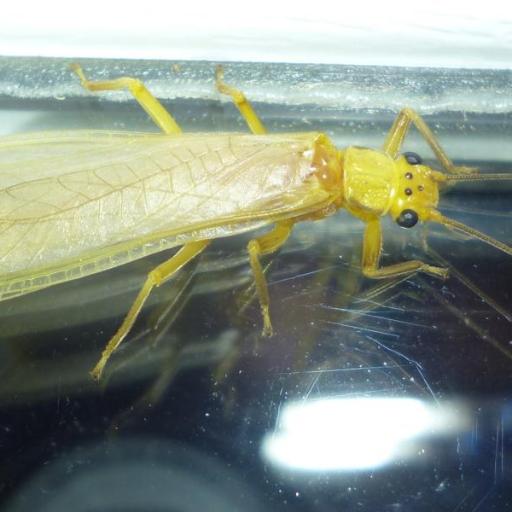
- 🪟 Veined Wings: Their wings are large, translucent, and covered in a complex, ladder-like network of veins. When resting, they fold these wings flat and square over their backs.
- 🥢 Twin Tails: Unlike their cousins the Mayflies (who often have three), Common Stoneflies always feature exactly two long, stiff tails (cerci) protruding from the end of their abdomen.
- 👞 Flat Profile: Their bodies are notably flattened from top to bottom. This "low-profile" design allows them to cling to rocks in fast-moving currents without being swept away.
🌊 Habitat & Ecology
- 💎 Clean Water Lovers: Perlidae are extremely sensitive to water pollution and low oxygen. They are almost exclusively found near fast-flowing, rocky streams and rivers with high water quality.
- 🧗 The "Push-Up" Behavior: If you watch a stonefly nymph closely, you might see it doing "push-ups." This isn't a workout—they are moving their bodies to flow more water over their gills so they can breathe better!
- 🦎 Predatory Youth: While the adults are often short-lived and may not eat at all, the nymphs (babies) are fierce underwater hunters, stalking other small aquatic insects among the river stones.
⚠️ Safety & Toxicity
- 🛡️ Completely Harmless: Despite their somewhat "creepy-crawly" appearance and frantic scurrying, stoneflies are "friends" of the highest order.
- 🚫 No Sting or Bite: They do not possess a stinger, and their mouthparts are not designed to bite humans. They are safe for children to observe and do not pose any threat to pets or gardens.
✨ Fun Fact
- 🥁 Nature’s Drummers: To find a mate in the noisy environment of a splashing river, male stoneflies "drum" their abdomens against rocks or wood. Each species has its own unique rhythm, and females respond with their own drumming "beat" to lead the male toward them.
More Details








