Info
The Buff-tip Moth (Phalera bucephala) is nature’s ultimate illusionist. Often mistaken for a snapped-off twig of a silver birch tree, this moth has mastered the art of "crypsis" (camouflage) to hide from predators in plain sight. It is a common visitor to European gardens and woodlands, though you would likely walk right past it without ever knowing it was there.
🔍 How to Identify
- 🪵 The "Broken Twig" Look: When its wings are folded, the moth forms a perfect cylinder. The pale, buff-colored patches at the tips of the wings look exactly like the exposed, cut wood of a broken branch.
- 🌫️ Silver-Grey Body: The main part of the wings is a beautiful silvery-grey, mimicking the lichen-covered bark of birch or willow trees.
- 🍯 The Fuzzy Thorax: Its head and shoulders are covered in dense, buff-yellow hairs, reinforcing the appearance of a jagged, woody snap.
🌲 Habitat & Ecology
- 🍂 Dietary Habits: While the adult moths do not feed at all, their caterpillars are voracious eaters. They live gregariously (in large groups) and feast on the leaves of deciduous trees like Oak, Birch, Willow, and Hazel.
- 🌳 Garden Presence: You are most likely to spot them in late spring and summer. During the day, they remain perfectly still on tree trunks or among leaf litter, relying entirely on their disguise to avoid becoming a bird's snack.
⚠️ Safety & Toxicity
- 🟢 Harmless to Humans: The Buff-tip moth is completely non-aggressive and does not bite or sting. They are safe to observe and gently handle if found in the grass.
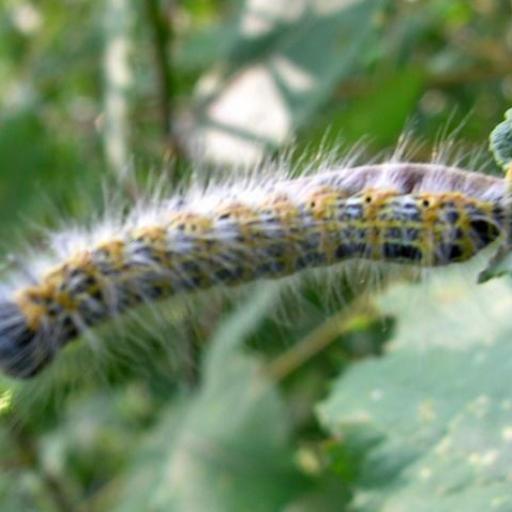
- 🐛 Caterpillar Caution: The larvae are bright yellow and black with fine hairs. While not dangerously toxic, some people with sensitive skin may experience mild irritation if they handle the caterpillars directly, so it is best to use a leaf to move them.
✨ Fun Fact
The Buff-tip’s camouflage is so precise that it even includes dark, wavy lines on its wings that mimic the "lenticels" (the small pores or slits) found on the bark of real birch trees!
More Details








