Info
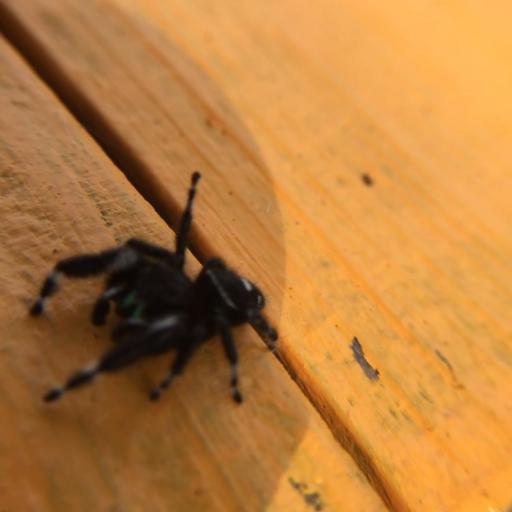
The Bold Jumping Spider (Phidippus audax) is often affectionately called the "eight-legged kitten" by nature enthusiasts. Unlike many spiders that hide in the shadows, this charismatic hunter is active during the day, famously curious, and known to "track" human movement with its massive front eyes. Its bold personality and striking iridescent colors make it a favorite among backyard explorers.
🔍 How to Identify
- 👀 Primary Eyes: Features two enormous, forward-facing central eyes that provide high-resolution vision, flanked by smaller eyes that offer a nearly 360-degree view of its surroundings.
- 💎 Iridescent Chelicerae: Look for its mouthparts (chelicerae), which shimmer in brilliant metallic shades of emerald green, turquoise, or royal blue.
- ⚪ Abdominal Markings: A fuzzy black body typically marked with a distinct white, yellow, or orange triangular spot in the center of its abdomen, often resembling a "smiley face" to the keen observer.
🌲 Habitat & Ecology
- 🎯 The Precision Pouncer: This spider does not build webs to catch food. Instead, it stalks its prey like a tiny leopard, leaping many times its own body length to snatch flies, crickets, and even other spiders.
- 🧗 Sunny Surface Dweller: You will most likely spot them on vertical, sun-drenched surfaces such as garden fences, exterior house walls, or large leaves, where they utilize the light to hunt.
- 🧶 The Safety Tether: Before jumping, they always attach a "dragline" of silk to their starting point. If they miss their target or fall, this silk line acts as a bungee cord to catch them.
⚠️ Safety & Toxicity
- 🟢 Harmfulness: Generally harmless. They are extremely shy and will almost always choose to flee or jump away rather than confront a human.
- 🩹 The Bite: Bites are exceptionally rare and usually only occur if the spider is trapped against the skin. The venom is not considered medically significant; for most people, it results in nothing more than a minor, localized sting or itchy red bump.
✨ Fun Fact
Bold Jumping Spiders are surprisingly intelligent; researchers have found they are capable of learning, recognizing colors, and even planning complex routes to reach their prey—a level of cognition rarely seen in creatures so small!
More Details








