Info
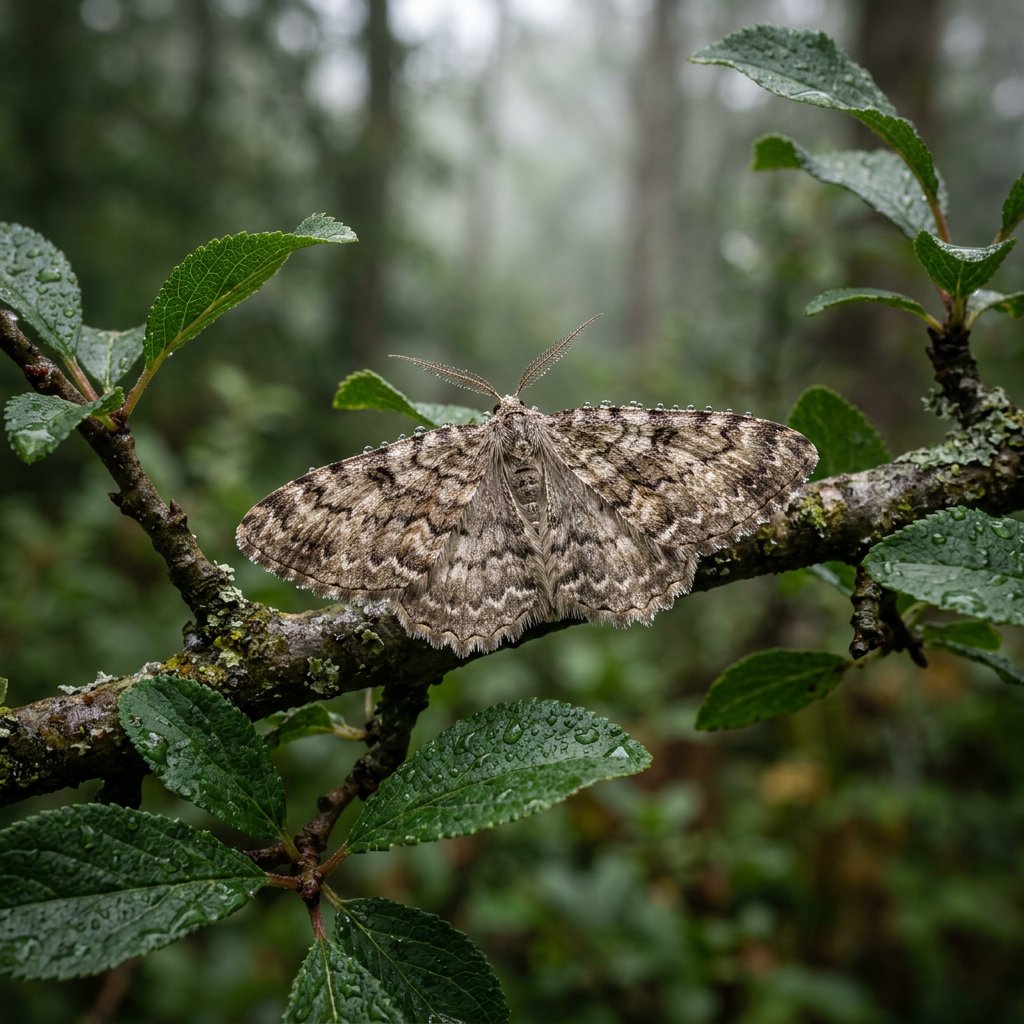
Often referred to as the Brown Scallop, this subtle moth is a master of camouflage within the shadows of woodland edges. Unlike its more flamboyant cousins, Philereme vetulata relies on intricate, wavy patterns to blend perfectly into dried leaves and bark. It is a specialist species, rarely found far from its favorite nursery: the Buckthorn bush.
🔍 How to Identify
- 🦋 Scalloped Edges: The most distinctive feature is the finely "toothed" or scalloped edge of the wings, which gives the moth its common name.
- 🎨 Wavy Patterns: The forewings and hindwings are covered in numerous fine, dark, transverse wavy lines over a grayish-brown base, resembling the grain of polished wood.
- 📏 Resting Posture: When at rest, it holds its wings out flat and slightly pressed against the surface, creating a triangular silhouette that breaks up its shadow.
🌲 Habitat & Ecology
- 🌿 The Buckthorn Specialist: This moth is a "monophagous" species, meaning its caterpillars feed almost exclusively on Common Buckthorn (Rhamnus cathartica). If you have Buckthorn in your hedgerow, you likely have these quiet residents.
- 🌙 Nocturnal Life: While primarily active at night, they are easily disturbed from their resting spots in dense foliage during the day, fluttering a short distance before disappearing back into the shade.
- 🐛 Inchworm Movement: As a member of the Geometridae family, its larvae are "loopers" or inchworms, moving with a distinctive looping gait as if they are "measuring the earth."
⚠️ Safety & Toxicity
- ✅ Harmless Friend: The Brown Scallop is completely harmless to humans and pets. It does not bite, sting, or carry any known diseases.
- 🍃 Garden Impact: While the caterpillars eat leaves, they rarely occur in high enough numbers to cause significant damage to Buckthorn plants. They are a vital part of the local food web, providing a snack for nesting birds.
✨ Fun Fact
The Brown Scallop is often used by ecologists as an "indicator species." Because it is so dependent on old-growth Buckthorn, its presence usually signals a healthy, well-established, and ancient hedgerow or woodland ecosystem!
More Details








