Info
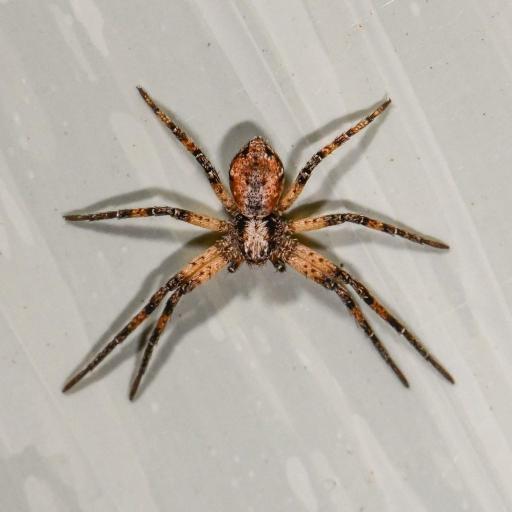
Known as the Running Crab Spider, Philodromus cespitum is the Olympic sprinter of the backyard. Unlike many spiders that wait patiently in a web, these agile hunters rely on their incredible speed and "crab-like" sideways movement to chase down prey. They are masters of disguise, often blending perfectly into bark or dried grass, waiting for the perfect moment to dash toward a meal.
🔍 How to Identify
- 🏃 Leg Length: The second pair of legs is noticeably longer than the rest, which helps them pivot and sprint with surprising agility.
- 🎨 Camouflage: Their bodies are typically mottled with shades of earthy brown, gray, and cream, often featuring a faint "heart mark" on the abdomen.
- 📐 Flattened Profile: They have a very flat body shape, allowing them to tuck themselves into narrow crevices in tree bark or under leaves to hide from birds.
🌲 Habitat & Ecology
- 🍂 The Active Hunter: You won't find these spiders in sticky circular webs. Instead, they use a "dragline" of silk as a safety rope while they wander across shrubs, tall grass, and tree trunks looking for small insects.
- 🦟 Garden Guardian: They are excellent natural pest controllers, specializing in eating aphids, small flies, and midges. Having them in your garden is a sign of a healthy, balanced ecosystem.
⚠️ Safety & Toxicity
- 🛡️ Non-Aggressive: These spiders are extremely shy and will almost always choose "flight" over "fight." They are much faster than you and will likely vanish before you can get close.
- 🐶 Low Risk: While they technically possess venom to subdues insects, they are not considered medically significant to humans or pets. A bite is rare and usually less painful than a bee sting, typically occurring only if the spider is accidentally crushed against the skin.
✨ Fun Fact
- 🚀 High-Speed Drifting: Philodromus cespitum can move sideways and diagonally just as fast as they move forward, allowing them to "drift" around corners of leaves to surprise their prey!
More Details








