Info
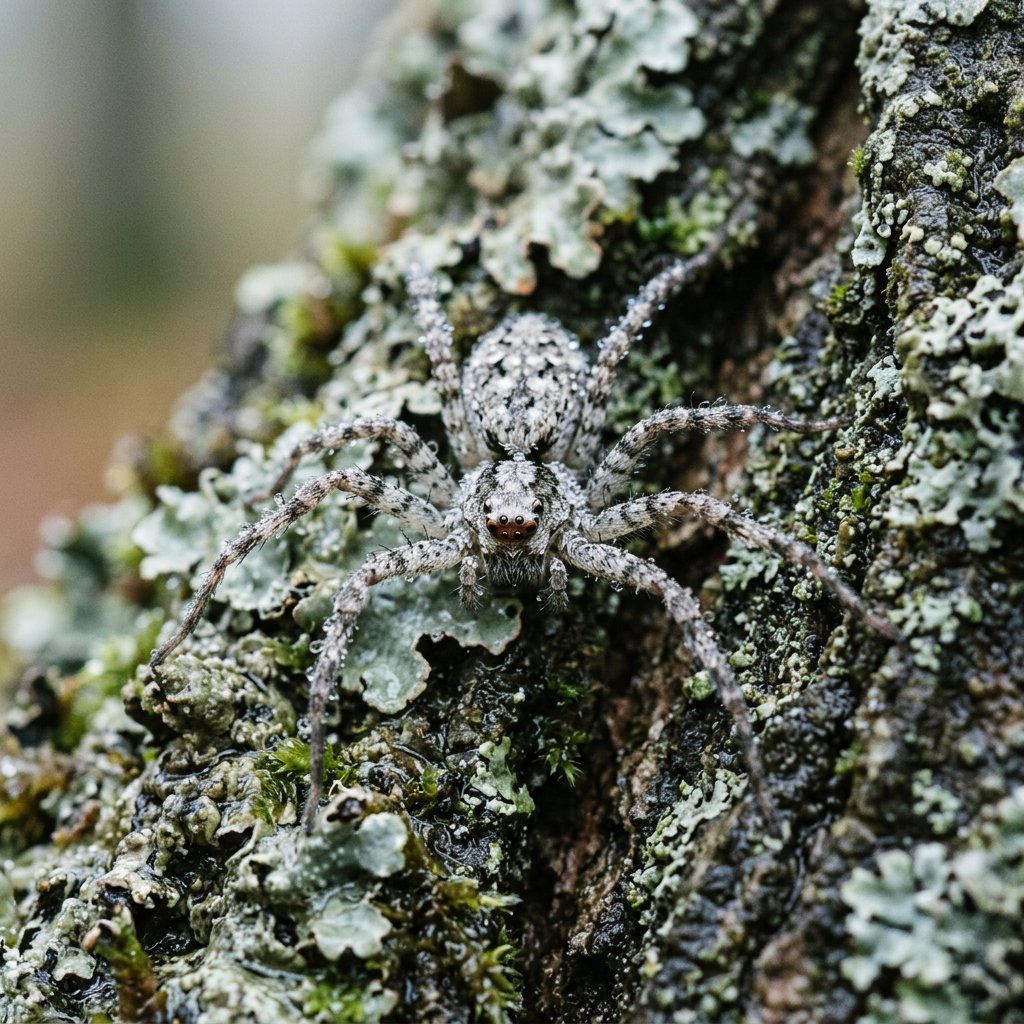
The Lichen Running Spider, known scientifically as Philodromus margaritatus, is a true master of disguise within the arachnid world. Often nicknamed the "Pearl Running Spider," it spends its life hiding in plain sight by perfectly mimicking the colors and textures of tree lichen. To the casual observer, it is practically invisible until it suddenly sprints across a tree trunk with startling speed.
🔍 How to Identify
- 🎨 The Camouflage: Its body is a mottled mosaic of grey, white, black, and sometimes greenish tones, designed to blend seamlessly with crustose lichens.
- 🦀 Crab-like Stance: Like other running spiders, it has a flattened body and legs that spread out to the sides. Notably, its second pair of legs is longer than the others, allowing for rapid, sideways movement.
- 👀 Eye Arrangement: It possesses eight small eyes arranged in two rows, providing a wide field of vision to spot both approaching predators and unsuspecting prey.
🌲 Habitat & Ecology
- 🌳 The Bark Dweller: This spider is most commonly found on the trunks of old trees—particularly Oak, Pine, and Birch—where lichen growth is most abundant. It is also a frequent visitor to old wooden fences and weathered stone walls.
- 🏹 The Ambush Hunter: Unlike the classic garden spider, the Lichen Running Spider does not spin a web to catch its food. Instead, it remains motionless for hours, lunging forward with lightning speed to grab small flies or aphids that wander too close.
⚠️ Safety & Toxicity
- 🛡️ Status: Completely harmless and a beneficial "friend" for your garden.
- 🏠 Details: This spider is shy and will always choose flight over fight. It poses no danger to humans, children, or household pets. If it accidentally ends up inside your home, it can be easily relocated back to a tree using a cup and a piece of paper.
✨ Fun Fact
- 💎 The specific name margaritatus is derived from the Latin word for "pearly" or "decorated with pearls," referring to the beautiful, shimmering white spots that decorate its back and help it disappear against sun-dappled bark.
More Details








