Info
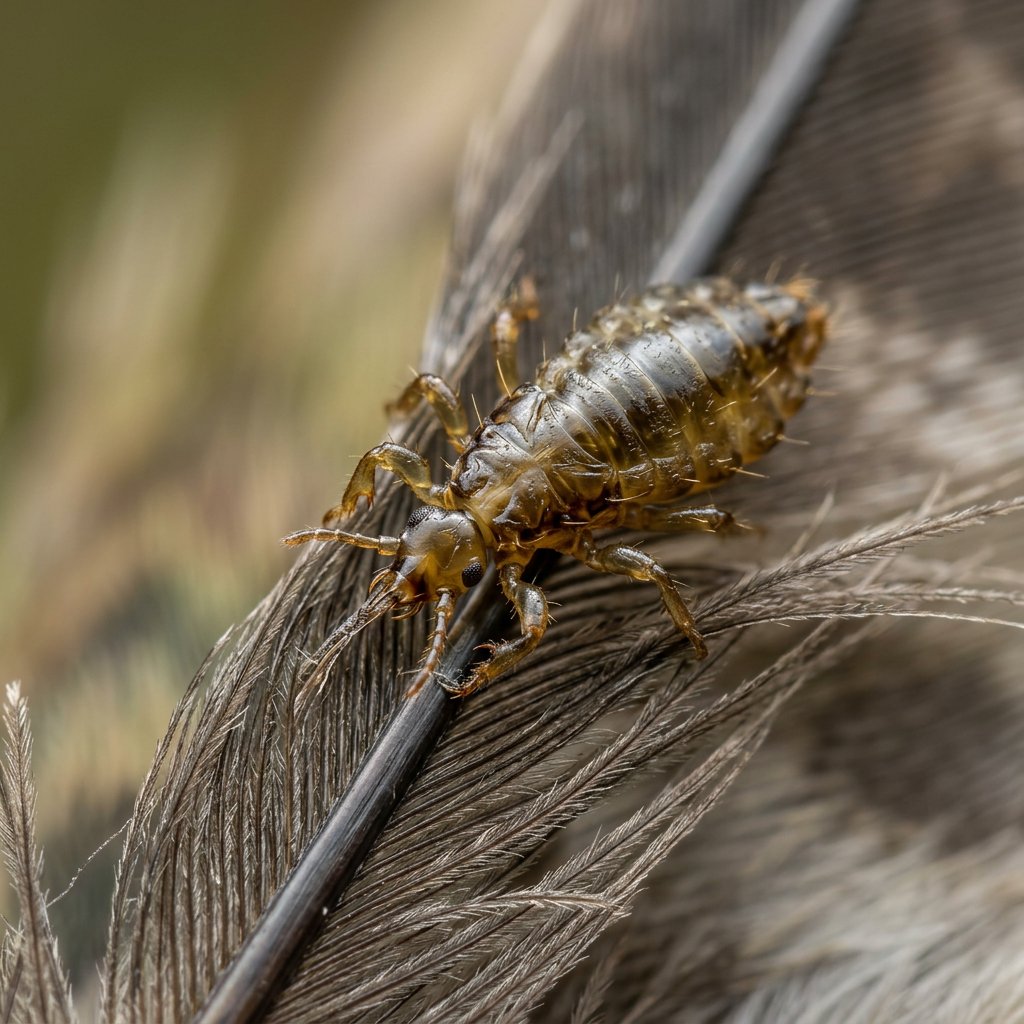
The Philopteridae are the tiny, uninvited hitchhikers of the bird world. Commonly known as "Bird Lice" or "Chewing Lice," these wingless insects have spent millions of years perfecting the art of living between feathers. While the thought of lice might make your skin crawl, these specialists are a fascinating look at how nature adapts to very specific, cozy environments.
🔍 How to Identify
- 🪟 Body Shape: They are distinctively flat and oval-shaped, looking almost like they have been pressed thin. This "pancake" physique allows them to slide easily between a bird's dense feathers without getting stuck.
- 🚫 Wingless Wonders: They have completely lost their wings through evolution. Since they spend their entire lifecycle on a single bird, they have no need to fly—they simply "hitch a ride."
- 👄 Head & Mouth: They have relatively large, rounded heads with powerful chewing mandibles on the underside. Unlike "sucking" lice, their mouths are built for grazing rather than piercing skin.
🌲 Habitat & Ecology
- 🍽️ The Feather Diet: Unlike the lice that plague mammals, Philopteridae are "chewers." They primarily eat the keratin found in feathers, dead skin flakes, and natural skin oils. In high numbers, they can make a bird look quite "moth-eaten."
- 🦅 Host Loyalty: These insects are incredibly host-specific. A louse adapted to a sparrow usually cannot survive on a hawk. They typically move from bird to bird during mating, nesting, or when parent birds are brooding their chicks.
- 🏃 Fast Crawlers: While they cannot jump or fly, they move with surprising speed through plumage. If you find an old bird nest in your eaves, you might spot these tiny specs scurrying away from the light.
⚠️ Safety & Toxicity
- 🛡️ Human Risk: Very Low. Philopteridae are biologically "locked" to birds. They require the specific body temperature and skin chemistry of an avian host to survive and reproduce. They will not infest human hair.
- 🐤 Pet & Poultry Safety: While they won't bite you, they are a nuisance for backyard chickens or pet birds. An infestation can cause birds to become restless, over-preen, or lose patches of feathers.
- 🧼 Prevention: If you handle wild birds or clean out birdhouses, a simple hand-wash is enough to ensure these tiny travelers don't cause any temporary skin irritation.
✨ Fun Fact
Scientists actually use Philopteridae as "evolutionary clocks." Because these lice stay with their hosts for millions of years, researchers can study the DNA of the lice to figure out when different species of birds first branched off from one another!
More Details








