Info
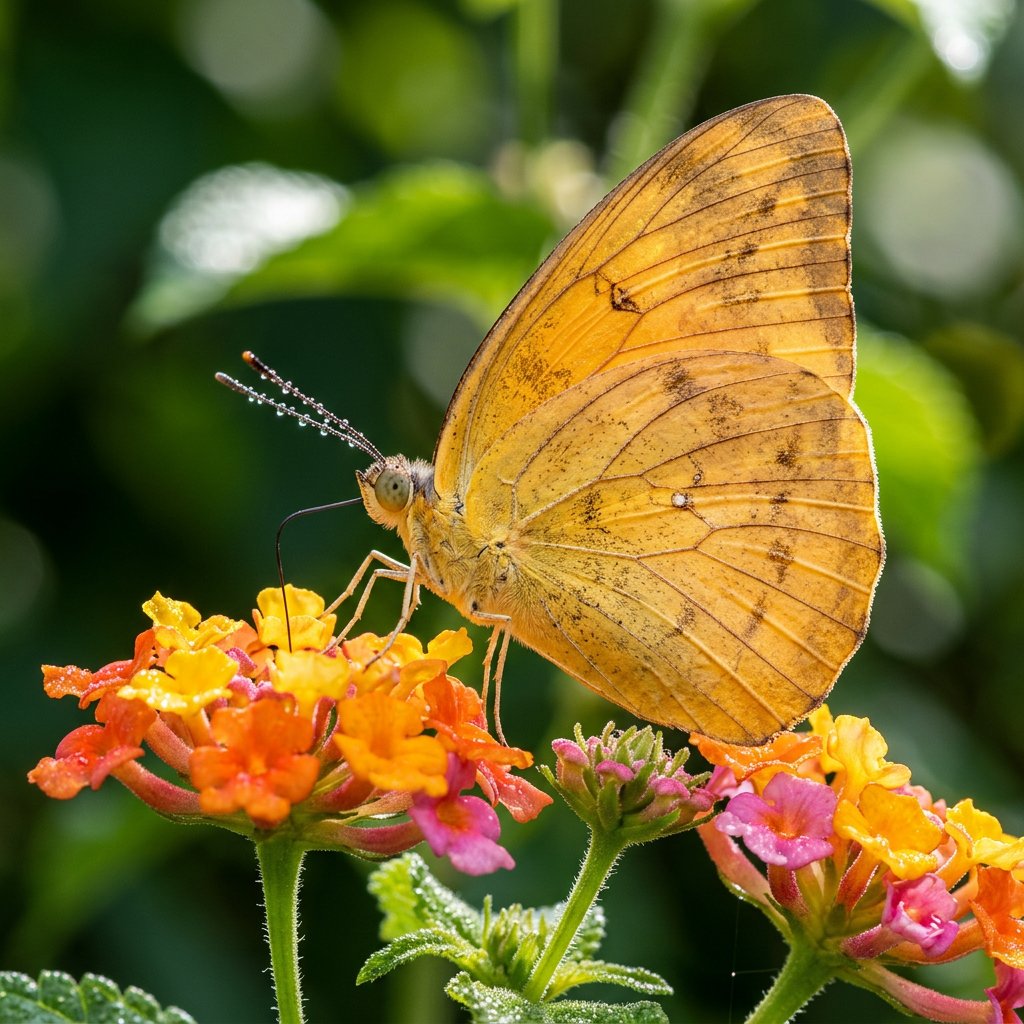
The Apricot Sulphur (Phoebis argante) is a sun-drenched jewel of the Neotropics, often seen darting through gardens and forest edges like a stray beam of light. Known for its vibrant, glowing hue, this butterfly is a tireless traveler and a vital pollinator for many tropical wildflowers. Whether it’s migrating in large groups or visiting your backyard blooms, it is a quintessential "friend" to any nature lover.
🔍 How to Identify
- 🦋 Wings: The upper side is a brilliant, saturated apricot-orange. Males are typically more uniform in color, while females may show slightly more ornate dark markings along the edges.
- 🍂 Underside: When at rest, the wings look like a pale yellow or cream leaf. They are covered in delicate brownish speckles and small "eye-spots" that provide excellent camouflage against predators.
- 🚀 Flight Pattern: These butterflies are "strong" fliers. Unlike the lazy flutter of some species, the Apricot Sulphur moves with a rapid, powerful zig-zagging motion that makes them quite challenging to photograph.
🌲 Habitat & Ecology
- 💧 Mud-Puddling: One of their most famous behaviors is gathering in large groups on damp sand or riverbanks. This isn't for thirst; they are "puddling" to extract essential salts and minerals from the wet earth, which are vital for reproduction.
- 🌿 Host Plants: The caterpillars are specialists, feeding almost exclusively on plants in the pea family (Fabaceae), particularly Senna and Cassia species. By hosting these plants, you can often attract them to your own garden.
- 🌺 Nectar Preference: Adults are attracted to brightly colored, tubular flowers. They are particularly fond of red and purple blossoms, which they navigate with a long, precise proboscis.
⚠️ Safety & Toxicity
- ✅ Status: Entirely harmless and non-toxic.
- 👐 Details: This butterfly does not bite, sting, or possess any chemical irritants. They are safe for children and pets to be around. However, like all butterflies, their wings are covered in microscopic scales—touching them can damage their ability to fly, so it is best to observe them from a distance.
✨ Fun Fact
The Phoebis argante is a champion migrator. In certain seasons, thousands of these orange butterflies have been recorded crossing vast distances together, sometimes even flying far out over the ocean in search of new breeding grounds!
More Details








