Info
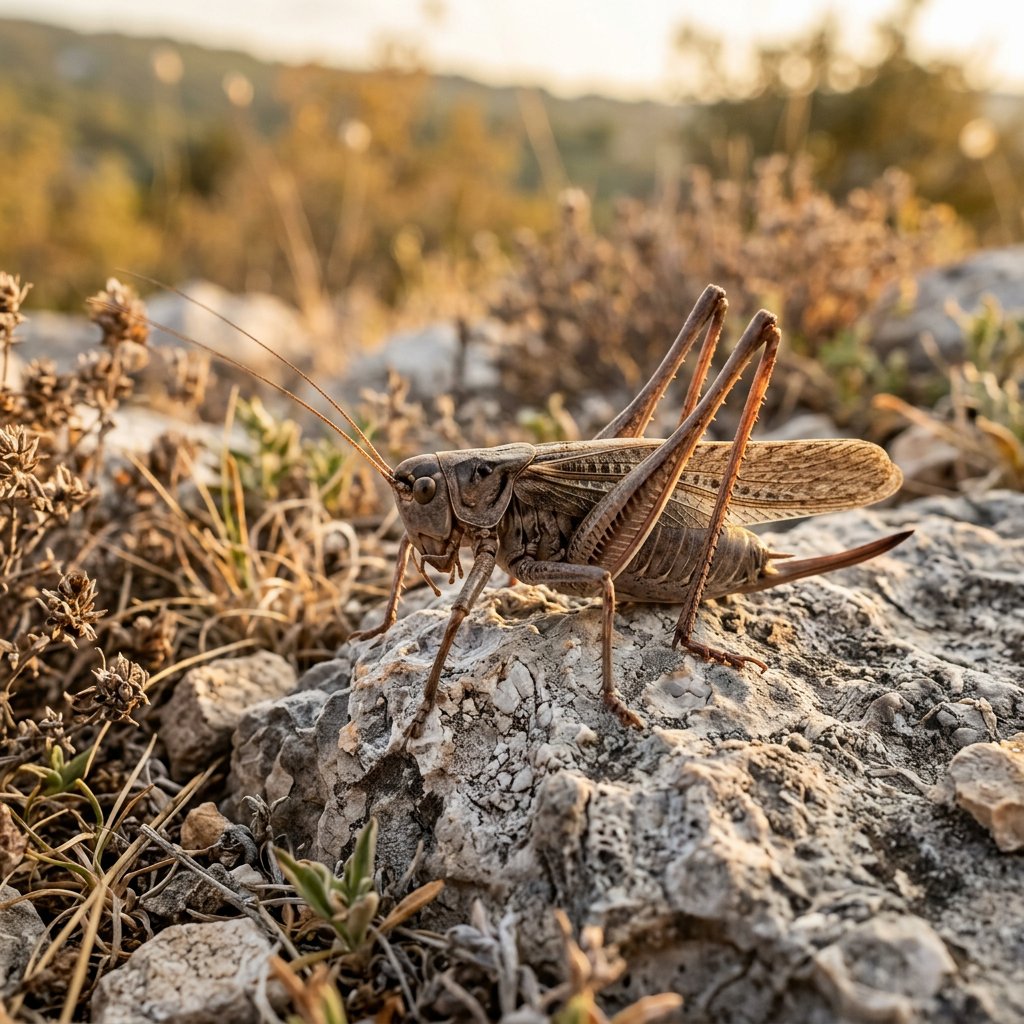
Known as a close relative of the Dark Bush-cricket, Pholidoptera femorata is a master of disguise within the scrublands of Southern Europe. This sturdy, flightless insect is often found lurking in brambles and tall grass, blending perfectly with dried leaves and woody stems. While its robust size might startle a gardener, it is a quiet, beneficial neighbor that helps keep smaller pest populations in check.
🔍 How to Identify
- 🎨 Camouflage Tones: Its body is colored in earthy shades of dark brown, grey, and ochre, often with a pale "collar" or edge on the pronotum (the shield behind the head).
- 🦵 Powerful Jumpers: It possesses exceptionally long and muscular hind legs, which it uses to catapult itself away from predators with surprising force.
- 🪶 Reduced Wings: This species is effectively flightless; the wings are reduced to small, scale-like appendages that are mostly hidden, especially in females.
🌲 Habitat & Ecology
- 🌿 The Edge-Dweller: You will most likely spot them in "ecotones"—the sunny transition zones between forests and open meadows where there is plenty of leaf litter to hide in.
- 🦗 Nocturnal Song: Males produce a short, high-pitched "zip" or "chirp" during late summer evenings. The sound is produced by rubbing their small wings together, a process known as stridulation.
- 🍽️ Omnivorous Diet: They are opportunistic feeders, consuming a mix of soft plant material, fallen fruit, and small, slow-moving insects like aphids or caterpillars.
⚠️ Safety & Toxicity
- 🛡️ Status: Completely harmless and non-venomous. They do not possess a stinger and have no interest in humans.
- 🤏 Defensive Nip: If handled roughly or squeezed, a large adult may deliver a small defensive nip with its mandibles. It is not dangerous but can be a sharp surprise, so it is best to let them crawl onto a leaf instead of picking them up.
- 🐾 Pet Safety: They are non-toxic to inquisitive cats or dogs who might try to catch them.
✨ Fun Fact
👂 Leg Ears: Like most bush-crickets, Pholidoptera femorata doesn't hear through its head. Its ears (tympana) are located on its front legs, just below the "knee" joint, allowing it to sense vibrations and songs through the grass!
More Details








